
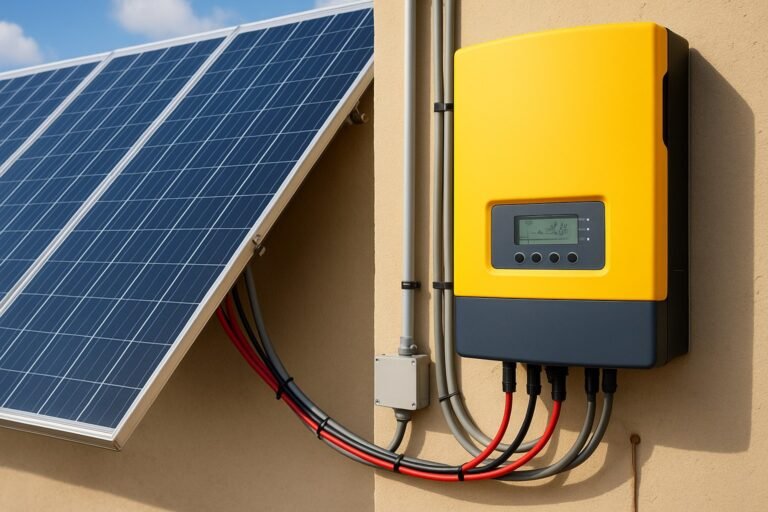
If you’re exploring solar energy for your home, one of the first terms you’ll hear is solar power inverter. Think of it as the brain of your entire solar setup. Your panels collect sunlight and turn it into electricity, but the inverter is the device that makes that electricity usable. Without it, your lights, appliances, fans, and even your charger wouldn’t run. This is why experts always say the solar inverter is just as important as the panels you choose.
A good inverter does more than convert power. It improves system efficiency, protects your appliances, keeps your batteries healthy, and ensures your solar system performs well for years. Whether you’re setting up a solar power inverter for home, planning to upgrade, or searching for the best solar power inverter for long-term use, understanding how it works gives you a huge advantage. Choosing the right one affects everything from your energy savings to the life of your entire solar system, which is why homeowners today prefer to make informed decisions backed by real, trustworthy information.
What Is A Solar Power Inverter And Why It Matters
A solar power inverter is the device that takes the direct current (DC) electricity produced by your solar panels and converts it into alternating current (AC) electricity, which is what your home appliances use. Even if your solar panels are generating plenty of power, none of your home’s devices can run on that energy until the inverter transforms it into a usable form. This is why many experts call the inverter the “heart” or “brain” of a solar system.
Beyond conversion, the inverter plays several important roles. It constantly monitors voltage and current from the solar panels to ensure that power flows safely into your home. It also protects appliances by preventing issues like overvoltage, low voltage, or sudden power spikes. In hybrid or off-grid systems, the inverter manages battery charging as well, making sure your batteries receive the right amount of power and don’t get overcharged or drained too quickly. Modern inverters also optimize solar output through MPPT technology, which means they continuously adjust the system to get the best performance from your panels in different lighting conditions.
For a beginner, think of it like this:
If your solar panel is a water tank collecting sunlight, the inverter is the tap that makes the water useful. It controls the flow, keeps it safe, and ensures the right amount reaches your appliances. Without it, the energy stays stored but unusable. This simple function is what makes the inverter one of the most important parts of any solar installation.
How A Solar Power Inverter Works (Expert Breakdown)
Understanding how a solar power inverter works makes it much easier to choose the right one. Even though the device looks simple from the outside, inside it’s doing multiple tasks every second to ensure your solar energy is clean, stable, and safe for your home. Here’s a clear, expert-friendly breakdown of the key processes.
Step-By-Step Conversion From DC To AC
Solar panels produce DC (direct current) electricity, which flows in one direction. Your home, however, runs on AC (alternating current) electricity, where the current changes direction many times per second. A solar power inverter handles this conversion through a series of internal stages.
- DC Input Stage:
The inverter receives power from the solar panels. Voltage levels can fluctuate depending on sunlight, shading, and temperature. - Power Conditioning:
The inverter stabilizes this DC energy so it enters the conversion stage at controlled levels. - DC-to-AC Transformation:
The inverter uses electronic switches (IGBTs or MOSFETs) to rapidly turn the DC signal on and off, creating an AC waveform. - Wave Shaping:
The rough AC signal is refined into a smooth, home-safe waveform. - Output Delivery:
The inverter sends clean AC electricity into your home, your battery (in hybrid systems), or the grid.
A simple way to visualize it:
Your panels provide the “raw material” while the inverter “processes” it into a finished product your home can actually use.
MPPT Vs PWM: Which Technology Performs Better
Two major technologies control how efficiently an inverter manages solar panel output: MPPT and PWM.
PWM (Pulse Width Modulation):
This is older technology. It regulates power but doesn’t optimize it. If your solar panel voltage is higher than the battery voltage, PWM simply pulls it down to match the battery. This wastes energy and reduces efficiency.
MPPT (Maximum Power Point Tracking):
This is the modern standard and performs far better. MPPT constantly tracks the optimal voltage and current combination for your solar panels, even as conditions change throughout the day. Instead of wasting excess voltage, MPPT converts it into usable power.
Expert takeaway:
MPPT inverters often deliver 20 to 30 percent more usable energy compared to PWM, especially on cloudy days, cold mornings, or when panels have slight shading.
Why “Pure Sine Wave” Is A Non-Negotiable Feature
When the inverter produces AC power, it can do so in different types of waveforms. The best and safest version is pure sine wave.
Here’s why it matters:
- It matches the quality of electricity provided by the grid.
- Sensitive appliances like refrigerators, washing machines, laptops, and LED TVs run smoothly and last longer.
- There’s less noise, heat, and strain on motors.
- It reduces energy loss compared to modified sine wave inverters.
Using anything other than a pure sine wave inverter is like running your appliances on uneven, bumpy power. They’ll work, but not comfortably, and long-term damage becomes more likely.
Efficiency Ratings Explained And What To Look For
Inverters don’t convert 100 percent of DC power into AC — some energy is always lost as heat. That’s where efficiency ratings come in.
A high-quality solar power inverter will have:
- 96 to 98 percent efficiency (excellent)
- 94 to 95 percent efficiency (acceptable)
- Anything below 90 percent (outdated or inefficient)
Higher efficiency means:
- More usable energy
- Lower monthly electricity costs
- Less heat buildup
- Better long-term durability
The efficiency rating is usually listed as:
- Peak efficiency — the highest performance under ideal conditions
- CEC or European efficiency — real-world efficiency under varying loads
For homeowners, CEC efficiency is more important, because it reflects how the inverter performs throughout a typical day.
Types Of Solar Power Inverters (With Real-World Use Cases)
Solar power inverters come in several types, each designed for specific needs, environments, and budgets. Choosing the right type depends on how much power your home requires, whether you use batteries, and what local conditions (like shading or load-shedding) look like. Here’s a clear breakdown of the main inverter categories and when they work best in real life.
String Inverters — Best For Medium & Large Homes
A string inverter connects multiple solar panels together in a “string,” and the entire string feeds power into one central inverter. This setup is common in residential and small commercial systems.
Best for:
- Homes with open rooftops and minimal shading
- Households looking for cost-effective and reliable performance
- Medium to large solar systems
Why it works:
String inverters are simple, durable, and usually more affordable than other types. Homeowners prefer them because maintenance is easier and long-term reliability is strong. However, if one panel in the string is shaded or underperforming, it can reduce the output of the entire string.
Microinverters — High Performance For Shaded Areas
Microinverters are small units installed behind each solar panel. Instead of one inverter handling the entire array, every panel gets its own inverter.
Best for:
- Rooftops with partial shading
- Installations with panels facing different directions
- Homes wanting maximum efficiency from every panel
Why it works:
Since each panel operates independently, shading on one doesn’t affect the others. Systems with microinverters generally produce more energy overall and allow for easy performance tracking at the panel level. They are slightly more expensive but ideal when sunlight conditions aren’t perfect.
Hybrid Inverters — The Top Choice For Load-Shedding Regions
A hybrid inverter combines the functions of a solar inverter, battery charger, and grid inverter in one device. It manages solar power, grid power, and battery storage automatically.
Best for:
- Areas with frequent power outages or load-shedding
- Homes planning to use lithium or lead-acid batteries
- Users who want uninterrupted power
Why it works:
Hybrid inverters ensure your home switches seamlessly between solar, battery, and grid power. They also provide smart battery management to improve battery lifespan. For many households in regions with unstable electricity, hybrid inverters are considered the most practical option.
Off-Grid Inverters — Ideal For Remote Or Rural Locations
Off-grid inverters are designed for setups that do not rely on the electric grid at all. These systems depend entirely on solar panels, batteries, and sometimes backup generators.
Best for:
- Remote villages
- Farms and cabins far from the grid
- Locations with no grid access
Why it works:
Off-grid inverters supply complete independence from local electricity providers. They are built to handle large battery banks and provide reliable power for essential appliances. These systems require careful sizing, but when installed correctly, they deliver stable energy even in isolated areas.
Portable Solar Power Inverters For Camping & Cars
Portable solar inverters are compact units that allow you to convert 12V car battery power into usable 220V or 110V AC electricity.
Best for:
- Road trips
- Camping
- Outdoor tools and small appliances
- Emergency power from a car battery
Why it works:
These inverters are lightweight and easy to carry. When paired with a foldable solar panel, they provide a dependable power source for charging phones, running lights, or powering small devices. For travelers, a solar power inverter for car setup is a convenient backup solution.
All-in-One Solar Panel With Inverter Kits
These ready-to-use kits combine solar panels, a charge controller or inverter, cables, and sometimes a small battery in one package.
Best for:
- Beginners
- Small cabins or sheds
- DIY users
- Temporary or portable installations
Why it works:
A solar panel with inverter kit simplifies installation and removes guesswork. Everything is pre-selected to work together, making it a great option for users who don’t want to calculate voltages or compatibility issues. These kits are also useful for learning how solar setups function before upgrading to a larger system.
Choosing The Right Solar Power Inverter For Your Needs
Selecting the correct solar power inverter is one of the most important steps in building a reliable and efficient solar system. Your inverter must match your home’s power needs, support your chosen battery type, and work smoothly with your solar panels. Here’s a clear, expert-guided breakdown to help you choose confidently.
How To Calculate Required Wattage (500W, 2000W, 3000W, 5000W)
The size of your inverter should match the total wattage of the appliances you want to run. A good rule is to calculate your expected load and choose an inverter slightly above that number for safe operation.
Here’s how wattage sizing works in real-world scenarios:
solar power inverter 500w
Suitable for very small setups like:
- Phone chargers
- LED bulbs
- Small fans
- Laptops
Great for camping, emergency kits, or car-based systems.
solar power inverter 2000w
Ideal for small homes or backup use:
- LED TV
- Small fridge
- Multiple fans
- Wi-Fi routers
This size is common for basic household needs.
solar power inverter 3000w
Works for homes with moderate load:
- Larger refrigerators
- Kitchen appliances
- Washing machines
- Multiple rooms running fans and lights
A solar power inverter 3000w is often selected for standard residential use.
solar power inverter 5000w
Best for full-home systems:
- Air conditioners
- Water pumps
- Full kitchen + living room load
A solar power inverter 5000w is the go-to choice when homeowners want a more complete solar-powered home.
Always add a 20 percent safety margin to ensure your inverter never operates under stress.
Matching Panels With Inverter Capacity (Most Missed Step)
Many people choose an inverter size but forget to match it with the right number of panels. This mismatch leads to underperforming systems and poor efficiency.
Simple rule:
The higher your inverter capacity, the more solar panels you need to feed it.
Examples:
- A 1000W inverter should have around 1200W–1500W of solar panels
- A 3000W inverter should have 3500W–4000W of solar panels
- A 5000W inverter needs 5500W–6500W of solar panels for peak performance
If the panels are too few, your inverter runs underpowered.
If they are oversized, the inverter limits output to its maximum rating.
Battery Compatibility: Lithium, AGM, Gel, And Lead-Acid
Not all batteries work the same way, and your inverter must support the type you choose.
Lithium (LiFePO4):
- Long lifespan
- Fast charging
- Lightweight
- Higher cost but best performance
Ideal for hybrid systems.
AGM (Absorbent Glass Mat):
- Maintenance-free
- Good performance
- Shorter lifespan than lithium
- Common for budget setups.
Gel Batteries:
- Slow discharge and stable performance
- Sensitive to high charging currents
- Good for low-load, stable usage.
Lead-Acid:
- Cheapest option
- Heavy, requires maintenance
- Short lifespan
- Used mainly in off-grid systems with basic needs.
Always check if your inverter supports customizable battery settings, especially for lithium batteries.
Voltage Options — 12V To 220V Converters Explained
Many portable and vehicle-based systems use 12V batteries, but most household appliances need 220V AC. A solar power inverter 12v to 220v handles this conversion safely.
These units are great for:
- Cars and RVs
- Camping setups
- Emergency power needs
- Small tools and electronics
However, they are not suitable for high-load home appliances like refrigerators or pumps unless designed for larger wattage.
Off-Grid Vs On-Grid Vs Hybrid: Which Works Best In 2025
On-Grid Inverters
- No batteries
- Requires stable electricity supply
- Best for reducing monthly electricity bills
Not ideal for areas with load-shedding.
Off-Grid Inverters
- Purely solar + battery
- Zero grid dependency
- Best for remote areas
Requires careful sizing for night-time usage.
Hybrid Inverters
- Solar + battery + grid
- Seamless switching
- Smart power management
The most recommended option in 2025 because it balances cost, reliability, and long-term savings.
Solar Power Inverter Installation Essentials
Installing a solar power inverter is not just about placing it on a wall. A good installation ensures higher efficiency, longer lifespan, and safer operation. These essentials reflect what professional installers follow on real job sites.
Correct Wiring Techniques And Safety Rules
Proper wiring reduces losses, prevents overheating, and ensures your inverter operates smoothly.
Installers focus on:
- Correct wire gauge (thicker wires for higher current)
- Using heat-resistant, UV-protected cables
- Tight and corrosion-free DC connections
- Avoiding long loops in wiring to reduce voltage drop
- Installing DC breakers and fuses for protection
Incorrect wiring is one of the main causes of inverter faults, so following safety standards is crucial.
Panel-To-Inverter Distance: Why It Affects Efficiency
The longer the distance between your solar panels and inverter, the more power is lost due to voltage drop.
General guidelines:
- Keep the distance as short as possible
- Use thicker cables if distance increases
- Avoid routing DC cables through hot areas
Shorter distance = better efficiency and less strain on the inverter.
Earthing And Surge Protection — Critical For Longevity
Every professional installer emphasizes proper grounding because it protects both equipment and your home.
Essential protections include:
- DC earthing
- AC earthing
- Surge protection devices (SPD)
- Lightning arrestors in high-risk areas
This safeguards your inverter from voltage spikes, storms, and sudden grid fluctuations.
How Professionals Test And Commission The System
Before handing over the system, technicians conduct a series of checks:
- Panel voltage and current performance
- MPPT channel balancing
- AC output stability
- Battery charging behavior
- Load tests at different levels
- Safety shutdown test
Only after these tests does the installer finalize the system. This ensures your solar setup performs safely and efficiently from day one.
Expert Tips To Get Maximum Output From Your Solar Power Inverter
A solar power inverter performs best when the installation and daily conditions support it. Even a high-quality inverter can underperform if it’s running too hot, poorly configured, or paired with unmaintained panels. These expert-backed tips help you avoid common issues and get the most out of your system throughout the year.
Ideal Operating Temperatures And Cooling Setup
Solar inverters generate heat during operation. If they run too hot, efficiency drops and the internal components wear down faster.
How to maintain ideal temperatures:
Install the inverter in a shaded, well-ventilated area
- Avoid airtight enclosures
- Maintain at least a few inches of space around the device
- Use cooling fans or wall-mounted ventilation in hot climates
- Keep the inverter away from direct sunlight and heat sources
A cooler inverter runs more efficiently, giving you more usable solar energy and longer device lifespan.
Optimization Settings Most Users Ignore
Many solar inverters come with built-in performance settings, but homeowners rarely check them after installation.
Key settings to review:
- MPPT channel assignment: Ensures each solar string is optimized
- Battery charging profiles: Different batteries require different settings
- Grid export limits: If your utility restricts export, configure the limit correctly
- Load priority modes: Choose whether solar, grid, or battery powers the home first
A quick review of these settings every few months can significantly improve overall system performance.
When To Clean Panels To Get Higher Inverter Yield
Dirty panels deliver less energy, which directly impacts the inverter’s output.
Dust, bird droppings, pollution, and leaves can block sunlight, reducing power generation by 10 to 30 percent.
General cleaning guidance:
- Clean panels every 1 to 3 months depending on weather and pollution
- Use clean water and a soft brush
- Avoid cleaning during midday heat
- If rainfall is frequent, clean only when dirt buildup is visible
Cleaner panels = more DC power = better inverter efficiency.
Seasonal Performance Adjustments (Summer vs Winter)
Solar systems behave differently across seasons, and adjusting expectations helps you manage energy use more effectively.
Summer:
- Higher temperatures reduce panel voltage
- Inverters may derate (lower output) if they overheat
- Ensure proper airflow to prevent thermal shutdowns
Winter:
- Cooler temperatures improve voltage and inverter performance
- Shorter days reduce overall energy production
- Snow on panels must be cleared for optimal output
Understanding these seasonal changes helps you plan energy usage and battery storage more effectively.
Common Problems With Solar Power Inverters (And How to Fix Them)
Solar power inverters are reliable, but certain issues can appear due to wiring errors, shading, battery problems, or voltage fluctuations. Knowing the cause behind common faults helps you troubleshoot quickly without guessing.
Low Insulation Error — Why It Happens
A low insulation error usually occurs when there is unwanted contact between DC wiring and the system’s grounding. This can stem from:
- Damaged cables
- Moisture entering connectors
- Loose wiring
- Faulty panel junction boxes
Fix:
Inspect DC wiring, replace damaged cables, and ensure all connections are dry and sealed. Proper earthing helps prevent recurring insulation faults.
Overload Shutdowns — When Your Load Exceeds Capacity
If the inverter is asked to run more wattage than it is designed to handle, it will shut down to protect itself.
Common causes:
- Adding new appliances without recalculating load
- Motors (pumps, AC compressors) needing high startup power
- Running too many devices during cloudy hours
Fix:
Reduce the load, stagger appliance usage, or upgrade to a larger inverter. Adding a 20 to 30 percent load buffer prevents frequent shutdowns.
Battery Not Charging — MPPT Troubleshooting
When the inverter’s MPPT system fails to charge the battery correctly, the problem may not be the inverter itself.
Possible causes:
- Panel voltage too low for MPPT activation
- Incorrect battery settings
- Faulty wiring from panels to inverter
- Weak or degraded battery
Fix:
Check voltage at the inverter’s DC input, verify battery type settings, and inspect connections. If voltage is sufficient but charging is slow, the battery may be nearing the end of its life.
High Voltage / Low Voltage Warnings
Your inverter will display voltage warnings when grid or battery conditions fall outside safe limits.
High voltage can occur due to:
- Grid instability
- Oversized panels
- Incorrect MPPT configuration
Low voltage can occur due to:
- Weak batteries
- Poor wiring
- Low sunlight hours
- Undersized panel array
Fix:
Measure voltage at the source (grid or battery), adjust wiring if needed, and ensure the panel array matches inverter requirements.
Inverter Not Syncing With Grid — Hybrid Issues Explained
Hybrid inverters must match grid frequency and voltage to operate in grid-tied mode. If syncing fails, the inverter stops exporting or blending power.
Common reasons:
- Grid frequency outside safe range
- Fluctuating grid voltage
- Incorrect grid settings in the inverter
- Faulty grid connection or loose terminals
Fix:
Verify the inverter’s grid parameters, check the main breaker connections, and ensure the local grid meets voltage/frequency standards. In unstable regions, hybrid inverters may frequently switch to battery mode for protection.
Solar Power Inverter Prices in 2025
Price Comparison By Wattage (500W–5000W)
In 2025, inverter cost varies widely depending on capacity, features, and brand — but you can get a rough idea based on wattage. In markets like Pakistan, smaller inverters (around 1 kW to 2 kW) often start from ~PKR 35,000–75,000.
For mid-range residential needs (around 3 kW), you might find inverters priced roughly PKR 80,000–150,000 depending on quality and features.
Larger inverters (around 5 kW), suitable for full-home solar systems or heavier loads, tend to range from roughly PKR 90,000 up to around PKR 150,000 or more, again depending on brand, build quality and extra features.
Naturally, prices rise with capacity, so a solar power inverter 500w will be much cheaper (basic use), while a solar power inverter 5000w will command a higher price tag reflecting its capacity and robustness.
Hybrid Vs Off-Grid Price Differences
Inverter cost also depends on type. Simple on-grid or off-grid inverters (without battery management or advanced features) tend to be on the lower side. Hybrid inverters — which combine solar, battery charging and sometimes grid interaction — generally cost more due to extra electronics and flexibility.
If you compare an off-grid inverter and a hybrid inverter of same wattage, expect the hybrid to cost more because it supports batteries, grid switching, and often advanced safety/management features.
Battery + Inverter Bundle Prices (solar power inverter with battery)
When you buy a solar power inverter with a battery (or as part of a solar + storage bundle), the overall cost increases. Bundles account for inverter, battery chemistry (lead-acid, lithium, etc.), wiring, and sometimes installation materials. Because battery cost adds significantly, bundles usually have a higher upfront price — but offer the advantage of ready-to-use backup power out of the box rather than buying components separately.
Exact bundle price can vary drastically depending on battery capacity, type (e.g. lithium vs lead-acid), inverter wattage, and extras like MPPT controllers or monitoring.
What Affects Inverter Pricing: Brand, MPPT, Efficiency, Warranty
Several key factors affect solar inverter price:
- Capacity and Wattage — higher wattage inverters cost more because they require stronger hardware.
- Type of Inverter — hybrid and feature-rich inverters cost more than basic on-grid/off-grid units.
- Technology and Features — inverters with modern features like MPPT, battery control, smart monitoring, surge protection, etc., are pricier because they offer better performance and longer life.
- Brand & Support / Warranty — reliable brands with good warranties and after-sales support often charge a premium, but they reduce long-term risk and maintenance costs.
So when you search for solar power inverter price or look at listings solar power inverter for sale, keep in mind that wattage, type, brand reputation, and extra features all shape the final cost.
Best Solar Power Inverter Brands In 2025 (Expert Picks)
Top Global Brands
Globally recognized solar inverter manufacturers typically produce high-efficiency, reliable products that meet stringent quality standards. Good inverter brands focus on safety, efficiency, warranty, and long-term durability. Experts often recommend brands with proven track records, robust MPPT, stable pure sine wave output, and reliable after-sales support.
Best Inverters For Home Use
For residential solar setups, especially in homes subjected to load-shedding or battery backup needs, hybrid inverters from established brands often represent the best balance of reliability and cost. These units offer smooth AC output, good battery support, and safe energy conversion — ideal for fans, lights, fridges, and daily appliances.
Best Budget-Friendly Inverters
If you’re on a budget but still want a reliable system, simpler off-grid or string inverters without too many advanced features can deliver basic solar power needs without overwhelming cost. These are suitable for small homes, single rooms, or light loads. Good selection of such models exists in local markets where price-to-performance balance matters.
Best Premium & Long-Term Options
For users who want maximum efficiency, longevity, and future-proofing — perhaps planning to expand their solar system — premium inverters with high efficiency, strong MPPT, built-in battery management, hybrid/grid-tied flexibility, and long warranty are worth investing in. These are often the “best solar power inverter” choices for serious homeowners.
Solar Power Inverters For Home: The Complete Buyer’s Guide
What Homeowners Should Look For First
Before buying, homeowners should assess: required load, future expansion plans, battery compatibility, and whether they want grid integration or full independence. Also consider efficiency, warranty, brand reputation, and whether the inverter supports battery charging if you plan backup power. A good inverter should match both your present needs and possible future upgrades.
Room-by-Room Load Planning (AC, fridge, TV, lights, fans)
Estimate how much power each room or appliance will consume — lights, fans, fridge, AC, television, etc. Add these up to calculate total peak and continuous load. This helps you select an inverter size that covers everyday usage without overloads, and ensures that critical appliances run smoothly even during peak hours.
How Many Panels You Need Based on Inverter Size
Your inverter capacity should align with the total wattage of solar panels. If you choose a 3 kW inverter, aim for slightly higher panel output (e.g. 3.5 kW–4 kW) to maintain efficiency. This ensures the inverter has enough input power even during less-than-ideal sunlight conditions, and prevents underperformance.
When You Must Choose Hybrid Over Grid-Tied
If your area suffers frequent load-shedding, or if you want battery backup in addition to solar (for blackouts or night-time use), a hybrid inverter becomes essential. Hybrid systems combine solar, battery, and optionally grid power — giving you reliability, flexibility, and smooth power continuity. For a home aiming for resilience and independence, hybrid is often the smarter choice over a simple grid-tied inverter.
Portable And Automotive Solar Power Inverters
Portable and vehicle-based inverters make it possible to use solar or battery power anywhere you go. Whether you’re camping, traveling, or preparing an emergency kit, these compact inverters help you convert 12V battery power into reliable AC electricity. Their convenience and flexibility make them a popular choice for people who want power on the move.
Ideal Inverters For Cars & Camping
Small, lightweight solar power inverters are ideal for outdoor use because they are easy to carry, quick to set up, and can run essential devices without needing a full solar system.
Great uses for portable inverters include:
- Charging phones, cameras, and laptops
- Powering LED lights and small fans in tents
- Running small coolers or portable fridges
- Operating small tools during road trips
For camping or vehicle setups, a solar power inverter for car in the 300W–600W range is usually enough for basic needs. If you plan to run heavier equipment like a mini-fridge or air pump, a 1000W or higher model may be more suitable.
Safe Use Of 12V To 220V Inverters In Vehicles
Many portable inverters are designed specifically to convert 12V DC from a car battery to 220V AC, which is common in many household appliances. While these inverters are extremely useful, safe usage is important.
Safety guidelines include:
- Always connect the inverter to a healthy car battery
- Do not overload the inverter beyond its rated wattage
- Keep the car engine running when using appliances that draw high power
- Use proper cables and clamps to avoid overheating
- Never place the inverter near fuel, heat sources, or flammable materials
A solar power inverter 12v to 220v is safe when used properly and can reliably power small devices during travel or emergencies.
Battery Drain Prevention Tips
Vehicle and portable inverters can quickly drain a battery if not used carefully. Here’s how to prevent that:
- Avoid running high-watt appliances with the engine off
- Use energy-efficient devices whenever possible
- Choose an inverter with low idle consumption
- Install a deep-cycle battery if using the inverter for long periods
- Check battery voltage regularly to avoid over-discharge
By following these simple tips, you can enjoy inverter power outdoors without risking a dead car battery.
Solar Power Inverter Maintenance: Keeping It Running for 10+ Years
A solar power inverter can last well over a decade if it’s cared for properly. Routine maintenance not only improves performance but also prevents issues that may shorten the system’s lifespan. Here are key maintenance practices used by professionals to keep inverters running smoothly.
Monthly Checkup Routine
A quick monthly inspection helps detect early signs of problems.
Check for:
- Loose wiring or corroded terminals
- Warning lights or unusual sounds
- Battery charging behavior (for hybrid systems)
- Dust accumulation around vents
- Signs of overheating
These small checks take only a few minutes but can prevent long-term damage.
Dust, Heat, And Ventilation Management
Heat is one of the biggest enemies of inverter performance. When dust blocks ventilation, temperatures rise and efficiency drops.
Maintenance tips:
- Wipe the inverter casing gently every few weeks
- Keep vents clean so heat can escape easily
- Ensure the inverter is installed in a shaded, cool area
- Avoid storing items around the inverter that restrict airflow
Good ventilation helps the inverter operate at peak efficiency, especially during hot seasons.
Firmware Updates And MPPT Calibration
Some modern inverters allow firmware updates to fix bugs, improve performance, or add new features. Updating once or twice a year helps keep the system optimized.
In hybrid or advanced MPPT inverters, calibration ensures maximum solar input. Professionals may fine-tune MPPT settings during annual inspections to match your panel layout and battery type.
When It’s Time To Repair Vs Replace
All inverters eventually age, but knowing when to repair and when to replace can save money and prevent long outages.
Repair when:
- Minor components fail (fans, connectors, relays)
- The inverter shows occasional errors but still performs well
- The warranty covers parts
Replace when:
- Efficiency drops noticeably over time
- Repairs become frequent and costly
- The inverter is too old to support new panels or batteries
- Newer models offer significantly better performance
A well-maintained inverter can easily last 10–12 years, and high-quality units often perform even longer with proper care.
Safety Tips Every Homeowner Should Know
A solar power inverter is designed to operate safely, but proper installation and usage are essential to reduce risks. Following basic safety guidelines protects your home, your equipment, and your family. Here are the key precautions every homeowner should understand before and after installing a solar inverter.
Avoiding Undersized Wiring
Undersized or low-quality wiring is one of the most common causes of inverter faults. When cables are too thin, they heat up under load, leading to voltage drop and potential damage.
Safety recommendations:
- Use the wire gauge recommended by the manufacturer
- Ensure DC cables are rated for high voltage and outdoor conditions
- Replace any melted, cracked, or worn-out wiring immediately
- Keep wiring lengths as short as possible to reduce loss
Choosing proper wire size improves performance and reduces the risk of overheating or electrical faults.
Preventing Overloads
Overloading an inverter puts unnecessary pressure on internal components and can trigger safety shutdowns.
To prevent overloads:
- Calculate your total load before selecting an inverter
- Avoid connecting high-watt appliances all at once
- Understand the startup wattage of devices like pumps or compressors
- Use dedicated circuits for sensitive equipment
A little planning ensures your inverter operates within safe limits and avoids sudden outages.
Fire Safety Precautions For Inverters
While solar inverters are built with safety in mind, mishandling or poor installation can create fire risks.
Important fire safety practices:
- Install the inverter on a non-flammable surface
- Keep the area around it clean and free of clutter
- Ensure proper ventilation to avoid overheating
- Never install the inverter near fuel, chemicals, or moisture
- Use certified circuit breakers and surge protectors
These precautions greatly reduce the chances of electrical fires and keep your system operating safely.
Shutdown Procedure During Emergencies
Knowing how to turn off your system during emergencies is essential for safety.
A standard shutdown sequence includes:
- Turn off AC output from the inverter
- Switch off the DC supply from the solar panels
- Disconnect the battery (for hybrid/off-grid systems)
- Finally, turn off the main breaker if required
This controlled shutdown prevents damage from grid surges, storms, or internal faults.
Environmental Impact: How Inverters Support Cleaner Energy
Solar power inverters play a major role in reducing carbon emissions and improving energy efficiency. By converting and optimizing power effectively, they help homeowners get more from their solar panels while contributing to a cleaner environment.
Power Optimization = Less Wasted Energy
Modern inverters use advanced MPPT technology to extract the maximum possible energy from solar panels. This means:
- More energy converted into usable electricity
- Less dependency on fossil-fuel-based power
- Higher efficiency during cloudy or low-light conditions
The more efficiently a system operates, the less energy is wasted — directly supporting clean energy goals.
Smart Inverters For Smart Grids In 2025
Smart inverters are becoming essential in modern solar systems. They communicate with the grid, balance power flows, and help stabilize voltage during fluctuations.
Benefits of smart inverters include:
- Improved grid reliability
- Better control of excess solar export
- Automatic shutdowns during unsafe grid conditions
- Remote monitoring and performance tracking
These capabilities strengthen grid stability and support a more flexible, renewable-focused energy infrastructure.
Hybrid Systems Reducing Diesel Generator Use
In many regions, diesel generators have long been used as backup power sources. Hybrid solar power inverters significantly reduce the need for generators by combining solar, battery storage, and grid power.
Advantages include:
- Lower fuel consumption
- Reduced noise and emissions
- Cleaner energy backup
- Longer generator life due to limited usage
Hybrid systems create a smoother, more sustainable shift away from fossil fuels and toward renewable energy.
Conclusion
Choosing the right solar power inverter is one of the most important decisions you can make when building a solar system. It’s the device that transforms sunlight into usable electricity, protects your appliances, and keeps your solar setup running smoothly for years. A well-matched inverter improves efficiency, reduces energy waste, and ensures your batteries and panels perform at their best. Whether you’re powering a full home, preparing for camping trips, or setting up an off-grid location, the right inverter gives you stability, safety, and long-term savings.
With so many options available today, understanding how inverters work, which features matter, and how to choose the right size makes the process far easier. Use this guide as your starting point to select an inverter that matches your needs — from hybrid systems with backup power to compact inverters for cars and travel. When you invest wisely, you don’t just buy equipment; you build a reliable energy future for yourself and your home.
FAQ’s:
What Size Solar Power Inverter Do I Need For My Home?
The right inverter size depends on your total load. A small home with basic appliances may work well with a 2000W–3000W inverter, while a full-home setup with heavier appliances like air conditioners often requires a 5000W or larger unit. Always calculate the wattage of your appliances and add a safety margin of around 20 percent.
Does A 500w Solar Inverter Run A Tv Or Fan?
Yes, a 500W solar inverter can run a small LED TV, a fan, or laptop chargers. However, it cannot support heavy appliances like refrigerators or pumps. This size is ideal for small rooms, camping, or emergency backup.
Can A 12v To 220v Inverter Damage A Car Battery?
It can, but only if used incorrectly. A 12V to 220V inverter is safe when you:
- Avoid running heavy appliances
- Keep the car engine running during high-load usage
- Monitor battery voltage to prevent deep discharge
Proper use prevents battery strain and keeps the system safe.
Do I Need A Battery For My Solar Inverter?
You need a battery only if you want backup power during outages or if you live in an off-grid area. On-grid inverters do not require batteries because they rely on the utility grid. Hybrid and off-grid systems are designed to work with battery storage for uninterrupted power.
What Is The Difference Between MPPT And PWM?
MPPT (Maximum Power Point Tracking) is advanced technology that extracts the highest possible energy from solar panels by adjusting voltage and current continuously.
PWM (Pulse Width Modulation) is older and less efficient because it cannot optimize power output. MPPT inverters outperform PWM by 20–30 percent and are the preferred choice for modern solar systems.
How Long Does A Solar Power Inverter Last?
Most inverters last 10 to 12 years, and high-quality units can run even longer with proper maintenance. Keeping the inverter cool, dust-free, and correctly installed helps extend its lifespan.
Which Is Better: Hybrid Or Off-Grid Inverter?
It depends on your needs.
- Hybrid inverters are best for homeowners who want the flexibility of solar, battery backup, and grid support.
- Off-grid inverters are ideal for places without grid access at all.
Hybrid inverters offer more convenience for daily home use, especially in areas with load-shedding.
Best Brand For Solar Inverter In 2025?
The best brand depends on your budget and system requirements, but reliable inverters typically come from companies known for efficiency, durability, strong MPPT performance, and good warranties. Homeowners often prefer brands that offer stable output, easy monitoring, and long-term reliability.
What Is The Price Of A 2000w, 3000w, And 5000w Inverter?
Prices vary by brand and features, but generally:
- 2000W inverters fall in the lower-mid range
- 3000W inverters cost slightly more due to higher load capacity
- 5000W inverters land in the premium residential range
Additional features like hybrid capability, multiple MPPTs, or battery compatibility can increase the price.
Can I Connect Multiple Panels To One Inverter?
Yes, you can connect multiple panels as long as the total voltage and current stay within the inverter’s input limits. Most homeowners connect panels in series or parallel (or a mix) depending on system size. Always follow inverter specifications to avoid overload or wiring issues.
Disclaimer
The information in this article is for general educational purposes only and should not be considered technical, financial, or installation advice. Solar systems vary by home and region, so always consult a qualified solar professional before making purchasing or installation decisions.
