
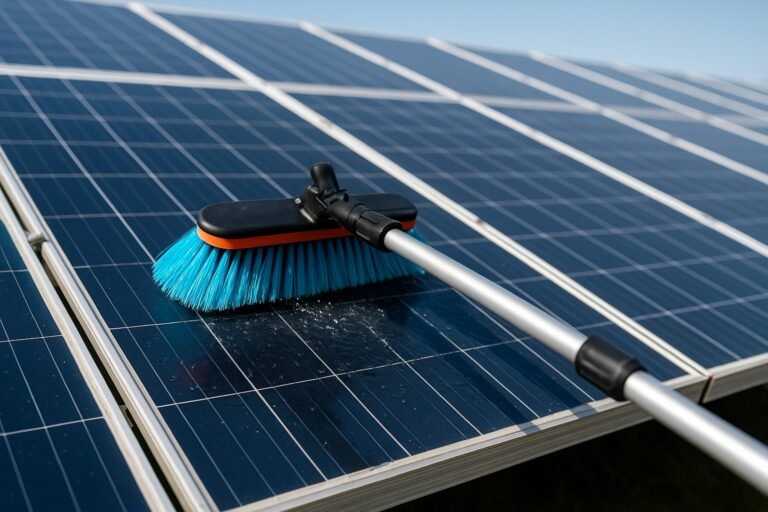
If you’ve ever noticed a thin layer of dust or a few stubborn bird droppings on your solar panels, you’ve probably wondered whether it affects their performance — and the short answer is yes, it does. Even a small amount of dirt can block sunlight and reduce your panels’ efficiency by up to 20%. Regular cleaning keeps your solar investment working at full power, but the real question is how to do it safely and effectively.
That’s where a solar panel cleaning brush comes in — a simple yet essential tool designed to remove dust and grime without scratching the delicate glass surface. Whether it’s a soft bristle brush, a telescopic brush with a pole, or a rotating motorized brush used by professionals, each type serves a purpose depending on your setup and environment.
In this guide, you’ll learn everything you need to know about choosing and using the right solar panel cleaning brush — from expert-recommended cleaning techniques to the pros and cons of DIY versus professional cleaning. We’ll cover practical tips, trusted products, and insights from solar experts to help you clean smart, stay safe, and keep your panels performing efficiently all year round.
Why Clean Solar Panels? (Context & Importance)
How Dirt And Dust Affect Solar Efficiency
Solar panels depend on direct sunlight to generate electricity. When dust, pollen, or bird droppings build up on the surface, they create a thin barrier that blocks sunlight from reaching the solar cells. Over time, this layer can reduce energy output by 5% to 30%, depending on how dirty the panels get. The effect might not be noticeable day to day, but on a yearly scale, that lost energy can add up to a significant drop in savings.
In dry or windy areas, dust from roads and nearby construction can settle quickly. If you live near the coast, salt particles can also form a hazy film that dulls the panels. Rain does help a little, but it rarely provides a full clean — especially when mud or sticky residue remains behind.
When And How Often Should You Clean Your Panels?
There’s no one-size-fits-all rule for cleaning frequency, but most experts recommend giving your panels a good wash two to four times per year. In areas with heavy dust, industrial zones, or frequent bird activity, cleaning every two months can make a visible difference in performance.
Here’s a quick guide:
- Urban areas: Clean every 4–6 months.
- Rural or dusty environments: Every 2–3 months.
- Coastal regions: Every 2 months to prevent salt buildup.
- After pollen season or storms: A light cleaning is often worthwhile.
Some homeowners also track their system output. If you notice a drop of around 20% in production, it might be time to break out your solar panel cleaning brush.
The Risks Of Neglecting Or Improperly Cleaning Solar Panels
Leaving panels dirty for too long can lead to hot spots — areas where dirt concentrates heat on the glass, potentially damaging cells underneath. Over time, this can shorten the lifespan of your panels.
Improper cleaning can also cause harm. Using hard brushes, abrasive pads, or harsh detergents may scratch the surface and void the manufacturer’s warranty. Even pressure washers can damage the seal between the glass and the frame. That’s why using the right type of solar panel cleaning brush — one that’s gentle yet effective — is essential for safe maintenance.
In short, a little regular care with the correct tools can prevent costly repairs, maintain energy efficiency, and ensure your solar panels keep performing at their best for years to come.
Types Of Brushes & Cleaning Tools (Tool Taxonomy)
When it comes to cleaning your solar panels, not all brushes are created equal. The goal is to remove dirt gently without leaving scratches or streaks behind. Below are the main types of solar panel cleaning brushes and tools you’ll find, each with its own advantages depending on where and how your panels are installed.
Soft Bristle Brush For Cleaning Solar Panels
A soft bristle brush is the most common and safest tool for manual cleaning. These brushes are designed with gentle nylon or microfiber bristles that glide smoothly over the glass surface. They loosen dust and grime without scratching or wearing down the protective coating of the panel.
Soft brushes are ideal for small home systems, ground-mounted panels, or areas where dirt is light and manageable. They don’t require electricity or complex setups — just a bucket of clean water and a bit of patience.
Pro tip: Avoid using cheap plastic bristles or anything stiff; even minor abrasions can affect long-term performance.
Water-Fed Brush / Flow-Through Brush
For homeowners who want more efficiency, a water-fed solar panel cleaning brush is a game changer. It connects to a hose or a water tank, allowing water to flow through tiny holes in the brush head while you clean. This continuous rinsing helps wash away loosened dust instantly, minimizing friction and streaks.
Many professionals prefer this setup because it’s faster and more consistent. It also reduces the need for detergents — pure water alone often does the job perfectly when combined with a quality brush.
Solar Panel Cleaning Brush And Pole (Telescopic Design)
If your panels are roof-mounted or hard to reach, a solar panel cleaning brush with pole is your best bet. These telescopic poles — made from lightweight aluminum, carbon fiber, or fiberglass — can extend up to 20 or even 30 feet.
They often feature swivel joints or goosenecks so you can adjust the brush angle, making it easier to clean at different panel inclines. This setup provides safety and convenience by reducing the need for ladders or climbing onto the roof.
Rotating Or Motorized Solar Panel Cleaning Brush
When cleaning larger arrays or heavily soiled panels, a rotating solar panel cleaning brush can make the job faster and more thorough. These brushes are powered by small electric motors or battery systems that spin the bristles automatically.
The rotating motion helps lift stubborn dirt and bird droppings more effectively than manual scrubbing. Some high-end models even combine rotation with water-fed systems for maximum cleaning efficiency.
While these are excellent for professionals or large systems, they can be costly and require careful handling to avoid overpressure or mechanical damage.
Solar Panel Cleaning Brush Kit
A cleaning kit usually includes everything you need: a soft brush, an extendable pole, a hose connection, and sometimes a squeegee for drying. These all-in-one solutions are perfect for DIY users who want convenience and compatibility in one package.
Look for kits that include adjustable water flow control, quick connectors, and replacement heads. The initial investment is often well worth it for long-term maintenance and peace of mind.
Professional Solar Panel Cleaning Equipment
For commercial installations or solar farms, professionals often use advanced cleaning systems — from dual-rotating brush machines to robotic cleaners that glide automatically across panel surfaces.
These systems can clean hundreds of panels in one session, using filtered or deionized water to avoid mineral residue. While not practical for home users, they show how cleaning technology continues to evolve for efficiency and sustainability.
Seasonal And Specialty Brushes (Snow Or Ice Cleaning)
If you live in a region that experiences snow, you can use a specialized snow brush with a foam or rubber edge to clear panels safely during winter. These brushes remove light snow without damaging the glass or frame — but remember, never use metal tools or hard scrapers on panels.
A good solar panel cleaning brush doesn’t just remove dirt; it helps protect your investment. The right tool depends on your system size, environment, and comfort level with maintenance. Whether it’s a simple soft brush or a professional rotating system, always choose equipment that keeps your panels spotless without risk of damage.
How To Choose The Right Solar Panel Cleaning Brush
Choosing the right solar panel cleaning brush isn’t just about convenience — it’s about protecting your panels while maintaining maximum efficiency. The best brush depends on your setup, environment, and how often you plan to clean. Here’s what you should consider before buying.
Match The Brush To Your Solar Setup And Environment
Start by thinking about where and how your panels are installed.
- Ground-mounted panels: A soft manual brush or short water-fed system usually works best.
- Roof-mounted panels: Go for a telescopic or extendable pole system to stay safely on the ground.
- Commercial or large setups: Consider motorized or professional-grade systems for faster coverage.
Environmental factors matter, too. In dry or dusty areas, frequent light brushing is better than occasional deep cleaning. Near the sea, look for brushes that handle salt residue and use deionized water to prevent streaks.
Bristle Material And Softness
The bristles are the heart of the brush. They must be soft enough to protect the glass but firm enough to loosen dirt. Nylon and microfiber are the most common materials, both known for their balance between flexibility and cleaning strength.
Avoid any brush that feels rough to the touch or looks stiff. A single scratch on the solar surface can cause light reflection issues or permanent damage. Many experts also recommend brushes labeled “non-abrasive” or “anti-scratch,” especially for high-efficiency panels with anti-reflective coatings.
Pole Length And Build Quality
If you need to reach high panels, the pole becomes just as important as the brush. Look for lightweight materials like carbon fiber or aluminum — strong enough for control but light enough to reduce arm fatigue.
Some poles come with adjustable locking systems and swivel heads, which allow you to reach awkward corners and clean from different angles. A good brush and pole combo will feel sturdy yet smooth when extended.
Water-Feed And Flow Features
For faster and more effective cleaning, a water-fed brush is ideal. These systems use built-in jets or holes that let water flow directly to the surface while brushing. The steady rinse helps flush out debris and prevents residue.
You can connect these brushes to a garden hose or a deionized water system. If you live in an area with hard water, use filtered water to avoid leaving mineral spots on the glass.
3Motorized Or Rotating Options
Motorized brushes are great for those who want speed and precision. These tools spin automatically, saving effort on large or heavily soiled systems. When selecting one, pay attention to:
- Battery life (if cordless)
- Rotation speed (RPMs)
- Brush width (for coverage)
However, motorized options require caution. Too much pressure or poor handling can cause scratches, so it’s best to use them only when necessary or for larger systems.
Durability, Warranty, And Support
A solar cleaning brush is a long-term tool, so durability is key. Choose products with strong joints, rust-proof materials, and replaceable parts. Good brands often offer one to three years of warranty, which shows confidence in their build quality.
If possible, buy from companies that offer spare heads or bristles. Replacing worn-out parts regularly ensures consistent cleaning and prevents accidental scratches from old or hardened fibers.
Balancing Cost And ROI
You don’t need to buy the most expensive brush on the market. Instead, focus on value for money — how long it will last and how much performance it delivers. Spending a little more on a sturdy, high-quality brush often pays off in saved energy and lower maintenance costs.
For homeowners with small solar systems, a simple soft bristle brush and pole kit works perfectly. Larger setups or businesses can benefit from professional solar panel cleaning equipment, which, though costly, offers efficiency and longevity.
In short, the right solar panel cleaning brush should make your job easier, safer, and more effective. Think of it as a long-term investment in your system’s performance and health. When in doubt, go for quality, not gimmicks — your panels will thank you with cleaner power and higher output.
Expert-Backed Methods For Safe & Effective Cleaning
Cleaning your solar panels may look simple, but technique and timing make a huge difference. Using the wrong approach can lead to scratches, streaks, or even damage to the panel seals. Below are expert-approved methods to help you clean efficiently and safely using your solar panel cleaning brush.
Prepare Properly Before You Start
Always begin by ensuring safety. Switch off your solar system from the main inverter before cleaning — this prevents electrical risk when water is used.
Check your surroundings for hazards such as loose tiles, steep slopes, or live wires. If your panels are on a roof, use a harness or safety rope, or work from an extendable pole instead of climbing up.
Choose the right time of day: early morning, late evening, or cloudy weather is ideal. Cleaning under direct sunlight causes water to evaporate quickly, leaving behind streaks or mineral spots.
Soak, Then Gently Brush
Start by rinsing the panels with clean water to soften any stuck dirt, pollen, or bird droppings. Never go in dry — pre-wetting reduces friction and prevents scratches.
Next, use your soft bristle brush to make gentle circular or sweeping motions. Let the bristles and flowing water do the work; you don’t need to apply pressure.
Experts often recommend the top-to-bottom approach — it prevents dirty water from dripping onto areas you’ve already cleaned.
Control Pressure And Angle
It’s tempting to scrub stubborn spots hard, but that can backfire. Instead, maintain light contact and a consistent rhythm. If your brush has an adjustable pole, set the angle between 30° and 45° for better surface contact.
Avoid hitting the panel edges or frames, as these areas are more delicate and can trap water.
For sticky substances like sap or bird droppings, let water soak for a few minutes before brushing again — patience is safer than force.
Rinsing And Drying Like A Pro
Once brushing is complete, rinse the panels thoroughly with filtered or deionized water. This step removes remaining dirt and prevents water spots caused by minerals in tap water.
In hot or dry climates, it’s a good idea to finish with a soft squeegee or microfiber cloth. This ensures streak-free drying and gives your panels a polished, clear finish.
Tackling Stubborn Or Special Deposits
Some stains require a little extra care:
- Bird droppings: Use warm water and let it sit for a minute before brushing.
- Tree sap or pollen film: Mix mild biodegradable soap (1–2 drops per liter of water) — avoid detergents or chemicals.
- Hard water marks: A diluted vinegar solution (1 part vinegar to 8 parts water) can dissolve calcium deposits safely.
Always test a small area first, and never use harsh chemicals, abrasive pads, or metal tools.
Maintaining Your Brush And Equipment
After cleaning, rinse your solar panel cleaning brush thoroughly to remove grit or debris from the bristles. Shake off excess water and store it in a dry, shaded place.
If your brush has water-feed channels, flush them occasionally to prevent clogging. Replace worn-out or flattened bristles to maintain soft contact with the panel surface.
A well-maintained brush ensures consistent performance and protects the panels from micro-scratches caused by trapped particles.
When To Hire Professional Cleaners
If your panels are installed on steep roofs, multi-story homes, or large commercial setups, calling professionals might be the safest and most efficient option.
Professional teams often use rotating solar panel cleaning brushes, pure water systems, and even robotic cleaners to handle big jobs quickly.
Hiring experts once or twice a year can complement your own light maintenance and ensure deep cleaning without safety risks.
Real-Life Tips, Myths & Community Wisdom
Even though solar technology feels high-tech, the cleaning part is down-to-earth. Over the years, homeowners and professionals have tested all kinds of methods — from DIY tools to robotic systems. Here are some of the most useful insights, common myths, and expert-backed answers to real-world questions about solar panel cleaning brushes and techniques.
What Is The Best Brush For Cleaning Solar Panels?
The best brush is one that’s gentle on glass but strong against dirt. Most solar experts recommend a soft bristle water-fed brush for general cleaning. It allows continuous rinsing, prevents scratches, and cuts cleaning time in half.
If your panels are high up, a solar panel cleaning brush with pole — ideally made of carbon fiber or aluminum — keeps you safe on the ground. For larger or commercial systems, rotating solar panel cleaning brushes are often preferred for their efficiency and coverage.
In short:
- Use soft bristles for safety.
- Water-fed or telescopic designs for convenience.
- Motorized options for large arrays or professional cleaning.
What Can I Use To Clean My Solar Panels If I Don’t Have A Brush?
If you don’t own a brush yet, don’t panic. You can use a soft microfiber cloth or a sponge mop with gentle water pressure. The key is to avoid anything abrasive like kitchen scrubs or rough cloths.
Some DIY users use a car-wash wand or a window-cleaning pole with a soft attachment — both work fine if handled carefully. Just remember: the goal is to loosen dirt, not polish the glass.
Still, investing in a proper solar panel cleaning brush kit is the safest long-term option — it’s designed specifically for this task and minimizes risk of damage.
What Is The “20% Rule” For Solar Panels?
The 20% rule is a common guideline used by both homeowners and solar technicians. It suggests that if your energy output drops by around 20% or more, it’s time to clean your panels.
This isn’t a strict rule, but it’s a reliable indicator. Dust, pollen, or smog can all reduce sunlight absorption gradually, so monitoring your production data is the best way to spot when cleaning is needed.
Pro tip: Check your system’s monitoring app weekly. A consistent drop without cloudy weather usually means it’s time to bring out the solar panel cleaning brush.
How Do Professional Solar Cleaners Use Brushes?
Professional cleaners use high-reach telescopic systems combined with filtered or deionized water. Their brushes often feature dual rotating heads that gently scrub while rinsing at the same time.
They also follow strict safety steps — shutting down the system, testing water purity, and avoiding cleaning during peak sun hours. On large commercial fields, robotic cleaning systems are now common. These robots move automatically across the panels using motorized brushes, ensuring even pressure and thorough coverage.
Professionals also record performance improvements after cleaning to show clients how output rises once dirt is removed — typically between 10% and 25% gain in real-world conditions.
Common Myths And Mistakes About Cleaning Solar Panels
Myth 1: Rain is enough to clean solar panels.
Rain helps rinse off loose dust, but it rarely removes sticky residue or bird droppings. Think of it like your car windshield — it looks better after rain but not spotless.
Myth 2: Any household cleaner will work.
Never use window cleaners, bleach, or detergent. These can leave streaks or damage coatings. Always use clean water and a soft brush.
Myth 3: The harder you scrub, the cleaner it gets.
Scrubbing too hard can scratch the glass or loosen panel seals. Let your brush’s bristles and water do the job gently.
Myth 4: Cleaning panels yourself voids the warranty.
Most warranties allow cleaning as long as you use approved tools and safe methods. However, always check your manufacturer’s care guidelines to be sure.
Community Insights And Real Experiences
Online solar communities have tested nearly every method possible — and their feedback can save you time and frustration.
- One DIY user shared on a Reddit solar forum that a boat brush with soft bristles worked perfectly for his ground array — sturdy but gentle.
- Another noted that using an extendable pole with a swivel head reduced wrist strain and improved reach.
- Several users agreed that early morning cleaning gives the best results because panels stay cool and water doesn’t evaporate too fast.
In general, the community’s advice aligns with expert recommendations: use soft brushes, avoid chemicals, and clean consistently rather than waiting until panels look visibly dirty.
Comparative Table — Best Brush Types & Use Cases
To make your decision easier, here’s a detailed comparison of the most common solar panel cleaning brushes available in 2025. Each option has its strengths, depending on your system size, budget, and cleaning frequency.
| Brush Type | Best For | Main Features | Pros | Cons | Typical Cost (USD) |
| Soft Bristle Brush | Small home systems, light dirt | Non-abrasive nylon or microfiber bristles | Gentle, affordable, simple to use | Requires manual scrubbing, slower for big systems | $20 – $40 |
| Water-Fed Brush | Moderate dirt, eco-friendly cleaning | Hose connection, continuous water flow | Faster cleaning, less friction, streak-free | Needs hose or water source nearby | $50 – $100 |
| Telescopic Brush & Pole | Roof-mounted panels | Extendable poles (aluminum or carbon fiber), adjustable heads | Safe ground cleaning, reach up to 30 ft | Slight learning curve for balance | $70 – $150 |
| Rotating / Motorized Brush | Large or heavily soiled arrays | Battery-powered or electric spinning head | Efficient, less effort, deep cleaning | Expensive, requires power source | $150 – $400 |
| Solar Panel Cleaning Brush Kit | Homeowners who want all-in-one solutions | Brush, pole, hose adapter, squeegee | Complete setup, versatile | May include low-quality accessories in cheap kits | $80 – $180 |
| Professional / Robotic Cleaner | Solar farms, commercial systems | Automated or dual-brush systems, deionized water | Covers large areas quickly, consistent results | High cost, not for home use | $1,000+ |
Key Takeaways From The Comparison
- If you own a small residential system, start with a soft bristle brush or water-fed model — they’re budget-friendly and gentle.
- For roof installations, an extendable pole system gives you safe reach without climbing.
- When managing larger arrays or heavy soiling, a rotating solar panel cleaning brush saves time and improves efficiency.
- Professionals or commercial users should invest in robotic systems or dual-head motorized equipment for long-term ROI.
Ultimately, the “best” solar panel cleaning brush isn’t the most expensive one — it’s the one that fits your system, your comfort level, and your safety.
Conclusion
Keeping your solar panels clean isn’t just about appearance — it’s about performance, protection, and long-term efficiency. A good solar panel cleaning brush helps remove dust, pollen, and other debris safely, preventing power loss and avoiding costly damage. Whether you prefer a soft manual brush, a water-fed system, or a rotating motorized model, the right tool makes the job easier and safer. Regular cleaning with the proper brush ensures that every ray of sunlight counts, maximizing your system’s output throughout the year.
When caring for solar panels, consistency is key. Gentle, routine maintenance with quality tools will always outperform aggressive or irregular cleaning. Choose brushes designed specifically for solar use, follow safe cleaning practices, and respect your panel manufacturer’s recommendations. With the right balance of care, patience, and equipment, your panels will keep delivering clean energy efficiently — and your solar investment will stay bright for years to come.
Disclaimer:
The information in this article is for general educational purposes only. Always follow your solar panel manufacturer’s cleaning and safety instructions. Use proper equipment and seek professional help if your panels are difficult or unsafe to access.
