
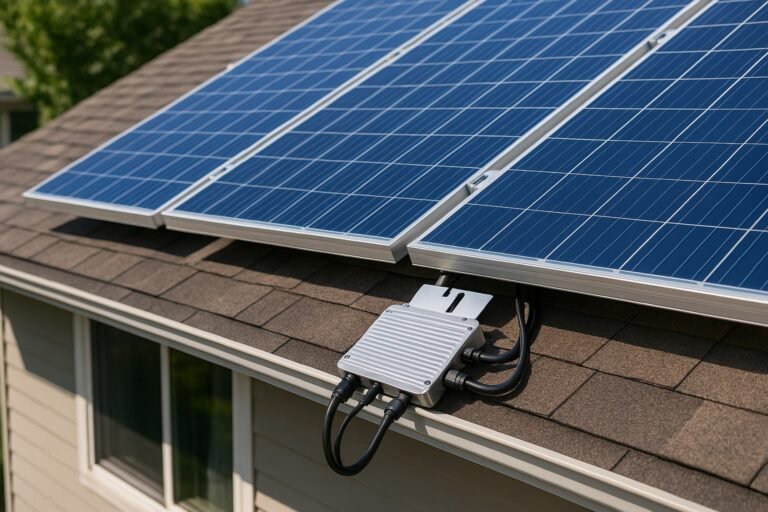
Solar energy is changing the way people power their homes, and one small but powerful device is making that change even more efficient — the solar micro inverter. Instead of relying on a single central inverter to convert energy for an entire system, micro inverters work on each solar panel individually, improving overall performance and safety. They’ve become especially popular for homeowners and small businesses that want smarter energy control, better reliability, and easier system monitoring. In this article, you’ll learn what solar micro inverters are, how they work, how they differ from traditional systems, and whether they’re the right choice for your solar setup. With insights from solar engineers, installers, and real-world examples, this guide aims to help you make an informed decision that fits both your energy goals and your budget.
What Are Solar Micro Inverters?
A solar micro inverter is a small device attached directly to each solar panel. Its job is simple but essential — it converts the direct current (DC) electricity produced by that single panel into alternating current (AC), which can be used by your home or sent to the grid. Unlike traditional systems where one large inverter manages the output of all panels together, micro inverters give each panel its own “brain,” letting it operate independently for maximum efficiency.
When compared to string inverters, which handle power from a group of panels wired in series, micro inverters eliminate the “weakest link” problem — if one panel underperforms due to shade or dirt, the others keep running at full strength. They also differ from hybrid inverters, which combine solar and battery management in one unit; micro inverters are focused purely on panel-level conversion and optimization.
Their biggest advantages include panel-level performance tracking, improved safety (since high-voltage DC isn’t running across the roof), and better energy yield in systems exposed to shading or multiple roof directions. The main trade-off is a slightly higher initial cost, but many experts find that the improved efficiency and longer lifespan often balance out the expense over time.
How They Work: Technical Basics
A solar micro inverter works by managing the power conversion for each individual panel, allowing the system to produce more stable and efficient energy. Each micro inverter is equipped with its own MPPT (Maximum Power Point Tracking) technology, which ensures every panel operates at its highest possible efficiency regardless of differences in sunlight or shading. This means if one panel is partially shaded or slightly dirty, it won’t drag down the performance of the others — a common issue with traditional string inverter systems.
In a typical micro inverter solar system wiring setup, every solar panel has its own micro inverter mounted underneath. These inverters then send AC power directly to a junction box or AC combiner, which merges the outputs into a single line that connects to the main service panel and, eventually, the electrical grid. Since the conversion from DC to AC happens at the panel level, there’s no need for long high-voltage DC cables, which improves safety and reduces power loss.
When professional installers design such systems, they pay close attention to the voltage and current ratings, ensuring the micro inverters are compatible with the chosen solar panels. They also evaluate rooftop conditions such as temperature exposure, airflow, and tilt angles, as these factors can affect the performance and lifespan of the inverters.
One of the subtle but valuable benefits of micro inverters is that they often start producing power earlier in the morning and continue later in the evening. This is because they have a lower startup voltage, allowing panels to begin generating electricity even under weak sunlight. Over time, these extra hours of production can contribute to higher overall energy yield and better system efficiency.
Micro Inverter Vs String Inverter – Which One Should You Choose?
Choosing between a micro inverter and a string inverter depends on your roof type, budget, and energy goals. Both perform the same core function — converting DC electricity from solar panels into AC power — but they differ in how they handle performance, shading, cost, and monitoring.
In a head-to-head comparison, micro inverters tend to cost more upfront because each solar panel requires its own inverter. However, this setup pays off through higher efficiency and easier maintenance. In a string inverter system, all panels are wired in series and connected to a single central inverter. If one panel is shaded, dirty, or malfunctioning, the entire string’s output can drop. In contrast, with micro inverters, every panel operates independently, so one underperforming module doesn’t affect the others.
Micro inverters shine in situations where roofs have multiple angles or partial shading, such as homes with trees nearby or panels facing different directions. They’re also great for people who may want to expand their system later, since adding new panels with micro inverters doesn’t disrupt the existing setup.
That said, string inverters still make sense for simple, wide-open rooftops with consistent sunlight and no shading issues. They’re usually more affordable and easier to replace if something goes wrong, making them ideal for budget-conscious homeowners.
Expert tip: If even a single panel on your roof is poorly oriented or shaded, micro inverters will isolate that loss to just that one panel, ensuring the rest of your system keeps performing at full capacity.
Key Benefits Of Solar Micro Inverters
Solar micro inverters come with several benefits that make them a smart choice for both residential and commercial solar systems. The biggest advantage lies in panel-level optimization. Since each inverter works independently, every solar panel can perform at its best regardless of differences in sunlight or shading. This setup helps increase total energy yield, especially on rooftops with multiple orientations or partial obstructions like chimneys or nearby trees.
Another major advantage is enhanced safety. Traditional systems send high-voltage DC power across the roof before converting it to AC at a central inverter. With micro inverters, that conversion happens right at the panel, meaning far less high-voltage DC runs through the system. This design significantly reduces the risk of electrical faults and makes the overall setup safer for installers and homeowners alike.
Micro inverters also excel in monitoring and diagnostics. Most systems come with user-friendly apps or web portals that let you see how each panel is performing in real time. If a panel or inverter ever has an issue, it can be detected instantly, helping you or your installer fix the problem quickly without affecting the rest of the system.
They also provide scalability and future-proofing. If you ever decide to expand your solar system — for instance, after buying an electric vehicle or increasing household usage — it’s easy to add more panels without changing the existing setup. Each new panel simply gets its own micro inverter and connects to the same AC line.
Lastly, longevity and reliability are key strengths. Because micro inverters isolate performance issues and prevent a single fault from bringing down the entire system, they tend to have a longer operational life. Many manufacturers offer warranties of 20 to 25 years, showing confidence in the durability and consistent performance of this technology.
Potential Drawbacks And What To Watch For
While solar micro inverters offer impressive performance and flexibility, there are a few considerations to keep in mind before installation. The most noticeable downside is the higher upfront cost. Because each panel needs its own inverter, the total cost per watt is usually higher than that of a basic string inverter system. However, many homeowners find that the increased energy yield and lower long-term maintenance often balance this expense over time.
Another factor is that there are more points of failure in a micro inverter system. With one inverter per panel, you’re managing multiple electronic devices rather than a single central one. Although each unit is designed for durability, this means more components to monitor and maintain throughout the system’s lifespan.
Compatibility can also be an issue if panel and inverter specifications don’t align. Some micro inverters are optimized for specific panel voltages or brands, and mismatching them can affect performance or void warranties. Always confirm manufacturer recommendations before finalizing equipment.
Lastly, roof-top conditions can influence long-term reliability. Micro inverters are mounted directly under panels, exposing them to heat, moisture, and dust. Proper installation, including secure mounting, ventilation, and weatherproofing, is essential to prevent premature wear and ensure consistent operation over the years.
Market Highlights: Top Brands & Price Overview
The solar micro inverter market has grown rapidly, with several key brands leading the way in innovation, reliability, and performance. Enphase Energy remains the most recognized name, often credited as the pioneer of micro inverter technology. Their products are known for exceptional efficiency, strong warranties, and advanced monitoring platforms. Other reputable manufacturers include APsystems, Hoymiles, Darfon, and TSUN, each offering models tailored for different installation sizes and budgets.
When considering the Enphase micro inverter price, costs typically range from $120 to $180 per unit, depending on the model and wattage rating. This translates to about $0.30 to $0.45 per watt when calculated across a full system. Although these prices are higher than string inverter options, they come with advantages such as longer warranties (often 20–25 years) and superior panel-level control.
For those comparing models, the best solar micro inverters generally share a few key traits:
- High conversion efficiency (typically 96–98%)
- Strong warranty coverage
- Integrated module-level monitoring platforms
- Wide compatibility with different panel types and power ratings
As of 2025, the solar micro inverters for sale market shows a broad range of pricing. Budget-friendly models can start around $90 per unit, while advanced versions with higher power output or smart monitoring systems can reach up to $200 or more. Prices also vary based on installation scale, labor costs, and the region’s energy regulations.
Overall, while micro inverters are an investment, their performance reliability, scalability, and longevity make them one of the most future-ready choices for solar power systems today.
Installation Guide For Solar Micro Inverters
Installing a solar micro inverter system requires careful planning and attention to detail to ensure maximum safety, efficiency, and compliance with local grid standards. The process begins with a site assessment, where installers evaluate roof direction, shading patterns, and available space. Once the layout is planned, they mark the panel arrangement and plan the electrical routing.
The next step involves mounting the micro inverters directly beneath each solar panel. Installers secure them to the racking system using appropriate hardware, ensuring good airflow for heat dissipation. Each inverter is then connected to the panel’s DC output and linked in an AC trunk cable that runs across the array. This setup forms the foundation of what’s known as the “micro inverter solar system wiring diagram”, where individual AC outputs combine into a single junction box or combiner, leading to the home’s main service panel and grid connection.
Some systems come with “solar panels with micro inverters built-in”, also known as AC modules. These are panels that already have a factory-integrated micro inverter, simplifying installation and reducing wiring complexity. They’re especially popular for residential rooftops because they save time and lower the risk of connection errors.
Safety considerations are crucial. Installers must follow rapid shutdown requirements, grid code compliance, and manufacturer installation guidelines. All electrical work should be performed by licensed professionals to ensure the system meets local and national safety standards.
From an expert installer’s perspective, success comes down to precision and planning. It’s important to maintain proper ventilation for each inverter, avoid overtightening mounts that can damage components, and plan for future expansion so that new panels can be added easily later.
Performance, Efficiency & Monitoring
One of the reasons homeowners and solar professionals prefer micro inverters is their impressive efficiency. When reviewing specifications, key metrics include peak efficiency (the highest achievable conversion rate) and European efficiency, which measures average performance across varying sunlight levels. High-quality micro inverters often reach efficiencies of 96% to 98%, ensuring that very little energy is lost during conversion.
Micro inverters also excel in real-world conditions, where roofs may experience shading or have panels facing different directions. Because each inverter tracks its own panel’s maximum power point (MPPT), it optimizes performance under partial shading or uneven light exposure. This panel-level control eliminates energy losses caused by weaker panels, something that traditional string inverters struggle with.
Most modern systems come equipped with advanced monitoring features. Through mobile apps or web dashboards, users can view real-time data for each panel, track historical performance, and receive alerts for any issues. This makes it easy to identify faults quickly and maintain the system efficiently over time.
In terms of long-term reliability, micro inverters are built to last. Many models come with 20–25-year warranties, matching or even exceeding the lifespan of solar panels themselves. Their ability to isolate problems at the panel level also means less stress on the overall system, leading to stable energy output and minimal downtime throughout the years.
Battery Integration & Future-Ready Systems
As solar systems become more advanced, many homeowners are adding battery storage to capture and use excess solar energy. Micro inverters are well-suited for this evolution, especially in AC-coupled systems. In an AC-coupled setup, each micro inverter converts the solar panel’s DC power into AC before it reaches the battery. The battery then uses a separate inverter to charge and discharge energy. This approach offers flexibility — you can add storage at any time without changing your solar inverter setup.
In contrast, DC-coupled systems send unconverted DC power directly to a hybrid inverter that manages both solar and battery operations. While DC-coupled systems can be slightly more efficient in transferring energy, they are less flexible and often require upfront planning and compatible equipment.
When comparing a micro inverter vs hybrid inverter, the main consideration is timing. If you plan to add a battery later, a micro inverter system provides easier integration because it doesn’t depend on a single central inverter. Hybrid inverters, on the other hand, are more convenient for immediate solar-plus-storage setups but can complicate future upgrades.
To keep your solar array future-ready, ensure your wiring layout and panel configuration allow room for expansion. This includes leaving capacity for additional circuits or choosing monitoring systems that support future components like batteries or EV chargers.
Expert insight: Even if you’re not ready to install a battery today, it’s wise to choose a system that won’t limit you later. A well-designed micro inverter setup keeps your options open for future technologies, making your investment adaptable and long-lasting.
Common Mistakes And How To Avoid Them
Even though solar micro inverters are user-friendly and highly efficient, a few common mistakes during installation or maintenance can affect system performance. One frequent error is oversizing the number of panels per inverter beyond the manufacturer’s recommendations. Every micro inverter is designed for a specific power range, and exceeding that limit can reduce efficiency or shorten its lifespan.
Another mistake is ignoring roof shading or panel cleanliness. While micro inverters reduce the negative effects of shading, they can’t eliminate them completely. Regular cleaning and periodic shading assessments help maintain consistent energy production.
Some users overlook system monitoring setup or warranty registration after installation. Most micro inverter systems offer detailed monitoring platforms, but these must be properly activated to provide real-time data and alerts. Registering your equipment also ensures warranty protection, which is essential given the long operational life of these devices.
Lastly, it’s important not to ignore maintenance and airflow planning. Micro inverters are mounted under solar panels, where heat can accumulate. Without proper ventilation, high temperatures can affect performance. Installers should always ensure good airflow and avoid blocking the inverters with insulation or roofing materials.
Cost Vs Savings: Is It Worth It?
When evaluating solar micro inverters, cost is often the first consideration — but understanding the comp10. Common Mistakes And How To Avoid Themlete picture helps determine true value. The overall price of a system includes several cost components: solar panels, micro inverters, racking, wiring, labor, and monitoring setup. Micro inverters usually cost more than a single string inverter system, with the extra expense coming from having one inverter per panel.
However, the savings potential can be significant. Because micro inverters optimize each panel’s output, they deliver higher energy yields on shaded or complex roofs. This increased production can improve your return on investment over time, especially in areas where sunlight conditions vary throughout the day.
In many real-world installations, pay-back periods for micro inverter systems average between 5 to 8 years, depending on location, utility rates, and available incentives. While string inverters may have a lower upfront cost, micro inverters often outperform them in lifetime energy generation, reducing maintenance costs and downtime.
Expert tip: If your roof is perfectly angled, receives full sunlight all day, and has no shading issues, a string inverter can be a cost-effective solution. But if your roof has multiple sections, partial shading, or future expansion plans, micro inverters typically pay off in the long run through better performance, reliability, and scalability.
Future Trends & Innovations In Micro Inverters
The solar industry continues to evolve rapidly, and micro inverters are at the center of this transformation. One of the most promising developments is the rise of module-level power electronics (MLPE). These technologies enhance energy capture and system intelligence by allowing each panel to operate independently with precise MPPT (Maximum Power Point Tracking) algorithms. Newer models are also becoming more efficient, with conversion rates edging closer to 99%, meaning almost no power loss during energy conversion.
Another exciting trend is the integration of micro inverters with smart home and grid services. Future systems are expected to communicate directly with home energy management devices, electric vehicle chargers, and even utility smart grids. This will allow homeowners to automate energy usage, prioritize storage, or sell excess power back to the grid when rates are high.
From a market perspective, the global demand for micro inverters is growing steadily. Manufacturers such as Enphase, APsystems, Hoymiles, and Darfon are investing heavily in research and innovation to make these systems more affordable and intelligent. This growth reflects a larger shift toward modular, scalable, and efficient solar solutions that align with the global transition to clean energy.
Looking ahead, there are several key innovations to watch. Manufacturers are working on extended warranties of up to 30 years, smarter software for real-time diagnostics, and hybrid micro inverters that integrate energy storage directly into the device. These advances will make installations easier and reduce the number of components needed in a solar system.
Expert view: Within the next five years, we can expect micro inverters to become deeply integrated with battery storage and smart grid technologies, forming the foundation for fully autonomous energy systems that balance generation, consumption, and storage seamlessly.
Conclusion
Solar micro inverters have reshaped the way modern solar systems operate by giving every panel its own level of control and optimization. They offer clear benefits like increased safety, higher energy yield, and advanced monitoring that lets homeowners track performance in real time. For properties with partial shading, complex roofs, or plans for future expansion, micro inverters stand out as a forward-thinking investment that brings both efficiency and flexibility. Their long warranties and reliability make them an appealing choice for those seeking a system that will perform consistently for decades.
However, it’s equally important to consider your home’s layout and budget before deciding. For rooftops with uniform sunlight and simple design, a string inverter can still deliver strong performance at a lower cost. The smartest approach is to match the technology with your site conditions and long-term energy goals. With the expert insights, cost comparisons, and technical guidance discussed in this article, you now have the knowledge to make an informed decision about whether solar micro inverters are the right fit for your solar journey.
FAQ’s:
What Size Micro Inverter Do I Need?
The size of your micro inverter depends on the wattage of your solar panels. Ideally, choose a micro inverter with a rated output equal to or slightly higher than your panel’s maximum DC power. For example, a 400-watt solar panel usually pairs well with a micro inverter rated between 400 and 450 watts. Oversizing the inverter slightly helps accommodate occasional power surges under bright sunlight.
Can I Mix Panel Brands With Micro Inverters?
Yes, you can mix different solar panel brands with micro inverters, but it’s important to make sure that each inverter is compatible with the electrical characteristics of the panel it’s connected to. Always check voltage and current limits listed by the inverter manufacturer before installation. Using mismatched equipment can reduce efficiency or void warranties.
How Long Does A Micro Inverter Last?
Micro inverters are built for durability and typically last 20 to 25 years, matching the lifespan of most solar panels. They’re sealed against dust and moisture and tested to withstand high rooftop temperatures. Regular cleaning and visual inspections can further extend their life expectancy.
How Much Does A Micro Inverter System Cost Compared To A String Inverter?
A complete solar system using micro inverters generally costs 10% to 20% more upfront than one using a string inverter. However, this difference often balances out through higher energy production, lower maintenance, and longer warranties. For example, while a string inverter may need replacement after 10 years, micro inverters often last twice as long.
Is Maintenance Different For Micro Inverters?
Maintenance is minimal with micro inverters. Because they operate independently, you can quickly identify and fix issues through the system’s panel-level monitoring software. Unlike string inverters, which can cause system-wide downtime during repairs, micro inverters isolate faults to individual panels, allowing the rest of your system to keep producing power.
Can I Add A Battery Later To A Micro Inverter System?
Absolutely. Most micro inverter systems are AC-coupled, which makes them ideal for adding batteries later. You can integrate an AC battery like the Enphase IQ Battery or a similar storage system without changing your existing inverter setup. This flexibility makes micro inverters one of the best choices for homeowners planning to expand into energy storage in the future.
Disclaimer
The information in this article is for educational purposes only and should not be taken as professional installation or financial advice. Always consult a certified solar expert or licensed installer before purchasing or setting up any solar equipment.
