
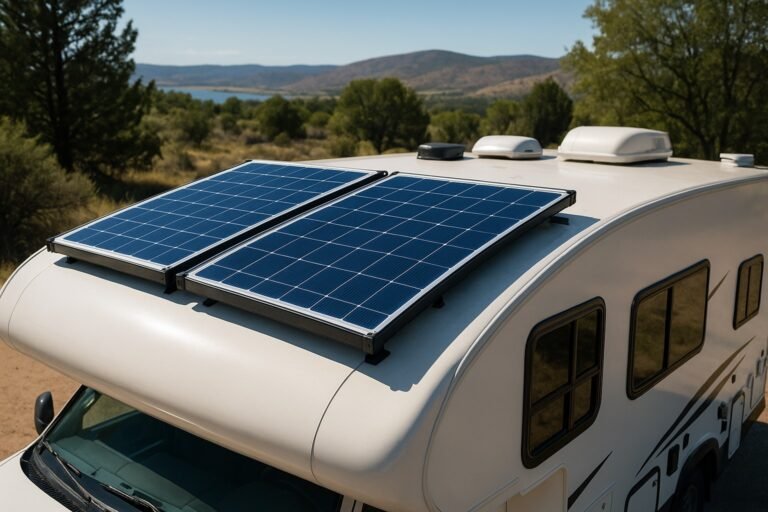
If you’ve noticed more RVs on the road these days, you’re not imagining it. The RV lifestyle has exploded, with more people choosing weekend road trips, long-distance adventures, and even full-time travel. And as RVers spend more time exploring nature, many are looking for cleaner, quieter, and more reliable ways to power their everyday essentials. That’s exactly where RV solar panels come in. They give you the freedom to camp off-grid without worrying about plugging into shore power or running a noisy generator all day. You save fuel, your batteries stay healthier, and your trips feel more peaceful and eco-friendly. For modern travelers who want convenience and independence, adding solar panels to an RV has quickly become one of the smartest upgrades you can make.
What Is An Rv Solar Panel System? A Complete Beginner-Friendly Breakdown
An RV solar panel system is simply a way to capture sunlight and turn it into usable electricity for your RV. Instead of relying heavily on shore power or running a generator all day, solar gives you a cleaner and quieter way to keep your lights, fridge, fans, water pump, and devices running. Even if you’re new to solar, the process is easier than it looks once you understand how each part works together.
Understanding How RV Solar Power Works
The basic process is simple:
sunlight → solar panel → charge controller → battery → inverter → appliances
Here’s what happens step-by-step:
Photons from the sun hit your solar panels.
- This creates direct current (DC) electricity instantly.
The charge controller regulates that power.
- It protects your batteries from overcharging and improves charging efficiency.
Your battery bank stores the energy.
- This gives you steady power even when the sun isn’t shining.
The inverter converts DC to AC.
- Most RV appliances like microwaves, TVs, and outlets use AC power.
Your RV appliances run smoothly.
- Lights, fans, laptops, fridges, and other essentials stay powered using clean solar energy.
Once everything is connected properly, the entire system works automatically without constant monitoring.
Key Components In A Complete Rv Solar System With Batteries
A reliable RV solar setup includes a few core components, each doing a specific job:
RV Solar Panels
- These capture sunlight and generate DC power. Monocrystalline panels are the most efficient for RVs because roof space is limited.
Charge Controller (PWM vs MPPT)
- A PWM controller is cheaper but less efficient.
An MPPT controller delivers more power, especially during cloudy conditions, making it the better choice for most RV owners.
Lithium or AGM Battery Bank
- Lithium (LiFePO4) batteries are lighter, charge faster, and last longer.
AGM batteries work well for smaller budgets but store less usable energy.
Inverter (Pure Sine Wave)
- This converts DC battery power into AC electricity. Pure sine wave inverters protect sensitive electronics and help appliances run smoother.
Wiring, Fuses, and Breakers
- These provide safe connections between all parts of the system and prevent overloads.
Roof Mounts and Portable Mounts
- Roof mounts are great for full-time setups.
Portable suitcase-style panels are perfect if you want flexibility and shade parking.
How RV Solar Differs From Home Solar
RV solar isn’t just a smaller version of home solar — it’s designed for mobility and changing environments.
- Portability: RV systems must handle vibration, movement, and travel.
- Lower Voltage: RV solar setups operate at lower power levels compared to residential systems.
- Limited Roof Space: With vents, AC units, and antennas, placing panels efficiently takes planning.
- Shading Challenges: Trees, power poles, and roof accessories can affect panel performance more than they would on a house.
- Curved Roofs: Many RV roofs aren’t flat, making flexible or portable panels more practical.
- Mobility: Because you’re constantly moving, sunlight exposure varies day to day.
These differences mean RV solar must be efficient, durable, and optimized for real-world travel conditions.
Types Of Rv Solar Panels: Choosing The Best Setup For Your Travel Style
Every RVer has a different routine, budget, and power need. That’s why choosing the right type of RV solar panel matters. Some panels are perfect for small campers, others are made for full-time boondocking. Below is a clear, friendly breakdown so you can pick a setup that fits your travel lifestyle perfectly.
Monocrystalline Solar Panels for RVs
Monocrystalline panels are the top choice for most RV owners because they offer the highest efficiency. This means they produce more power in less space — a huge advantage when your RV roof already has vents, fans, and antennas. They perform better in low light, handle heat well, and last for years with minimal maintenance. If you rely on things like a 12V fridge, Starlink, or laptops, monocrystalline panels give you dependable power without needing a huge array.
Polycrystalline Panels
Polycrystalline panels are cheaper upfront but slightly less efficient than monocrystalline panels. For weekend campers or RVers who only need to charge a phone, run lights, or power small electronics, these panels get the job done without stretching the budget. They may require a bit more roof space to match the output of monocrystalline models, but they’re a solid value for casual or seasonal RV travelers.
Flexible Solar Panels For RV Roofs
Flexible solar panels are thin, lightweight, and easy to install, especially on curved or uneven RV roofs. They can be glued down instead of drilled, which makes them appealing if you want a simple, low-profile option. They’re ideal for travelers who want quick installation and reduced wind resistance. However, they’re not as durable as rigid panels, and their lifespan is usually shorter, so they’re best for light to moderate solar needs.
Portable Solar Suitcases
Portable suitcase-style solar panels are one of the easiest ways to start using solar power in an RV. You simply unfold them, point them at the sun, and plug them into a charge controller or battery. They’re perfect if you often park in the shade, because you can place the panels in direct sunlight while keeping your RV cool. Many beginners love these setups because they require no roof drilling and offer excellent flexibility during travel.
400-Watt RV Solar Panels
A 400-watt RV solar panel setup is becoming one of the most popular choices among full-time RVers. It delivers enough power for essentials like lighting, fans, water pumps, device charging, and even small appliances. Because the panels are compact and efficient, they offer a strong balance between power and space. If you want a dependable system without covering your entire roof, 400W is a practical mid-range solution.
Pros & Cons Comparison Table
| Panel Type | Efficiency | Cost | Lifespan | Best For | Installation Difficulty |
| Monocrystalline | High | Medium–High | Long | Full-time RVers, limited roof space | Moderate |
| Polycrystalline | Medium | Low–Medium | Long | Budget users, weekend campers | Moderate |
| Flexible Panels | Medium–Low | Medium | Short–Medium | Curved roofs, lightweight setups | Easy |
| Portable Suitcases | High | Medium | Long | Beginners, shaded camping | Very Easy |
| 400W Rigid Panels | High | Medium–High | Long | Off-grid travel, regular use | Moderate–Hard |
This table gives a clear snapshot so you can decide which setup matches your RV, your power needs, and your camping style.
How Many Solar Watts Does Your Rv Need? Easy Expert Formula
One of the most common questions RV owners ask is: “How many solar panels do I actually need?”
The good news is that you don’t need complicated math. You just need a simple power audit and a general idea of your travel habits. Once you understand your daily usage, choosing the right RV solar setup becomes surprisingly easy.
Quick Power Audit For RV Owners
Start by listing the appliances you use each day and how long they run.
Here are the most common items RVers rely on:
- 12V fridge
- LED lights
- Roof vent fans
- Water pump
- Laptops and phones
- Wi-Fi or Starlink system
- TV
- Coffee maker or small appliances
- CPAP machine (if needed)
- Electric blanket (cold season)
Think about your typical day. Are you working on the road? Do you watch TV every evening? Do you need 24/7 refrigeration? These answers help narrow down the right wattage.
Daily Energy Consumption Chart
Here’s a simple example of how much common RV appliances use in watt-hours (Wh) per day:
| Appliance | Watts | Hours/Day | Daily Wh Used |
| 12V Fridge | 40W | 24h (cycles) | ~480 Wh |
| LED Lights | 20W | 4h | 80 Wh |
| Roof Vent Fan | 35W | 5h | 175 Wh |
| Phone Charging | 10W | 2h | 20 Wh |
| Laptop | 60W | 4h | 240 Wh |
| Wi-Fi/Starlink | 50–100W | 6–24h | 300–1800 Wh |
| TV | 70W | 2h | 140 Wh |
| Water Pump | 60W | 0.5h | 30 Wh |
| CPAP Machine | 40–80W | 8h | 320–640 Wh |
Typical RV use ranges between 800Wh to 2500Wh per day, depending on lifestyle.
This directly affects how many solar watts you need.
Recommended System Sizes
Based on real-world RV solar installs and average usage patterns, here are reliable guidelines:
400W RV Solar Panels
Perfect if you only camp a few days at a time and don’t need heavy electronics.
Supports:
- LED lights
- Fans
- Phones
- Small devices
- 12V fridge (mild climate)
This is great for casual travelers who want steady power without worrying about hookups.
600W To 800W (Full-Timers Using Laptop + Fridge)
A popular sweet spot for digital nomads and full-time RVers.
Supports:
- 12V fridge
- Multiple devices
- Laptop work
- Wi-Fi router
- Fans
- TV (limited)
This size offers comfort without covering your entire roof.
1000-Watt Solar Panel Kit for RV (Heavy-Duty + Starlink + CPAP)
Best for RVers who rely on consistent, higher power needs.
Supports:
- Laptop + Starlink system
- CPAP machine
- Large fridge
- Entertainment systems
- Small appliances like a blender or coffee maker
If you boondock often and work on the road, 1000W is a reliable choice.
1200W+ Systems (Off-Grid Boondocking Families)
Ideal for families or long-term remote camping.
Supports:
- Multiple laptops
- Entertainment devices
- 12V fridge + freezer
- Starlink
- Electric blankets
- Longer appliance run times
This size gives you real off-grid independence with fewer limitations.
With these recommendations, you can match your lifestyle to the right RV solar wattage and build a system that keeps your travels comfortable and stress-free.
Best RV Solar Panel Kit Options
With so many kits available today, choosing the right RV solar setup can feel overwhelming. To make it easier, here’s a breakdown of the top-performing options based on expert experience, real-world installs, and feedback from RV travelers who rely on solar every day.
Best RV Solar Panel Kit With Battery And Inverter
All-in-one kits are great for beginners because they include everything you need: solar panels, a charge controller, a lithium battery, and a pure sine wave inverter. They save time, reduce compatibility issues, and simplify installation.
Why RVers love these kits:
- Plug-and-play setup
- Pre-matched components
- Reliable lithium batteries
- Ideal for full-time or long-term travel
These systems are also popular among digital nomads because they deliver consistent power for laptops, routers, Starlink, and small appliances.
Best Portable RV Solar Panel Kit Amazon
Portable solar kits on Amazon remain a favorite because they are easy to use, require no drilling, and offer great efficiency for the price. Most come with built-in charge controllers and folding designs.
What users like most:
- Lightweight and compact
- Quick setup
- Adjustable angle for better sunlight
- Works well for shaded campsites
They’re perfect for travelers who don’t want to modify their RV roof or who camp in places where roof-mounted panels might struggle.
Best Complete RV Solar System With Batteries
Full-time RVers need steady, predictable power for work, cooking, refrigeration, and connectivity. A complete solar system with lithium batteries and a pure sine inverter gives you a true off-grid experience.
Benefits for full-timers:
- High-capacity lithium batteries
- Long lifespan (8–12 years)
- Pure sine wave inverters protect sensitive electronics
- Thoughtfully matched panels, controllers, and wiring
This setup is ideal for people who boondock, work online, or travel for months without hookups.
Best Budget-Friendly RV Solar Panels Kit For Newcomers
You don’t need to spend thousands to start using solar power. There are many beginner kits under a manageable price range that still deliver reliable performance.
These kits are great for:
- Weekend campers
- Seasonal RV owners
- People who only need lights, fans, and basic charging
- Small travel trailers or camper vans
They provide a simple and affordable way to test solar without a full commitment.
Best High-End Lithium Solar Kits
If you want premium performance, high-end lithium solar kits are the top choice. Brands like Renogy, Battle Born Batteries, and EcoFlow dominate this category due to their efficiency, durability, and advanced technology.
Why experts recommend these:
- Lithium iron phosphate (LiFePO4) batteries
- Fast charging and deep discharge capability
- Exceptional cycle life
- High-efficiency MPPT charge controllers
- Excellent customer support
These kits are perfect for heavy power users or families who rely on multiple appliances daily.
RV Solar Panel Installation Guide: Step-By-Step For Beginners
Installing RV solar panels may sound intimidating, but once you understand the steps, it becomes a manageable DIY project. Below is a clear, beginner-friendly guide that follows safe, practical installation methods used by real technicians.
Roof Mount Vs Portable Setup — Which One Is Right For You?
Roof-Mounted Panels:
- Best for full-time RVers
- Charge automatically while you drive
- Great long-term solution
- Always exposed to sunlight
- Requires drilling and wiring
Portable Panels:
- No drilling required
- Can be moved to follow the sun
- Ideal for shaded campsites
- Perfect for beginners
- Requires manual setup each time
Your decision depends on your lifestyle. Full-timers benefit from a permanent roof system, while casual travelers may prefer portable kits.
Tools And Materials You’ll Need
Before starting, gather these essentials:
- Solar panels
- Charge controller (preferably MPPT)
- MC4 connectors and wiring
- Roof mounts or portable stands
- Dicor lap sealant (for waterproofing)
- Battery bank (Lithium or AGM)
- Pure sine wave inverter
- Fuses and breakers
- Basic tools (drill, screwdrivers, crimpers, tape measure)
Having everything ready makes the installation smoother and safer.
Step-By-Step Installation
Here’s the entire installation broken down into simple steps:
Mounting the Panels
- Choose a clear roof area away from AC units, vents, and shadows.
- Install mounting brackets securely.
- Apply sealant around every screw to prevent leaks.
- Place the panels and tighten all hardware.
Running the Wiring
- Route the solar cables through a roof entry gland.
- Use protective loom or conduit to prevent wire damage.
- Bring the cables down into the RV’s electrical compartment.
Installing the Charge Controller
- Mount it close to the battery bank for best performance.
- Connect the solar panel wires to the controller’s input.
- Connect the controller’s output wires to the battery terminals.
Connecting the Battery Bank
- Use the correct gauge wire for your system size.
- Install a fuse between the charge controller and battery.
- Link multiple batteries in parallel (for RV 12V systems).
Installing the Inverter
- Mount it near the batteries with proper ventilation.
- Connect positive and negative cables to the inverter posts.
- Add a fuse on the positive cable for safety.
Testing the System
- Turn on the charge controller.
- Check voltage readings.
- Test the panels in direct sunlight.
- Run small appliances to confirm AC output.
This simple workflow mirrors what professional installers use, just explained in a beginner-friendly way.
Wiring Diagrams
Series Wiring:
- Higher voltage, lower amps
- Works well with MPPT controllers
- Better in cold weather
Parallel Wiring:
- Lower voltage, higher amps
- Panels continue working even if one gets shaded
- Ideal for mixed-light conditions
Most RVers choose parallel because RV roofs often have multiple shadows.
Rv Solar Panel Kits Explained: What’s Included And What’s Missing
RV solar panel kits come in many styles, but most are designed to simplify the buying process by putting the essential components in one package. Still, not every kit is complete. Understanding what’s included—and what’s not—helps you plan a system that works smoothly without surprises later.
What’s Inside A Standard Rv Solar Panel Kit
A standard RV solar panel kit usually includes the essential hardware needed to start generating power:
- Solar Panels
The main source of energy generation. Most kits include 100W, 200W, or 400W configurations. - Charge Controller
Protects your battery from overcharging. PWM is common in cheaper kits, while MPPT controllers appear in higher-quality setups. - MC4 Connectors
Weatherproof connectors that link solar panels and cables. - Mounting Hardware
Basic brackets to attach rigid panels to your RV roof. - Wiring & Extension Cables
Used to connect panels to the charge controller.
These components are enough to get power flowing, but usually not enough to build a full off-grid system.
Kits That Include Battery + Inverter
Some advanced kits come as complete power systems with:
- Lithium or AGM battery bank
- Pure sine wave inverter
- MPPT charge controller
- Battery cables and fuses
These all-in-one packages appeal to RVers who want simplicity. Everything is matched and tested, which means better efficiency and fewer compatibility issues. They are ideal for full-time RVers, remote workers, or families who rely on high-demand devices.
What You Usually Have To Buy Separately
Even the better kits sometimes leave out components needed for safety, monitoring, or advanced wiring.
Common items you may need to purchase separately include:
Inline Fuses and Circuit Breakers
- Protect wires and equipment from overload.
Battery Monitoring Screens
- Shows real-time battery status, voltage, and usage.
Roof Entry Gland
- A waterproof port to safely route solar wires into the RV interior.
Combiner Box
- Helps organize and protect wiring if you’re connecting multiple panels.
Additional Heavy-Gauge Wiring
- Required for longer cable runs or high-wattage systems.
Knowing these gaps helps you plan a complete, safe setup from the start.
Rv Battery Options: Choosing The Right Power Storage For Solar Charging
Your battery bank is the heart of your RV solar system. Even the most powerful solar panels are limited if your batteries can’t store enough energy or discharge it efficiently. Here’s a friendly breakdown of the main battery options and how they affect your system.
Lithium (LiFePO4) – Best Choice For RV Solar
Lithium iron phosphate batteries are considered the gold standard for RV solar setups.
Why RVers love them:
- Lightweight
- Long lifespan (3,000–6,000 cycles)
- Can discharge deeply without damage
- Fast charging
- Stable voltage output
They cost more upfront but save money in the long run due to their durability and performance. They’re the best match for high-wattage systems and full-time travelers.
AGM Batteries – Good For Budget Users
AGM (Absorbent Glass Mat) batteries are a step below lithium but still work well for small to medium RV systems.
Benefits:
- Affordable
- No maintenance
- Better performance than old-style flooded batteries
Drawbacks:
- Heavier than lithium
- Shorter lifespan
- Lower usable capacity (you can only discharge about 50 percent safely)
AGM is a practical choice for weekend travelers or anyone building a budget-friendly setup.
Gel Batteries – Not Recommended For High Loads
Gel batteries are reliable but not ideal for typical RV solar use.
Limitations:
- Slow charging
- Sensitive to overcharging
- Not suited for high-demand appliances
They work best in low-usage, stable environments. For modern RV needs like fridges, laptops, and fans, gel batteries struggle to keep up.
How Many Batteries Do You Need For A 400w, 800w, 1000w Solar Setup?
Battery requirements depend on your daily energy use and your solar wattage. Below are general recommendations based on common RV setups:
400W Solar System:
-
- Battery Recommendation: 100Ah to 200Ah
- Supports lights, phones, fans, small electronics.
600W to 800W Solar System:
-
- Battery Recommendation: 200Ah to 300Ah
- Ideal for full-timers with a 12V fridge and moderate electronics.
1000W Solar System:
-
- Battery Recommendation: 300Ah to 400Ah
- Good for heavy loads, Starlink, work-from-RV setups, and CPAP machines.
1200W+ Solar Systems:
-
- Battery Recommendation: 400Ah to 600Ah
- Works well for families or serious boondocking.
These estimates help balance your energy generation with your storage capacity.
Deep Cycle Battery Capacity Chart
Here’s a simple comparison to help you understand battery capacity and real usable power:
| Battery Type | Capacity (Ah) | Usable Capacity | Ideal RV Usage |
| AGM 100Ah | 100Ah | ~50Ah | Weekend campers |
| AGM 200Ah | 200Ah | ~100Ah | Light full-time use |
| Lithium 100Ah | 100Ah | ~90Ah | Small RV systems |
| Lithium 200Ah | 200Ah | ~180Ah | Medium setups |
| Lithium 300Ah+ | 300–400Ah | ~270–360Ah | Heavy users, families |
Lithium offers the best usable capacity, making it the preferred choice for most modern RV solar installations.
Charge Controllers For Rv Solar Panels: MPPT Vs PWM
A charge controller is the heart of your RV solar system. It regulates how much power flows from the solar panels into your battery bank and protects your batteries from damage. Choosing the right controller makes a noticeable difference in charging speed, efficiency, and overall system performance.
Why Mppt Is Better For Rvs (Efficiency + Shade Performance)
MPPT (Maximum Power Point Tracking) controllers are the preferred choice for most RV setups because they extract more usable power from your solar panels.
Key advantages:
- Higher efficiency (up to 98 percent)
- Better performance in cloudy or partial shade conditions
- Works well with higher-voltage panels
- Improves charging during cold weather
- Allows longer wiring runs without big power losses
For RVers who camp in forests, mountains, or winter conditions, MPPT controllers offer a major boost in reliability and consistency.
When PWM Is Still Acceptable
PWM (Pulse Width Modulation) controllers are more affordable and simpler in design. They work fine for:
- Small systems (100W–200W)
- Weekend travel
- Older RV setups that already run on matched low-voltage panels
- Users on a tight budget
If your power needs are minimal, a PWM controller is serviceable. But for any serious off-grid use, MPPT is the better long-term investment.
Choosing The Right Size Controller (20A / 30A / 40A)
To avoid overloading your charge controller, you need to choose the correct amperage:
20A Controller:
- Best for 100W–300W systems.
30A Controller:
- Good for 300W–500W setups.
40A Controller:
- Recommended for 600W–1000W systems.
A safe rule is to size your controller at 25–30 percent more than your panel’s maximum output.
Inverters For Rv Solar: Pure Sine Wave Vs Modified
An inverter converts your battery’s DC power into AC power so you can use household appliances. Choosing the right type of inverter has a big impact on performance and safety.
Why Pure Sine Wave Is Essential For Electronics
Pure sine wave inverters produce smooth, clean electricity similar to what you get at home. This is important because many RV appliances and electronics require stable power.
Benefits:
- Protects sensitive electronics (laptops, TVs, Starlink)
- Prevents humming, overheating, and device damage
- Works better with motors, compressors, and medical devices
- Improves appliance lifespan
Modified sine wave inverters are cheaper but create rough AC power, which can cause flickering lights, overheating chargers, or even appliance failures.
Best Inverter Sizes For Different Rv Setups
Choosing the right inverter size depends on your usage pattern and solar system size.
1000W Inverter
- Best for weekend travel
- Powers small electronics, fans, phones, LED TVs, and chargers
- Works well for 400W–600W solar setups
2000W Inverter
- Ideal for full-time RVers
- Runs microwaves, blenders, coffee makers, Starlink, and laptops
- Pairs well with 600W–1000W systems
3000W Inverter
- For high-demand users or families
- Powers induction cooktops, toaster ovens, and multiple devices
- Suitable for solar systems 1000W+ with large lithium banks
Most RVers find the 2000W size to be the best balance between power and efficiency.
Understanding Surge Watt Capacity
Many appliances draw extra power for a few seconds when they start up. This is called a surge. A microwave or fridge might require double its running wattage for a short moment.
Make sure your inverter’s surge rating is at least 2x the load of your biggest appliance.
For example, a 2000W inverter should have a 4000W surge capability.
RV Solar Panel Cost Breakdown
The cost of RV solar varies depending on panel type, battery size, and whether you install it yourself. Here’s a clear, updated breakdown to help you budget smarter.
Cost Of RV Solar Panel Kits
Approximate price ranges for 2025:
| System Size | Average Cost (Panels + Controller) |
| 100W Kit | $120–$180 |
| 200W Kit | $200–$350 |
| 400W Kit | $450–$700 |
| 600W Kit | $650–$1,000 |
| 800W Kit | $900–$1,400 |
| 1000W Kit | $1,200–$1,800 |
Prices vary based on brand, panel efficiency, and whether the kit includes an MPPT controller.
Cost For Professional Installation
Professional RV solar installation can cost:
- Basic install: $400–$800
- Complete system install: $1,000–$2,500
- Full off-grid lithium setup: $3,000–$7,000+
Complex installs, large battery banks, and inverter installations raise costs.
Hidden Costs You Should Know (Cables, fuses, mounts)
These extra items often surprise first-time installers:
- Heavy-gauge battery cables
- Inline fuses and circuit breakers
- Roof entry gland
- Additional connectors
- Battery monitor screens
- Longer extension cables
- Combiner boxes
Most RVers spend an additional $50–$300 on these items depending on system size.
Cost Comparison Chart: DIY Vs Professional Setup
| Setup Type | Estimated Total Cost | Best For |
| DIY (400W System) | $500–$900 | Hands-on RVers, small systems |
| DIY (1000W System) | $1,200–$2,200 | Experienced DIYers |
| Pro Install (400W–800W) | $1,500–$4,000 | Full-timers, families |
| Pro Install (1000W+) | $3,000–$7,000+ | Heavy users, long-term boondocking |
DIY saves money, but professional installs ensure safety and reliability.
Real-World RV Solar Setups
These real-world examples help you visualize what different RV solar setups look like and how they perform in daily use.
Weekend Traveler Setup (400W + 100Ah Battery)
This setup works perfectly for travelers who hit the road every few weekends.
Typical use:
- LED lights
- Smartphones
- A roof fan
- Small TV
- Occasional fridge use
It’s simple, affordable, and offers enough independence for short trips without hookups.
Digital Nomad Setup (800W + 200Ah Lithium + 2000W Inverter)
This is a popular setup among remote workers living on the road.
Supports:
- Laptop work
- Starlink internet
- TV streaming
- 12V fridge
- Fans and lighting
The system stays charged even in partial shade, and the lithium battery ensures steady power throughout the day.
Family Boondocking Setup (1000W–1200W + 400Ah Lithium)
Perfect for families traveling full-time or camping for weeks off-grid.
Powers:
- Multiple laptops
- Tablet charging
- 12V fridge + freezer combo
- Kitchen appliances
- Entertainment systems
- Water pump and lights
This setup mimics a small home’s energy flexibility without relying on a generator.
Lessons Learned From RV Solar Installations (Expert Tips)
From real RV solar technicians and long-time travelers:
- Shade is the biggest enemy of solar — plan panel placement carefully.
- Always oversize your battery bank if you can.
- Lithium batteries are worth the long-term investment.
- Install a monitoring screen — it helps you catch problems early.
- Use parallel wiring if your roof has lots of shadows.
- Keep cables short and use proper wire gauge for safety.
- Clean your panels once in a while — dust and pollen reduce output.
These lessons come from years of hands-on installs and real RV experiences.
Troubleshooting RV Solar Panel Issues
Even a well-installed RV solar system can run into problems occasionally. The good news is that most issues are simple to fix once you understand where the system might be struggling. Here’s a practical, beginner-friendly troubleshooting guide based on real scenarios RVers face on the road.
Solar Not Charging — Common Mistakes
If your solar panels suddenly stop charging your batteries, these are the most common reasons:
Loose or corroded wire connections
- Movement, dust, or moisture can cause poor contact.
Blown fuse or tripped breaker
- One small fuse can interrupt the entire charging circuit.
Incorrect wiring polarity
- Panels or controllers wired backward won’t charge at all.
Charge controller not configured correctly
- Wrong battery type (AGM/Lithium) settings reduce efficiency.
Panel shading or dirt buildup
- Even a tiny shadow can cut your power by 50 percent.
Start by checking all connections and fuses—these are the quickest fixes.
Battery Not Holding Charge
If your battery drains too fast or won’t stay charged, the issue is often related to battery health or usage habits:
Over-discharging batteries
- AGM batteries shouldn’t drop below 50 percent often.
Old or worn-out battery
- Batteries lose capacity after hundreds of cycles.
Phantom loads
- Devices like propane detectors and routers slowly drain power even when “off.”
Low solar input compared to usage
- Running a fridge, fan, and laptop on a small kit drains the battery fast.
Lithium batteries handle deep discharge better, so upgrading often solves long-term problems.
Shade Problems And Roof Placement
Shade is one of the biggest challenges for RV solar systems:
- Trees, chimneys, and antennas cast shadows
- Roof AC units block panels during certain hours
- Parallel wiring may be needed for shaded roofs
- Portable panels work better in forested campsites
Even a small shady spot on one panel can reduce the entire array’s output. Proper placement and parallel wiring help minimize this loss.
Why Your 400W Solar Panels Are Underperforming
400W is a popular size, but performance can drop if:
- Panels aren’t angled toward the sun
- Dirty surfaces block sunlight
- Wires are too long or too thin
- PWM controller limits power
- High temperatures reduce efficiency
- Partial shading affects output
Switching to an MPPT controller and cleaning the panels regularly usually improves performance immediately.
Simple Maintenance Checklist
A little routine care keeps your system running smoothly:
- Clean panels monthly to remove dust, pollen, and bird droppings.
- Tighten all screw terminals every few months.
- Inspect wiring for cracks or heat marks.
- Check fuses and breakers during power drops.
- Keep batteries in ventilated spaces.
- Monitor your system voltage weekly.
These simple habits prevent 90 percent of common issues.
Portable Vs Roof-Mounted RV Solar Panels: Which One Saves More Money?
Both portable and roof-mounted RV solar systems offer great benefits, but they serve different types of travelers. Understanding the pros, cons, and long-term costs can help you pick the option that fits your lifestyle—and your budget.
Comparison Table: Portable Vs Roof-Mounted RV Solar Panels
| Feature | Portable Solar Panels | Roof-Mounted Solar Panels |
| Cost | Lower upfront | Higher upfront |
| Installation | No drilling, plug-and-play | Drilling and wiring required |
| Efficiency | Can be aimed directly at sun | Fixed position, less adjustable |
| Shade Performance | Great for shaded campsites | Struggles in shade |
| Convenience | Must set up daily | Always charging automatically |
| Durability | Must be stored carefully | Permanently mounted and secure |
| Ideal Users | Weekend travelers, beginners | Full-time RVers, long-term boondockers |
| Power Output | Limited by portability | Higher capacity possible |
| Maintenance | Easy to clean and move | Minimal cleaning, hard-to-reach roof |
| Savings Over Time | Lower equipment cost | Higher long-term value for heavy use |
Which one saves more money overall?
- Portable panels save money upfront because there’s no installation cost and the kits are cheaper.
- Roof-mounted panels save more long-term for full-time RVers because they generate more power daily and require almost no setup or handling.
If you camp occasionally, portable panels give you flexibility and low cost.
If you travel full-time or rely on solar heavily, roof-mounted panels offer better long-term value and convenience.
Conclusion
Switching to RV solar panels gives you something that every traveler wants: freedom. Instead of planning your trips around crowded campgrounds or worrying about whether your generator will wake the neighbors, solar lets you enjoy quiet, dependable power wherever you go. It cuts down your fuel usage, keeps your batteries healthier, and gives you a cleaner, more sustainable way to run your everyday essentials. Whether you’re working remotely, taking weekend getaways, or living full-time on the road, solar helps you stay comfortable without sacrificing the peaceful experience of being outdoors.
In the long run, RV solar panels also save money by reducing generator wear, lowering fuel costs, and keeping you off-grid for longer stretches without paying for hookups. They’re easy to maintain, environmentally friendly, and designed to last for years, making them one of the most practical investments you can make for your RV. With the right setup, you get a reliable power source that supports your lifestyle, keeps things simple, and lets you enjoy the open road exactly the way you want.
FAQ’s:
Are Rv Solar Panels Worth It?
Yes, RV solar panels are absolutely worth it for anyone who enjoys camping without hookups or wants to reduce generator use. They provide quiet, clean, and reliable power for everyday essentials like lights, fans, fridges, and electronics. If you boondock often, work remotely, or want long-term savings, solar becomes one of the best upgrades you can make.
How Much Solar Do I Need For An Rv?
It depends on your daily power usage.
Here’s a quick guide:
- 400W: Weekend travelers or light users
- 600W–800W: Full-time RVers with laptops + 12V fridge
- 1000W: Heavy users with Starlink, CPAP, TVs, and kitchen appliances
- 1200W+: Families and remote boondockers
Your habits and appliances determine the ideal wattage, but many RVers find 600W–1000W to be a comfortable middle ground.
Can Solar Run An Rv Air Conditioner?
Technically yes — but not with a small solar setup.
An air conditioner draws a lot of power, often 1,500–3,000 watts, and needs a large battery bank and 2000W–3000W inverter to run comfortably.
To run AC with solar, most RVers need:
- 1200W+ of solar panels
- 400Ah+ of lithium batteries
- A soft-start kit on the AC unit
It’s possible, but it requires a powerful off-grid system.
How Long Do Rv Solar Panels Last?
Most high-quality RV solar panels last 20–25 years, even with regular travel.
What matters more is taking care of:
- Wiring
- Charge controller
- Battery health
- Clean panel surfaces
As long as you maintain your system, solar panels remain reliable for years.
Are Portable Solar Panels Good For Rvs?
Yes, portable solar panels are great for:
- Beginners
- Weekend travelers
- People who camp in shade
- Anyone who doesn’t want to drill holes in the roof
They’re easy to set up, efficient, and flexible. The only downside is that you must set them out and pack them up each time.
Best Rv Solar Panel Kit With Battery And Inverter?
All-in-one kits that include panels, a lithium battery, and a pure sine wave inverter are ideal for people who want a simple, matched system.
Popular options (based on real RV user reviews) include:
- High-efficiency rigid panels
- MPPT charge controllers
- 100Ah–200Ah lithium batteries
- 1000W–2000W pure sine wave inverters
These complete kits remove the guesswork and work well for full-time RV living.
Is A 1000 Watt Solar Panel Kit Enough For Rvs?
For most modern RV users, yes, 1000W is a strong and comfortable system.
It supports:
- Starlink internet
- Laptops and phones
- 12V fridge
- Fans and lights
- TV and entertainment devices
- CPAP machines
- Small kitchen appliances
A 1000W system gives you real off-grid flexibility as long as it’s paired with 300Ah–400Ah of lithium batteries and a 2000W inverter.
Disclaimer
The information in this article is for general guidance only and should not be considered professional electrical advice. RV solar requirements vary by vehicle and usage. Always consult a qualified technician before installing or modifying any electrical system.
