
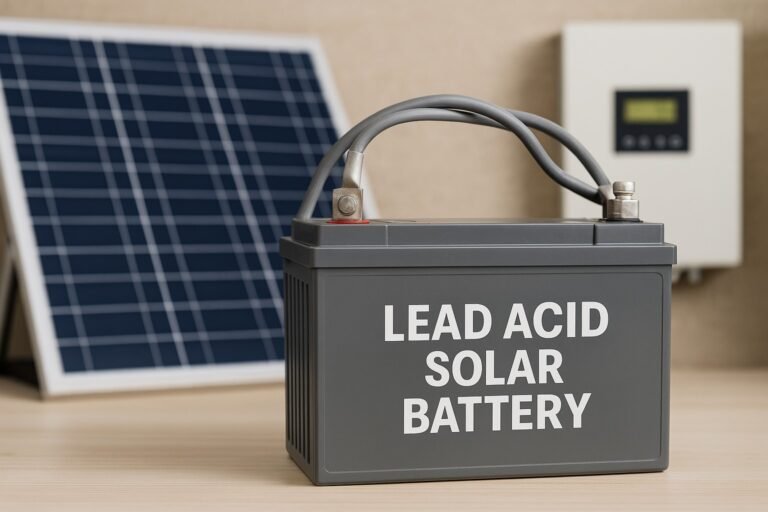
A lead-acid solar battery is one of the oldest and most reliable energy storage technologies still widely used in solar power systems. Even with modern lithium batteries gaining popularity, lead-acid batteries continue to hold a strong place in the solar market because of their affordability, proven performance, and easy availability. They store the extra energy produced by solar panels during the day and release it when the sun isn’t shining — helping homes, cabins, and small businesses stay powered without relying fully on the grid.
This guide is written to help you understand how lead-acid solar batteries work, the different types available, how to size and maintain them, and when they’re the best choice for your solar setup. Whether you’re a homeowner planning an off-grid project, a solar installer designing a backup system, or a DIY enthusiast curious about energy storage, this article gives you clear, practical, and expert-backed information. You’ll learn what affects their lifespan, how much they cost, what makes them different from lithium batteries, and how to get the best performance for years to come.
What Is A Lead Acid Solar Battery?
A lead-acid solar battery is a type of rechargeable battery designed to store energy generated by solar panels and supply it when sunlight is unavailable. It works as a bridge between solar energy production and power consumption, allowing users to have a stable and reliable electricity source day and night. These batteries have been a cornerstone of energy storage for over a century, originally used in vehicles and backup systems before finding a vital role in renewable energy setups.
Lead-acid technology dates back to the 1800s and remains one of the most widely used storage solutions because of its durability and simplicity. In solar applications, it became popular early on due to its ability to deliver consistent power output, even under varying conditions. Over time, improvements in materials and design have enhanced their performance, making them suitable for both off-grid and hybrid solar systems.
The basic operation of a lead-acid solar battery revolves around two lead-based plates submerged in an electrolyte solution of sulfuric acid and water. When the battery charges, electrical energy from the solar panels triggers a chemical reaction that stores energy in the plates. During discharge, the process reverses, releasing electricity for use in your home or devices. This cycle repeats thousands of times, though the depth and frequency of discharges influence how long the battery lasts.
A key factor affecting performance is known as Peukert’s Law, which explains how faster discharges reduce the total available capacity of a lead-acid battery. In simple terms, the harder you draw power from it, the less energy it can actually deliver. Understanding this helps in designing efficient solar systems that match energy demands with realistic battery capacity.
Despite newer options like lithium batteries, lead-acid solar batteries remain popular for good reasons. They’re cost-effective, widely available, and compatible with most solar setups. Their proven track record, easy recycling, and lower upfront cost make them a trusted choice for homeowners and small businesses seeking reliable solar energy storage.
Types Of Lead Acid Batteries For Solar Use
When it comes to solar power systems, not all lead-acid batteries are built the same. They come in a few main types, each designed to suit different needs, budgets, and installation conditions. Understanding these types helps you choose the one that matches your energy goals and maintenance preferences.
Flooded (Vented) Lead-Acid Batteries
Flooded batteries are the oldest and most traditional form of lead-acid technology. They contain liquid electrolyte that freely covers the lead plates, and this liquid must be maintained by checking and refilling distilled water regularly. These batteries are durable and cost-effective, which makes them popular for off-grid solar systems where budget and capacity are top priorities. However, they require proper ventilation because they release gases during charging. Their main advantages are long cycle life and high surge capacity, but they demand more care — such as keeping them upright, clean, and topped up — to prevent corrosion and leakage.
Sealed Lead-Acid Batteries (VRLA): AGM And Gel Types
Sealed batteries, also called Valve-Regulated Lead-Acid (VRLA) batteries, are the low-maintenance cousins of flooded types. They’re designed to be maintenance-free, with no need to add water. Two main designs exist: AGM (Absorbent Glass Mat) and Gel. AGM batteries use fiberglass mats to hold the electrolyte in place, making them spill-proof and vibration-resistant. They charge faster and perform well in high-current situations. Gel batteries, on the other hand, use a silica-based gel that immobilizes the electrolyte, offering deeper discharge tolerance and longer life in hot climates. Both types are ideal for indoor installations or smaller spaces where ventilation is limited.
Valve-Regulated Lead Acid (VRLA) Variants And Emerging Technologies
The VRLA category continues to evolve with advanced designs aimed at improving performance and efficiency. A notable development is the UltraBattery, which combines traditional lead-acid chemistry with a supercapacitor component. This hybrid structure improves charge acceptance, reduces sulfation, and extends lifespan, making it more competitive with lithium options in renewable applications. Such innovations are helping lead-acid technology remain relevant even in the era of high-tech batteries.
Choosing the Right Type For Your Solar Setup
Selecting between flooded, AGM, and gel batteries depends on your budget, space, and maintenance comfort level. If you prefer a low-cost, high-capacity solution and don’t mind occasional maintenance, flooded batteries are a solid choice. For users seeking a safer, maintenance-free option for indoor or compact setups, AGM or gel batteries offer convenience and reliability. In short, flooded batteries are best for large off-grid systems, while sealed types are perfect for smaller, user-friendly solar installations.
Key Technical Specifications & What They Really Mean
To make the best use of a lead-acid solar battery, it’s important to understand the technical specifications that define how it performs, how long it lasts, and how efficiently it stores energy. These key factors help you size your system properly and maintain it for years of dependable service.
Voltage and Capacity (12 V, 24 V, 48 V Banks)
Lead-acid solar batteries typically come in standard voltages of 12 V, 24 V, and 48 V. The choice depends on your solar setup and power demand. Smaller systems, such as those powering a few appliances or a cabin, often use 12 V batteries, while larger home or business installations rely on 24 V or 48 V banks for better efficiency and reduced current losses. Capacity is measured in ampere-hours (Ah), and when multiplied by voltage, it gives the total energy in watt-hours (Wh). For instance, a 12 V 200 Ah battery stores 2.4 kWh of energy. Choosing the right combination of voltage and capacity ensures that your solar panels, inverter, and battery bank all work in harmony.
Depth Of Discharge (DoD)
Depth of Discharge indicates how much of the stored energy you use before recharging. Lead-acid batteries perform best when they’re not discharged too deeply. A safe range is usually 30–50% DoD, meaning you should avoid draining more than half the battery’s stored energy regularly. Shallow discharges significantly extend lifespan, while frequent deep discharges reduce it. Keeping your DoD low is one of the simplest ways to make your lead-acid battery last longer.
Cycle Life
A battery’s cycle life represents how many times it can be charged and discharged before its capacity drops below useful levels. For lead-acid solar batteries, the average range is around 500 to 1,500 cycles, depending on battery type, maintenance, and usage pattern. Flooded batteries generally offer more cycles than sealed ones when maintained properly. The deeper the discharge, the shorter the cycle life. For example, a battery cycled at 30% DoD may last several years longer than one discharged to 80% daily.
Efficiency
Efficiency measures how much energy you can retrieve from what you put into the battery. Lead-acid batteries usually operate at 70–85% charge/discharge efficiency, while lithium-based chemistries reach up to 95%. Although they lose some energy during charging and discharging, proper system design—such as matching inverter capacity and avoiding overcharging—can minimize this loss.
Temperature Effects And Ageing
Temperature plays a major role in battery performance. Lead-acid batteries perform best around 25°C (77°F). High temperatures accelerate chemical reactions, which can shorten lifespan, while cold weather reduces available capacity. In extremely hot environments, the battery’s service life can drop by half. To get consistent performance, install batteries in a well-ventilated, shaded space with stable temperatures. Regular checks for corrosion, sulfation, and electrolyte level (in flooded types) also help slow ageing.
Discharge Rate And Peukert’s Effect
Another factor that affects real-world performance is Peukert’s Effect, which describes how the faster you discharge a battery, the less total energy it can deliver. In simple terms, heavy power draws reduce usable capacity. For instance, a 200 Ah battery might deliver close to that rating when discharged slowly over 20 hours but much less if drained quickly. Designing your solar system to spread out loads and avoid high discharge rates improves both efficiency and lifespan.
Understanding these specifications helps you get the most value from your lead-acid solar battery — ensuring it delivers steady, reliable power while lasting as long as possible.
Sizing A Lead Acid Battery Bank For Solar Systems
Proper sizing of your lead-acid solar battery bank ensures that your solar system runs efficiently and reliably. It helps prevent power shortages, premature battery wear, and unnecessary costs. Whether you’re designing a small off-grid setup or a full home backup system, the process starts with understanding your daily energy use and matching it to your battery’s usable storage capacity.
Calculating Energy Needs
Begin by estimating your daily energy consumption in kilowatt-hours (kWh/day). Add up the wattage of all devices you plan to power and multiply by the number of hours each runs per day. For example, if your lights (200 W) run for 5 hours, your refrigerator (150 W) runs for 10 hours, and your TV (100 W) runs for 4 hours, your total daily use is:
- (200×5) + (150×10) + (100×4) = 3,400 Wh or 3.4 kWh/day.
Next, decide how many days of autonomy you want — how long your system should operate without sunlight. Most users plan for 2–3 days, which helps maintain stability during cloudy weather.
Matching Battery Capacity To Solar Panel Output And Inverter Size
After knowing your daily use, size your battery bank to store enough energy to cover those needs plus some reserve. You also need to ensure that your solar panel array and inverter are correctly matched to charge and use the batteries efficiently. The inverter must handle your peak load (the highest power draw at once), while the panels should generate slightly more energy than your daily demand to account for charging losses and inefficiencies.
Example Calculation For A 5 Kw Solar Array Using A 12 V Battery Bank
Let’s say you have a 5 kW solar system that produces roughly 20 kWh per day in full sunlight. You want two days of autonomy, meaning you’ll need storage for about 40 kWh.
A 12 V lead-acid battery rated at 200 Ah stores:
- 12 V × 200 Ah = 2,400 Wh or 2.4 kWh.
Since lead-acid batteries should not be discharged more than about 50%, the usable energy per battery is 1.2 kWh.
So, to achieve 40 kWh of usable capacity:
- 40 ÷ 1.2 = approximately 34 batteries of 12 V 200 Ah each.
These can be arranged in series and parallel to create the correct voltage and capacity for your system (for example, four in series to make 48 V, with multiple series strings in parallel to increase storage).
Important Considerations: Usable Capacity And Expansion
Only part of a lead-acid battery’s rated capacity can be safely used, so your system should always be sized larger than your daily energy demand. When designing your bank, consider future expansion, as power needs often increase over time. Plan your layout so that additional batteries can be added later without replacing the entire system. Always use batteries of the same age and model in each string to maintain balance and performance.
Sizing Tip: Oversize Vs. Undersize
If you’re unsure between a smaller or larger battery bank, always lean toward oversizing. Lead-acid batteries benefit from lighter use, which reduces stress and extends their lifespan. An undersized battery bank will face deep discharges more frequently, leading to faster degradation and higher replacement costs. A slightly larger system may cost more upfront but often saves money and hassle in the long run.
Lead Acid Solar Battery Cost, Pricing & Value
When planning a solar energy system, understanding the cost and value of a lead-acid solar battery helps you make smart financial decisions. These batteries are known for being the most affordable energy storage option, but their true value depends on several factors — including lifespan, maintenance, and system design.
Current Price Trends And What Affects Them
The lead acid battery for solar price varies based on capacity, brand, build type, and country of purchase. On average, prices range from $100 to $400 for small 12 V units (100–200 Ah) and $1,000 to $3,000 for large commercial-grade banks. Flooded lead-acid batteries are generally the cheapest per kilowatt-hour of storage, while sealed types (AGM and Gel) cost slightly more due to their maintenance-free design. Well-known brands or heavy-duty models often come at a premium because they use thicker plates and higher-quality materials, which extend lifespan.
Lead Acid Solar Battery Cost Vs. Lifespan
One of the biggest trade-offs with lead-acid batteries is between upfront cost and long-term performance. Compared to lithium options, lead-acid batteries are cheaper to purchase initially — often half or even one-third the cost of LiFePO4 batteries — but their lifespan is shorter. A typical lead-acid solar battery lasts about 3 to 6 years, while lithium models can last 10 years or more. This means that even though lead-acid batteries are affordable at first, you may need to replace them several times over the life of your solar system.
Total Cost Of Ownership
When evaluating the lead acid solar battery cost, it’s important to look beyond the sticker price. The total cost of ownership includes maintenance expenses, such as distilled water for flooded batteries, regular inspections, and cleaning terminals. Energy loss during charging and discharging (due to lower efficiency) also adds to the long-term cost. Additionally, lead-acid batteries are bulky and heavy, often requiring reinforced storage areas and proper ventilation. These hidden costs can make a difference over time, especially in high-demand setups.
Best Cases For Budget Solar Storage
Despite their limitations, lead-acid solar batteries remain an excellent choice in many situations. They make sense financially when you’re building a budget-friendly system, running an off-grid cabin or rural setup, or need reliable backup power without heavy daily use. In these cases, the lower upfront cost and easy availability outweigh the shorter lifespan. When properly maintained, a well-sized lead-acid bank can deliver dependable energy storage at a fraction of the cost of lithium alternatives.
Installation, Wiring & Integration For Home Use
Installing a lead-acid solar battery correctly is just as important as choosing the right model. A well-planned setup ensures safe operation, optimal charging, and long battery life. Whether you’re doing a DIY installation or working with a professional, understanding the basics helps you avoid common mistakes and maintain system efficiency.
Battery Bank Wiring: Series Vs. Parallel
Lead-acid batteries can be wired in series, parallel, or a combination of both to achieve the desired voltage and capacity. Connecting batteries in series (positive to negative) increases voltage while keeping capacity the same, ideal for systems needing 24 V or 48 V banks. Wiring in parallel (positive to positive, negative to negative) increases capacity while keeping voltage constant, which is useful when you want more storage at 12 V. Larger solar systems often use higher voltages like 48 V to reduce current flow, minimize losses, and improve efficiency.
Ventilation And Safety Concerns
For flooded lead-acid batteries, proper ventilation is essential. During charging, they release small amounts of hydrogen gas, which can be flammable if it builds up in an enclosed space. Always install them in a well-ventilated, dry area, away from sparks or open flames. Use acid-resistant trays or mats to prevent damage from potential spills. Sealed batteries (AGM and Gel) are safer and can be installed indoors, but they should still be kept in spaces with moderate airflow to prevent overheating.
Placement Considerations
Because lead-acid batteries are heavy, ensure the surface or floor can support their weight, especially for large banks. The storage area should be cool, clean, and easily accessible for routine maintenance. Temperature affects performance—too much heat reduces lifespan, while extreme cold lowers capacity. Aim for stable indoor temperatures and avoid placing batteries directly on concrete floors, as this can cause uneven cooling and condensation.
Integration With Solar Panels, Charge Controllers, And Inverters
Lead-acid batteries must work seamlessly with your solar panels, charge controller, and inverter. The charge controller manages voltage and current from the panels to the battery, preventing overcharging or deep discharging. Ensure that the controller’s settings match your battery type (flooded, AGM, or Gel). Your inverter should also support the chosen voltage and provide battery protection features such as low-voltage disconnect. Using appropriately sized cables, fuses, and connectors ensures safety and efficient power flow throughout the system.
Expert Installation Tips
- Label your battery connections to simplify maintenance and troubleshooting.
- Use identical batteries (same brand, capacity, and age) within a single bank for balanced performance.
- Perform regular equalisation charges on flooded batteries to balance cells and prevent sulfation buildup.
- Always wear safety gear like gloves and goggles when handling batteries or electrolytes.
Maintenance, Lifespan & When To Replace
Maintaining your lead-acid solar battery properly ensures that it delivers consistent performance and reaches its full lifespan. While these batteries are durable, neglecting maintenance can drastically shorten their life and lead to unexpected failures.
Routine Maintenance Tasks
For flooded batteries, regular care involves checking electrolyte levels and topping up with distilled water when necessary. Clean the terminals to prevent corrosion and ensure good connections. Use a voltage meter or battery monitor to keep an eye on charge levels and prevent deep discharges. Sealed types (AGM and Gel) require less attention but should still be inspected periodically for voltage consistency and any signs of swelling or leaks.
Best-Practice Maintenance Schedule
Inspect batteries at least once a month. Keep them clean and dry, and check for loose or oxidized terminals. Perform equalisation charges on flooded batteries every few months to restore balance between cells. Neglecting these tasks leads to sulfation, where lead sulfate crystals harden on the plates, reducing the battery’s ability to hold charge and causing permanent damage.
Signs Of Fatigue Or Failure
You can tell a lead-acid battery is nearing the end of its life when it charges slowly, discharges quickly, or fails to reach full voltage. Other warning signs include bulging sides, overheating during charge, low specific gravity readings, or reduced capacity even when fully charged. Ignoring these signs can result in leaks or complete system failure.
Typical Lifespan In Solar Use
Under normal solar conditions, a lead-acid battery lasts between 3 and 8 years, depending on the type, usage pattern, and care routine. Flooded batteries generally last longer if well maintained, while sealed batteries offer shorter lifespans but greater convenience. Factors such as high temperatures, deep discharges, and poor maintenance can cut that lifespan in half.
Replacement And Recycling
When it’s time to replace your battery, always dispose of old lead-acid batteries responsibly. They contain lead and sulfuric acid, both of which are hazardous to the environment but also highly recyclable. Many suppliers and recycling centers accept used batteries for safe processing. Never throw them in regular trash or landfill sites. By recycling, you not only protect the environment but also recover valuable materials for reuse.
Pros & Cons: Is A Lead Acid Solar Battery Right For You?
Like any energy storage solution, a lead-acid solar battery has its strengths and weaknesses. Understanding these helps you decide whether it’s the right fit for your solar setup or if a newer technology would suit your needs better.
Pros
- Lower Upfront Price: Lead-acid batteries remain the most cost-effective option for solar energy storage. Their low initial cost makes them ideal for homeowners or small projects where budget is a top priority.
- Established, Widely Available Technology: With over a century of use, lead-acid batteries are well-understood, easily available, and supported by nearly every solar installer and equipment supplier.
- Simplicity of System Design: These batteries are straightforward to install and integrate with most solar systems. They don’t require complex battery management systems, and compatible components are readily accessible.
Cons
- Shorter Lifecycle Compared to Newer Chemistries: Lead-acid batteries typically last 3 to 6 years under solar conditions, while modern lithium options like LiFePO4 can exceed 10 years. This means more frequent replacements and higher long-term costs.
- Regular Maintenance Required: Flooded lead-acid batteries demand consistent attention — including electrolyte checks, cleaning, and equalisation charges — to perform optimally.
- Lower Energy Density and Larger Size/Weight: They take up more space and weigh more than lithium batteries of the same capacity, which can make installation challenging in compact areas.
- Less Tolerant of Deep Discharge and Extreme Temperatures: Regular deep discharges or exposure to very hot or cold conditions shorten their lifespan and reduce performance.
- Environmental Concerns: Lead and sulfuric acid are hazardous materials that require careful handling and proper recycling to prevent pollution or health risks.
When Lead-Acid Still Wins
Despite their drawbacks, lead-acid batteries remain a smart choice in certain scenarios. They excel in budget-friendly off-grid systems, backup power setups, or large-scale installations where cost per kilowatt-hour matters more than energy density or compactness. Their proven track record, easy availability, and reliable performance make them a dependable option for users who value affordability and simplicity over long-term durability.
Comparing Lead-Acid With Other Battery Technologies
As solar energy systems evolve, homeowners and installers often compare lead-acid batteries with newer options like lithium (LiFePO4) to find the best fit for their needs. Both have unique advantages, and your choice largely depends on your budget, maintenance preferences, and long-term goals for energy independence.
Lead-Acid Vs. Lithium (LiFePO4) For Solar Use
Lead-acid batteries have a shorter cycle life, typically offering between 500 and 1,500 cycles depending on maintenance and usage depth, while LiFePO4 batteries can exceed 4,000 cycles with minimal care. Lithium batteries also have a higher depth of discharge (up to 90–95%), meaning you can use most of their stored energy without damaging the cells. In contrast, lead-acid batteries should only be discharged about 50% for optimal life.
When it comes to maintenance, lithium batteries clearly win—they are maintenance-free, lighter, and more compact. However, lead-acid batteries remain far more affordable, making them the go-to choice for users who need reliable storage at a lower upfront cost. If your goal is to power basic loads or create a backup system without major investment, a lead-acid solar battery still offers dependable value.
Solar Batteries For Home: Which Is Best?
For home solar users, both technologies can serve well depending on priorities. Lithium batteries are ideal for urban homes or high-efficiency systems that need compact, long-lasting energy storage. Lead-acid batteries, on the other hand, remain one of the best lead acid battery for solar choices in rural or off-grid areas where maintenance can be handled easily and replacement costs are manageable.
Hybrid Setups And Upgrade Paths
Some homeowners start with lead-acid systems and later switch to or mix in lithium batteries. These hybrid setups can provide the best of both worlds: cost-effective energy storage upfront and a long-term upgrade path when budgets allow. However, mixing the two chemistries in the same bank isn’t recommended due to differences in charging profiles. Instead, you can operate them in separate circuits — for example, using lead-acid for daily cycling and lithium for critical loads or backup power.
Future-Proofing Your Solar Storage
If you’re building a solar setup today, starting with lead-acid batteries doesn’t mean you’re stuck with them forever. You can design your system to be future-proof, using inverters and charge controllers that are compatible with multiple battery types. This flexibility allows you to upgrade to lithium or other next-generation chemistries later without overhauling your entire setup. In this way, lead-acid batteries can serve as an affordable stepping stone to more advanced solar storage systems in the future.
Buying Guide & Lead Acid Solar Battery Reviews
Choosing the right lead-acid solar battery is more than just picking a product off the shelf — it’s about finding the right balance between quality, performance, and long-term value. With many models available, knowing what to look for can save you both money and future frustration.
What To Look For When Buying
When shopping for a lead-acid solar battery for sale, start by considering a few key features:
- Brand Reputation: Choose trusted brands known for consistent quality and after-sales support. Established names often provide better performance tracking and reliability data.
- Warranty: Look for at least a 2- to 5-year warranty. It’s a good indicator of the manufacturer’s confidence in their product.
- Capacity Rating: Make sure the capacity (Ah or kWh) fits your system’s needs. Larger capacities cost more but offer longer backup times.
- Sealed vs. Flooded: Decide based on maintenance comfort. Flooded batteries require regular care, while sealed AGM and Gel types are maintenance-free.
- Temperature Rating: Select a battery designed for your local climate. High-temperature-rated models are crucial for areas with intense heat.
- Size and Weight: Plan for available space and structural support, especially for large battery banks.
Lead Acid Solar Battery Review Highlights
When reading a lead acid solar battery review, focus on real-world experiences — how well the battery performs after long-term use, how quickly it charges, and how consistent its voltage remains. Reliable reviews often mention performance in off-grid applications, ease of maintenance, and overall durability. Users typically report that sealed AGM batteries perform best for indoor use, while flooded models excel in outdoor or utility-scale setups where maintenance access is easier.
Top Brands And Models
Some reputable brands that consistently receive strong feedback include Exide, Trojan, Narada, Luminous, and Amaron. These manufacturers offer models ranging from small 100 Ah 12 V units for basic systems to large industrial batteries for commercial setups. What sets them apart is their plate design, build quality, and cycle life. For example, deep-cycle flooded models from Trojan are known for durability, while AGM batteries from Exide and Narada are valued for low maintenance and long shelf life.
Tips For International Buyers (Especially in Pakistan and Asia)
If you’re purchasing in Pakistan or other Asian markets, prioritize local availability and after-sales service. Import duties and shipping costs can significantly affect pricing, so it’s often smarter to buy from regional distributors or authorized dealers who offer warranty support locally. Always verify that the product is genuine and check how easily replacement parts or distilled water are available. Having access to professional maintenance services also adds long-term convenience.
Questions To Ask Your Installer Or Retailer
Before buying, discuss these important points with your supplier or installer:
- What is the expected lifespan of this battery under my specific usage?
- Is the warranty full replacement or pro-rated?
- Can the battery be easily expanded or connected in series/parallel?
- What maintenance schedule is recommended?
- Is this model compatible with my existing inverter and charge controller settings?
By asking the right questions and focusing on verified reviews, you’ll be able to choose a lead-acid solar battery that fits your energy needs, budget, and long-term reliability goals.
Conclusion
A lead acid solar battery remains one of the most dependable and accessible options for storing solar energy. Its proven technology, low upfront cost, and wide availability make it an excellent choice for homeowners and small businesses looking for reliable backup power or off-grid solutions. With proper sizing, installation, and maintenance, these batteries can provide years of steady service, making them especially valuable for users in regions where affordability and practicality come first.
However, choosing the right battery requires more than just comparing prices. Homeowners should carefully assess their energy needs, maintenance capability, and long-term goals before committing. If you’re comfortable performing regular maintenance and prefer a cost-effective setup, lead-acid batteries are a solid option. But if you want a maintenance-free, long-lasting solution, lithium-based systems may be a better fit. Ultimately, a well-maintained lead-acid solar battery can still offer exceptional value — proving that even with new technologies emerging, this classic power source continues to play a vital role in modern solar energy systems.
FAQ’s:
What Is The Typical Lifespan Of A Lead-Acid Solar Battery?
A well-maintained lead-acid solar battery usually lasts between 3 and 8 years, depending on factors like temperature, depth of discharge, and maintenance habits. Flooded batteries often last longer than sealed types if properly cared for.
Can You Use A 12 V Lead Acid Battery For Solar Panel Setups?
Yes. A 12 V lead-acid battery is commonly used in small to medium solar systems, such as home backup units or off-grid cabins. For larger setups, multiple 12 V batteries can be connected in series or parallel to achieve higher voltages and capacities.
How Often Do Lead-acid Batteries Need Maintenance For Solar?
Flooded lead-acid batteries require monthly maintenance, including checking electrolyte levels, cleaning terminals, and equalising charges. Sealed batteries (AGM or Gel) need less attention but should still be inspected every few months for voltage and performance.
Is A Sealed Lead-acid Battery Better Than A Flooded One For Solar Use?
It depends on your needs. Sealed lead-acid batteries are cleaner and maintenance-free, making them ideal for indoor or space-limited installations. Flooded batteries are more cost-effective and offer a longer lifespan but require regular water refilling and proper ventilation.
How Much Does A Lead-acid Solar Battery Cost In Pakistan/Asia Region?
In Pakistan and across much of Asia, a 12 V 150–200 Ah lead-acid solar battery typically costs between PKR 30,000 and PKR 80,000, depending on brand and quality. Larger systems with multiple batteries or industrial-grade units can cost more.
Can I Later Switch To Lithium If I Start With Lead-Acid?
Absolutely. You can begin with a lead-acid setup and upgrade to lithium (LiFePO4) later as your budget allows. Just make sure your inverter and charge controller are compatible with both battery types, so the transition is smooth and cost-effective.
Disclaimer
The information in this article is provided for general educational purposes only. It should not be taken as professional or technical advice. Always consult a qualified solar installer or energy expert before purchasing, installing, or maintaining any solar battery system.
