
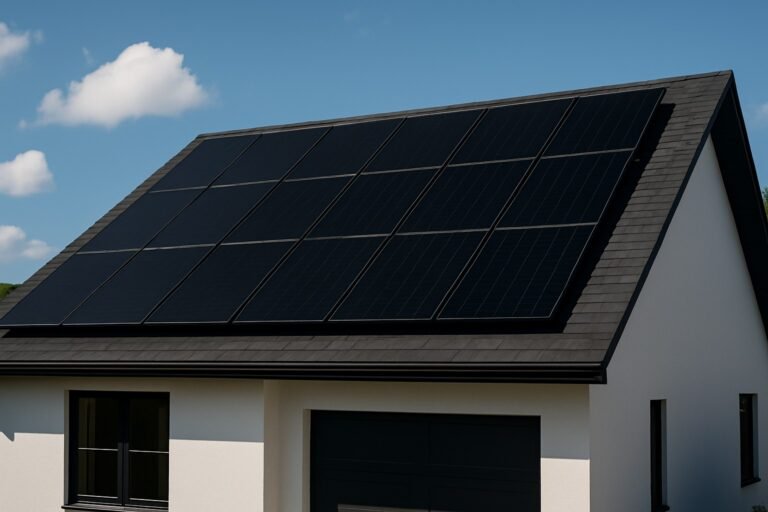
Black solar PV panels are quickly becoming the top choice for homeowners who want clean energy that also looks sleek and modern. Unlike the traditional blue or silver-framed panels, black solar PV panels blend smoothly with most rooftops, giving homes a refined, uniform appearance without compromising performance. Their rise in popularity comes from both improved technology and growing aesthetic preferences among U.S. homeowners who want sustainability to match style. In this guide, we’ll explore everything you need to know about black solar PV panels — how they work, what makes them different, their cost, efficiency, and whether they’re the right fit for your home’s energy goals.
What Are Black Solar PV Panels?
Black solar PV panels are a modern evolution of traditional photovoltaic technology, designed to offer high performance with a more refined appearance. Most black solar panels are made using monocrystalline silicon, which gives them their signature dark look and excellent energy efficiency. Unlike older blue polycrystalline panels or silver-framed modules, black panels feature dark solar cells, a black backsheet, and often a black aluminum frame. This combination creates a smooth, uniform look that blends seamlessly with rooftops, especially on darker roof types. Beyond aesthetics, black solar PV panels also deliver strong efficiency and reliability, making them a popular option for homeowners who want both function and visual appeal.
How They’re Made And Why They Look Black
The deep black color of these panels comes from their manufacturing process and material composition. Monocrystalline silicon cells are cut from a single crystal structure, which allows electrons to flow more efficiently — this is why they perform better and appear darker. The black hue is enhanced by anti-reflective coatings and sometimes black-silicon technology, which minimizes light reflection and helps the cells absorb more sunlight. Additionally, the black backsheet and frame reduce visible gaps between cells, giving the entire panel a consistent, sleek finish. This visual uniformity is one of the main reasons homeowners prefer black panels over traditional blue ones, which often have a patchy or metallic look.
“Black Solar Panels On Roof”: Visual & Design Considerations
When installed on rooftops, black solar panels create a clean and integrated aesthetic that appeals to many homeowners. Their dark color blends well with asphalt shingles, metal roofs, and even slate tiles, making the panels appear as part of the roof rather than an add-on. This design harmony can enhance a home’s curb appeal and even its resale value. Beyond looks, black panels can be strategically arranged to complement roof lines and skylights, maintaining symmetry and a professional finish. For many U.S. homeowners, “black solar panels on roof” represents not just an energy upgrade but also a design statement that combines sustainability with modern architecture.
All-Black Vs Standard Black Cell Panels Vs Blue Panels
When homeowners explore solar options, they often come across several types of black and blue panels, each with its own benefits, appearance, and performance characteristics. Understanding the differences helps make a smarter investment that fits both your home’s energy needs and design preferences.
Standard Black Cell Panels (Black Cells with Silver Frame)
Standard black cell panels feature dark monocrystalline cells paired with a silver aluminum frame and a white backsheet. This design offers a good balance between efficiency and affordability. The silver frame helps dissipate heat, keeping performance slightly higher in warm climates. These panels still deliver a refined look but are not as seamlessly dark as all-black panels. For many homeowners, they’re a practical choice that blends performance and price without a significant visual compromise.
All-Black Panels (Black Cells + Black Frame + Black Backsheet)
All-black solar panels take the visual appeal a step further by using black cells, a black backsheet, and a black frame. This design creates a uniform, jet-black appearance that blends beautifully with darker roofs. However, because black absorbs more heat, these panels may operate at slightly higher temperatures, which can reduce efficiency by a small margin — usually 1–2 %. Despite this, the difference in real-world energy production is minimal, and many homeowners prefer the elegant look enough to justify the modest performance trade-off. All-black models often cost a bit more due to their premium design and materials, but they’re highly sought after for aesthetic installations and luxury homes.
Blue Polycrystalline Panels
Blue polycrystalline panels are the older generation of solar technology, made by melting multiple silicon fragments together. This process gives them their distinct bluish hue and a slightly lower efficiency rate compared to monocrystalline black panels. Because of their structure, they require more surface area to produce the same amount of energy, making them less suitable for smaller roofs. While they’re usually cheaper, many homeowners now move toward black solar panels for their higher efficiency, modern design, and cleaner integration with the roof.
Which One Should You Choose?
When deciding between standard black cell, all-black, or blue panels, consider these key factors:
- Roof Color & Style: Dark roofs look best with all-black panels; lighter roofs can complement silver-framed black or blue modules.
- Budget: Blue panels are the most affordable; all-black panels carry a small premium for aesthetics.
- Efficiency Needs: Monocrystalline (black) panels offer better efficiency and higher output in limited space.
- Climate: If you live in a very hot region, standard black cell panels may stay slightly cooler.
- Aesthetic Preference: Choose all-black panels for a seamless, modern roof design that enhances curb appeal.
Each option has its place, but for most homeowners today, all-black solar PV panels strike the best balance between efficiency, beauty, and long-term value.
Performance & Efficiency: What To Expect
Black solar PV panels aren’t just about good looks — they’re also strong performers in real-world energy production. Built with high-grade monocrystalline cells, these panels are known for their excellent efficiency, reliability, and long lifespan. While aesthetics play a role in their popularity, their performance metrics are what truly make them a smart investment for homeowners looking to cut electricity costs and boost home value.
Efficiency Ratings And Output
Most black solar PV panels deliver efficiency levels between 20% and 25%, depending on the brand, model, and installation conditions. This means that roughly one-fifth to one-quarter of the sunlight that hits the panel is converted into usable electricity — an impressive figure for residential systems. These panels outperform older polycrystalline blue models, which typically range between 15% and 18%. The higher efficiency allows homeowners to generate more power from fewer panels, which is ideal for rooftops with limited space. In day-to-day use, a high-quality black module can produce 350–450 watts per panel, depending on sun exposure and temperature.
Temperature, Heat & Roof Effects
Because black surfaces absorb more heat, black solar PV panels can run slightly warmer than lighter-colored panels. Higher temperatures can cause a small drop in energy output, as most solar cells lose efficiency when they get too hot. However, the loss is typically minor — around 0.3% to 0.5% per degree Celsius above the optimal temperature. Modern panel designs include anti-reflective coatings, tempered glass, and improved ventilation gaps, all of which help reduce heat buildup. For most homes, especially in moderate climates, this effect is negligible and does not impact long-term performance or roof safety. Proper installation with adequate airflow ensures that your panels stay cool and efficient year-round.
Degradation, Lifespan, And Reliability
Black solar panels are built to last. A well-manufactured system can function efficiently for 30 to 40 years, with performance warranties typically guaranteeing 80–90% output after 25 years. Degradation — the gradual reduction in energy output over time — averages only about 0.3% to 0.5% per year in modern modules. Many manufacturers back their products with robust warranties that cover both performance and equipment reliability, giving homeowners peace of mind. With minimal maintenance, such as occasional cleaning and inspection, black solar panels remain one of the most durable and dependable energy solutions available.
Aesthetic Benefits Impacting Value
Beyond performance, aesthetic appeal plays a big role in property value. Black solar PV panels, with their uniform and modern design, blend naturally with most rooftops and enhance the overall look of a home. This sleek appearance can make a property more attractive to buyers, potentially increasing its resale value. Many homeowners find that the slightly higher black solar PV panels price is offset by the long-term visual and financial benefits. When exploring black solar panels for sale, it’s smart to consider not only efficiency and cost but also how well the panels complement your home’s exterior. A visually balanced solar setup can make clean energy look as impressive as it performs.
Cost & Value: Black Solar Panels Price, Kits & Deals
When planning a solar project, understanding the cost and long-term value of black solar PV panels helps homeowners make better financial decisions. Prices vary based on the type of panel, system size, installation complexity, and additional equipment like batteries and inverters. While black panels tend to be slightly more expensive than traditional options, their sleek design, high efficiency, and lasting durability make them a valuable investment for homeowners looking to reduce energy bills and increase property value.
What Does “Black Solar Panel Price” Look Like?
The average price of black solar panels depends on whether you choose standard black-cell or all-black panels. Standard black-cell modules typically cost around $0.80 to $1.10 per watt, while all-black panels can range between $1.20 and $1.40 per watt due to their premium aesthetics and design. For a typical 6 kW to 8 kW residential system, the total cost can fall between $8,000 and $12,000 before incentives. Although they come with a modest price premium compared to blue panels, black solar PV panels deliver higher efficiency and a more attractive appearance that often adds value to the home.
“Solar Panel Kit With Battery and Inverter” And System Cost
When budgeting for solar, it’s important to remember that the panels are only one part of the full system. A complete solar panel kit with battery and inverter includes the panels, a solar inverter to convert DC power to AC electricity, and often a battery storage system for off-grid or hybrid setups. For solar panels for home, costs can vary widely depending on energy needs. Adding a lithium battery and inverter can increase total system expenses by $4,000 to $8,000, but it offers greater energy independence and backup power during outages. When searching for solar panels for sale, always compare package deals that include high-quality inverters and batteries, as these components play a major role in overall system performance and efficiency.
Financing, Incentives & Payback
In the U.S., homeowners can take advantage of federal solar tax credits (ITC), which currently allow up to 30% off the total system cost. Many states and local utilities also offer rebates, net metering programs, and low-interest financing plans that make going solar more affordable. On average, the payback period for black solar PV panels ranges from 6 to 10 years, depending on local energy rates and sunlight exposure. Once the system is paid off, the remaining 20 to 25 years of operation can produce nearly free electricity, turning your initial investment into long-term savings. Homeowners should also check if financing partners offer flexible payment options that align with their budget and energy goals.
How To Spot “Deals On Home Solar Panels”
With the growing popularity of solar energy, the market is full of attractive offers — but not all deals are genuine. To find real deals on home solar panels, consider these expert tips:
- Verify the warranty: Look for at least 25 years of performance coverage and a 10–12-year equipment warranty.
- Check installer reputation: Work only with certified and experienced installers who provide references and transparent pricing.
- Evaluate system size and quality: Ensure the quoted system size matches your energy usage and that all components are from reputable brands.
- Watch for red flags: Extremely low prices often indicate poor-quality panels or hidden installation fees.
- Explore local incentives: Combine seasonal sales with government or utility rebates to maximize savings.
By following these guidelines, homeowners can confidently choose black solar panels that balance affordability, performance, and long-term value, ensuring a system that performs beautifully both on the roof and on the budget.
Installation Considerations For Black Solar Panels On Roof
Installing black solar PV panels on a roof requires careful planning to ensure maximum energy generation, long-term safety, and a clean visual finish. While these panels enhance both efficiency and curb appeal, they perform best when installed under the right roof and environmental conditions. Homeowners who understand these installation factors can avoid common mistakes and make the most of their solar investment.
Roof Orientation, Tilt, Shading & Suitability
The orientation and angle of your roof directly affect how much sunlight your black solar PV panels can capture. The most efficient setup for homes in the Northern Hemisphere is a south-facing roof with a tilt between 25° and 40°, which allows panels to absorb sunlight throughout the day. East- or west-facing roofs can still produce good results but may generate slightly less power. Shading from trees, chimneys, or nearby buildings should be minimized, as even small shadows can reduce panel output. Before installation, a professional site assessment should be done to check your roof’s structural integrity, age, and exposure to sunlight — ensuring that it’s strong and well-positioned for decades of solar performance.
Mounting Systems, Roof Colour & Aesthetics
One of the main reasons homeowners choose black solar PV panels for sale is the modern, uniform look they provide once installed. The mounting system plays a major role in achieving this clean appearance. Panels are typically attached using low-profile racking that keeps them close to the roof surface while maintaining enough space for airflow and cooling. Roof colour also affects visual impact: black panels blend beautifully with dark roofs, creating a seamless design, while on lighter roofs, they create a striking, high-contrast effect. Proper flashing and concealed wiring help maintain the roof’s watertight integrity and prevent visible cables from disrupting the aesthetic. Choosing an experienced installer ensures that your panels are both securely mounted and visually balanced with your roof’s design.
Compatibility With Inverters/Batteries (Hybrid Systems)
Black solar panels can be paired with a variety of inverters and battery storage systems, making them suitable for both grid-tied and hybrid setups. When designing your system, make sure the inverter’s capacity matches the panel array’s output to avoid energy losses. For homes that include storage, lithium-ion batteries are preferred for their durability and efficiency. Homeowners should ask their installer about system compatibility, monitoring software, and potential for future upgrades — for example, adding more panels or storage capacity later on. A well-integrated setup ensures that every watt generated by your black solar PV panels is efficiently used or stored for later consumption.
Inspection, Permits & Safety Considerations
Before installation, most local authorities require building permits and electrical approvals for rooftop solar systems. A certified installer typically handles this process, ensuring the system meets all safety codes. Although solar panels are generally safe, roof-mounted systems carry small risks such as wiring faults or overheating if not installed correctly. Using quality components, fire-resistant mounting materials, and proper ventilation helps minimize these risks. After installation, it’s a good idea to schedule periodic inspections to check for loose fittings, debris buildup, or wear around junction boxes. Proper installation, combined with regular maintenance, ensures that your black solar PV panels on roof remain safe, efficient, and visually stunning for decades.
Common Myths And Expert Insights
When it comes to black solar PV panels, a few misconceptions often circulate among homeowners. While these panels are admired for their modern look and strong performance, some myths can cause confusion about their efficiency, cost, or long-term value. Let’s separate fact from fiction with expert-backed explanations and practical insights to help you make an informed decision.
Myth: Black Panels Heat Up Too Much And Perform Worse
It’s true that black surfaces absorb more heat than lighter ones, but modern black solar PV panels are designed to handle this efficiently. They use advanced temperature coefficients, meaning their output only drops slightly as temperatures rise — typically by about 0.3% to 0.5% per degree Celsius. In real-world conditions, this difference is minimal, especially when panels are properly installed with ventilation space underneath to allow air circulation. High-quality monocrystalline panels also include coatings that reduce thermal buildup, ensuring strong performance even in warm climates. In short, while they may get warmer, today’s black panels maintain excellent efficiency and long-term reliability.
Myth: Colour Affects Efficiency Significantly
Many assume that darker panels automatically perform better or worse due to color alone, but that’s not the case. The color of a solar panel is primarily a result of the type of silicon and anti-reflective coatings used — not a performance factor by itself. The real determinant of efficiency lies in cell architecture, purity of silicon, and manufacturing quality. Black monocrystalline panels appear darker because they’re cut from a single silicon crystal that absorbs light more evenly, which contributes to their high efficiency. Blue panels, on the other hand, are polycrystalline, reflecting more light and appearing lighter in color. So, while the color might signal a certain cell type, it’s the material quality and design that truly influence performance.
Myth: All-Black Always Worth The Premium
All-black panels are often marketed as premium products, and for good reason — they look stunning and integrate beautifully with most rooftops. However, they’re not always necessary for every homeowner. The slight price premium for all-black modules is mainly due to their aesthetic design, not higher energy output. If you value curb appeal and want a sleek, uniform roof appearance, all-black panels are an excellent choice and can boost resale value. But if your priority is maximum efficiency at a lower cost, standard black-cell panels with silver frames may be more practical. The key is balancing budget, performance, and aesthetics according to your specific goals.
Trends & Future Of Black Solar PV Panels
The solar industry continues to evolve rapidly, and black solar PV panels are leading the charge into a new era of design, performance, and energy efficiency. As homeowners increasingly prioritize sustainability without compromising aesthetics, manufacturers are responding with advanced technologies and smarter integration solutions. The future of black solar panels points toward higher efficiency, better energy management, and seamless home compatibility.
Market Trends In 2025 And Beyond
By 2025, black solar PV panels have become the dominant choice for new residential installations. Blue polycrystalline panels, once the standard, are now being gradually phased out due to their lower efficiency and dated appearance. Homeowners now prefer the sleek, modern aesthetic and improved output of black monocrystalline panels. Many solar companies are also standardizing black modules as their main offering, focusing on models with higher wattage ratings and improved heat tolerance. This shift highlights a broader market movement — solar is no longer just about function; it’s also about form, home integration, and long-term environmental value.
Emerging Technologies: Bifacial, PERC, N-Type, All-Black Premium
The next generation of solar panels is pushing boundaries beyond appearance. Advanced technologies like PERC (Passivated Emitter and Rear Cell), N-Type TOPCon, and bifacial designs are being adopted in all-black variants, combining cutting-edge efficiency with refined aesthetics. Panels like the Hi-MO X6 Artist Ultra Black exemplify this innovation, offering exceptional energy output and minimal visual impact. These models use back-contact cell technology, which eliminates visible busbars, creating a flawless black finish while boosting light absorption. As research continues, future black panels are expected to deliver over 26% efficiency, improved temperature control, and enhanced recyclability — setting new standards in the solar industry.
How Homeowners Should Plan For Future Proofing
Homeowners investing in solar panels for home should think beyond immediate needs and plan for long-term flexibility. As grid policies, electricity rates, and technology evolve, having a system that’s ready for upgrades becomes crucial. When purchasing or designing a solar panel kit with battery and inverter, it’s wise to size the inverter slightly larger than your current array to allow for future panel expansion or battery addition. Opt for systems with modular batteries, so you can easily increase storage capacity as energy use grows. Future-proofing also means choosing panels with durable warranties and strong manufacturer support, ensuring compatibility with smart energy management tools and EV chargers. Investing in high-quality black solar PV panels today not only ensures decades of reliable power but also positions your home to take advantage of tomorrow’s clean energy advancements.
Conclusion
Black solar PV panels have transformed the way homeowners approach renewable energy — combining high efficiency, durability, and striking aesthetics in one solution. With most modern panels achieving over 20% efficiency and lasting up to 40 years, they deliver both reliable performance and visual harmony with the home’s architecture. Whether you prefer standard black-cell or all-black designs, these panels not only reduce electricity costs but also enhance curb appeal and overall property value. Their blend of advanced technology and elegant design makes them one of the most attractive options in today’s solar market.
For homeowners considering the switch, the next steps are simple yet important: evaluate your roof’s orientation and structure, compare quotes from certified installers, and balance cost versus value before deciding between standard or all-black modules. Be sure to consider system components like inverters and batteries, as well as available rebates or financing programs. By planning carefully and working with a trusted professional, you can ensure that your black solar PV panels deliver maximum energy savings, long-term reliability, and a beautifully integrated look that complements your home for decades to come.
FAQ’s:
What Is The Difference Between Black Solar Panels And Blue Solar Panels?
Black solar panels are made from monocrystalline silicon, which gives them a darker, more uniform look and higher efficiency. Blue panels, on the other hand, are polycrystalline, made from multiple silicon fragments that reflect light unevenly, resulting in a blue tint and slightly lower performance. Black panels also blend better with most roofs, making them more popular for modern homes.
Are All-black Solar Panels Worth The Extra Cost?
Yes, for many homeowners they are. All-black solar panels provide a sleek, uniform appearance that enhances curb appeal and can even increase property value. Although they cost slightly more than standard black-cell panels, the difference in performance is minor, and the visual upgrade often justifies the added expense — especially for design-focused homes or premium properties.
Do Black Solar Panels Run Hotter And Lose Efficiency?
Black panels can absorb a bit more heat, which may cause a small efficiency drop in very hot conditions. However, modern designs include temperature-resistant materials and ventilation systems that limit heat buildup. In real-world conditions, the difference in performance compared to lighter panels is minimal, and overall efficiency remains strong.
How Much Does A 5 Kw All-black Solar Panel System Cost?
A typical 5 kW all-black solar PV system costs between $7,000 and $9,000 before incentives, depending on the brand, location, and installation complexity. Federal and state solar incentives can reduce this price by up to 30%, making it a cost-effective and visually appealing option for most homeowners.
Can You Add A Battery And Inverter To A Black Solar Panel System Later?
Absolutely. Most black solar PV panels are compatible with hybrid inverters and modular battery systems, allowing for easy upgrades in the future. Homeowners can start with a grid-tied system and later add battery storage for backup power or energy independence without replacing the existing panels or wiring setup.
Disclaimer
The information in this article is for educational and informational purposes only. Always consult a certified solar installer or energy professional before purchasing or installing any black solar PV panels or related equipment.
