
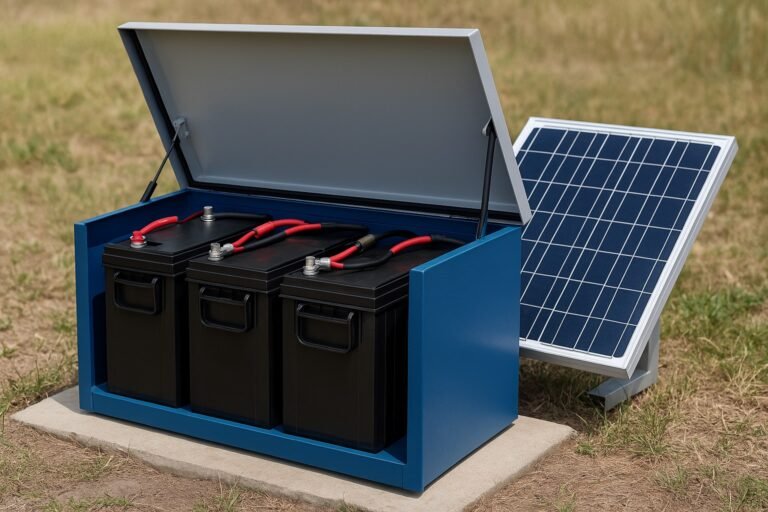
A battery box for solar batteries is a protective enclosure designed to keep your solar power storage system safe, organized, and efficient. When you install solar panels, the batteries that store your energy become one of the most valuable parts of the setup — and they need protection from heat, dust, moisture, and accidental damage. That’s where a battery box comes in. Whether you’re setting up an off-grid cabin, a home backup system, or a solar trailer, using the right battery box ensures your investment lasts longer and performs better. In this guide, you’ll learn what makes a good battery box, the different types available, how to choose the best one for your setup, and expert-backed tips to help you install and maintain it properly.
Why You Need A Dedicated Battery Box For Solar Batteries
Protecting Your Battery Investment
Solar batteries are sensitive components that can easily lose performance when exposed to the wrong environment. Extreme heat shortens their lifespan, while moisture and dust can cause corrosion or electrical short circuits. A battery box for solar batteries acts as a shield, creating a stable and protected environment that helps maintain consistent performance. Weatherproof enclosures are especially useful for outdoor setups, keeping rain, humidity, and debris away from the battery terminals. By investing in a proper battery box, you not only protect your solar batteries from physical and environmental damage but also ensure your entire solar system runs more efficiently year after year.
Enhancing Safety & Longevity
Safety is one of the most important reasons to use a battery box. Lead-acid batteries, for instance, release small amounts of gas during charging, and if not ventilated properly, this can pose a fire risk. A good enclosure provides controlled ventilation to disperse gases safely while also protecting the batteries from overheating. It also reduces the chance of accidental tampering, theft, or animal interference. Many enclosures are designed to meet recognized safety standards and electrical codes, ensuring your installation is compliant and secure. This means less maintenance, fewer hazards, and a longer battery lifespan.
Improving System Efficiency And Reliability
A properly designed battery box doesn’t just protect — it also enhances performance. Good ventilation keeps batteries cool, preventing energy loss caused by overheating. Proper shading and insulation stabilize internal temperatures, ensuring batteries operate at their optimal efficiency range. Additionally, a clean, organized enclosure makes wiring and maintenance easier, reducing the risk of connection faults or performance drops. When your batteries stay at the right temperature and are safely enclosed, your entire solar system becomes more reliable, efficient, and long-lasting.
Key Features To Look For In A Solar Battery Enclosure
Environmental & Weatherproof Ratings
When choosing a solar battery enclosure outdoor, one of the first things to check is its weatherproof rating. Terms like IP65, NEMA 3R, and NEMA 4 indicate how well the enclosure can resist dust, water, and harsh environmental conditions. For example, an IP65-rated box is dust-tight and protected against water jets, making it ideal for outdoor solar setups. A NEMA 3R or 4 enclosure offers similar protection but also includes safeguards against corrosion and ice formation. These ratings help ensure your outdoor battery box kit can withstand rain, humidity, sunlight, and other environmental challenges. A high-quality enclosure keeps your batteries safe, dry, and stable no matter the weather.
Materials, Construction & Ventilation
The material and build quality of your battery enclosure determine how long it will last and how well it protects your system. Look for enclosures made from stainless steel or powder-coated aluminium, which resist rust and UV damage even in extreme sunlight. Some outdoor boxes also feature reinforced plastic designs that offer lightweight durability. Just as important is proper ventilation — good airflow helps control heat and prevents gas buildup, especially in systems using lead-acid batteries. A well-ventilated enclosure ensures that your solar batteries remain at a safe operating temperature, reducing wear and extending their lifespan.
Size, Mounting & Accessibility
A solar battery enclosure must be the right size to fit your system comfortably. Choose a box that leaves enough space for wiring, airflow, and potential future expansion. Depending on your setup, you might select a wall-mounted, ground-mounted, or trailer-mounted design. For example, a battery box for solar batteries for trailer is built for mobility and compact use, while a wall-mount model works better for home systems. Accessibility is another key factor — look for boxes with easy-open panels, organized cable entries, and adjustable shelves so maintenance and upgrades can be done without hassle.
Security & Maintenance Features
A good enclosure not only protects from weather but also from theft and tampering. Look for lockable lids, tamper-proof latches, and pest-resistant seals that keep animals and insects out. Security features are especially important for outdoor or remote installations. Maintenance-friendly designs also make a big difference — removable panels, monitoring ports, and easy-to-clean surfaces save time and effort during regular inspections. By combining strong physical protection with convenient maintenance options, your battery box ensures both safety and long-term reliability for your solar power system.
Types Of Battery Box Options For Solar Systems
Standard Enclosure Kits (Residential-Scale)
For most homes and small solar setups, standard enclosure kits are the most convenient choice. These often come as a solar battery box kit that includes all the necessary components for secure installation and ventilation. They are ideal for residential energy storage, off-grid cabins, and even smaller setups such as garden lighting or solar battery box for LED string lights. A 12 volt battery box with solar panel is another popular option, especially for users who want a compact, plug-and-play power solution. These kits are simple to install, affordable, and well-suited for moderate weather conditions, making them perfect for beginner-friendly or small-scale solar systems.
Weather-Proof & Outdoor-Rated Boxes
For outdoor setups or installations exposed to varying climates, weatherproof battery enclosures are a must. These boxes are built using durable, corrosion-resistant materials designed to protect batteries from heavy rain, dust, and UV exposure. A solar battery enclosure outdoor typically has a higher IP or NEMA rating, ensuring the batteries inside remain safe even during storms or intense sunlight. These enclosures are especially useful for remote solar systems, standalone power units, and garden or commercial installations where environmental protection is crucial. Choosing a weatherproof enclosure means fewer performance issues and longer battery life, even in demanding outdoor conditions.
DIY Solar Battery Enclosure Solutions
A DIY battery box for solar batteries is an excellent option for those who enjoy hands-on projects and want to save costs. Homeowners often build their enclosures using wood, metal, or reinforced plastic, adding insulation and ventilation to maintain a stable internal temperature. However, it’s important to follow safety guidelines: include proper vents for heat and gas release, use fire-resistant materials, and ensure the box meets standard weatherproof ratings if placed outdoors. DIY boxes offer flexibility in size and design but require careful planning to avoid overheating or short circuits. Following expert tips and using quality materials can result in a safe, effective, and budget-friendly custom battery box.
Specialized Applications
Certain setups require more specific enclosure types, such as a battery box for solar batteries for trailer. These are compact, vibration-resistant, and designed for mobile power systems like RVs or off-grid vehicles. Commercial and remote applications may use rack-mounted or pole-mounted enclosures, which are engineered for scalability and easy maintenance. These specialized designs often include advanced cooling, monitoring systems, and security locks. While they come at a higher cost, their performance, durability, and flexibility make them ideal for industrial use or long-term off-grid projects. The right choice depends on your setup’s scale, budget, and environmental conditions, but all serve the same purpose — to keep your solar power storage safe, stable, and reliable.
Sizing & Configuring Your Battery Box For Solar Batteries
Determining The Bank Size And Voltage
Before buying or building your battery box for solar batteries, you need to know how many batteries you’ll be using and their configuration. The number of batteries depends on your system’s storage needs, voltage, and total load. For example, a 12 V solar setup may use one or two batteries, while larger systems may require multiple units wired in series or parallel to achieve higher capacity. The box must have enough room for all batteries, cabling, and airflow space between units. Consider the battery chemistry too—lithium-ion batteries usually need less space and cooling than lead-acid ones. Planning your layout around your battery bank’s voltage and storage capacity ensures efficiency and safety from the start.
Matching Box Capacity To Load & Autonomy
The size of your enclosure should align with your energy goals. Calculate your load requirements, expected usage time, and the number of backup days you want during cloudy weather or grid outages. Depth-of-discharge (DoD) and reserve capacity are key factors—lithium batteries can discharge deeper than lead-acid, meaning you might need fewer units for the same usable energy. By matching your box capacity to your load, you avoid overworking your batteries and extend their lifespan. Always leave a small margin for future energy needs rather than sizing too tightly.
Layout Considerations: Ventilation, Heat, Wiring
Inside the enclosure, layout matters as much as capacity. Proper ventilation helps control heat buildup and prevents gases from accumulating, especially in sealed environments. Position batteries with enough space for airflow and avoid stacking them directly on each other. Cables should be neatly arranged to reduce resistance and heat concentration. Avoid placing batteries near heat sources or direct sunlight; consistent, moderate temperatures improve performance. A clean, organized layout not only looks professional but also makes inspection and maintenance safer and easier.
Planning for Expansion & Future Proofing
If you plan to grow your solar system later, it’s smart to choose a modular battery box or one with extra space. Even if you only start with two batteries, having room for additional units can save you from rebuilding your enclosure later. Modular boxes often feature removable panels or adjustable brackets that make expansion simple. This future-proof approach allows you to adapt as your energy storage needs increase, ensuring that your investment stays useful for many years to come.
Installation Best Practices & Expert Advice
Site Selection & Preparation
Choosing the right installation site plays a big role in performance and safety. Always place your battery box in a shaded, well-ventilated area with a stable foundation to avoid shifting or water accumulation. Proper drainage around the site prevents moisture damage, while installing the box slightly elevated helps protect against flooding. For outdoor setups, consider theft and weather exposure — adding a lock or installing near a wall or fence adds security. Avoid placing it under direct sunlight for long hours, as excessive heat can shorten battery life and reduce efficiency.
Cabling, Grounding & Safety Protocols
A safe installation depends on proper wiring and grounding. Use high-quality cables and secure lugs to ensure firm electrical connections. Always install the battery management system (BMS) or fuses inside or near the enclosure to protect against short circuits and overcharging. For larger systems, maintain fire separation by keeping enough space between batteries and other electrical equipment. Correct grounding reduces shock hazards and protects your system during lightning or surges. Taking these precautions ensures a safer, longer-lasting setup.
Ventilation, Thermal Control & Battery Chemistry Considerations
Different battery types have different ventilation and temperature needs. Lead-acid batteries release gases during charging, so they need open vents or small fans to disperse them safely. Lithium-ion batteries, on the other hand, produce minimal gas but are more sensitive to temperature changes. In hot climates, consider adding thermal insulation or active cooling (like small DC fans) to maintain optimal temperatures. Proper ventilation and thermal control not only protect your batteries but also ensure steady output and efficiency, especially during heavy use.
Maintenance Schedule & Practical Tips From The Field
Routine maintenance helps prevent costly failures. Check your battery box every three months for corrosion, loose connections, or worn insulation. Keep the enclosure clean and ensure that seals remain tight to block out moisture and pests. It’s also a good idea to keep a maintenance log—for example, “I always mark the inspection date inside the door after each check” helps track your service history. If you notice unusual heat, swelling, or voltage drops, it’s best to call a professional technician to inspect the system. Regular care ensures safety, performance, and peace of mind for years to come.
Cost, Budgeting & Where To Buy
Typical Price Ranges & What Affects Cost
When budgeting for a battery box for solar batteries, expect wide cost variation depending on size, materials, rating and brand. For example, while full home battery systems cost thousands, the enclosure itself will scale depending on its durability and features. Reolink+1 Key cost-drivers include:
- Material quality and weatherproof rating: Higher IP/NEMA ratings or corrosion-resistant materials cost more.
- Size and capacity: Larger boxes for multiple batteries or higher voltage banks require more material and cost more.
- Brand and certifications: Known manufacturers with warranties or compliance certifications often charge premium.
- Additional features: Ventilation systems, lockable panels, cable entries, expansion modules all add cost.
Buying Channels: Retail Kits Vs Custom Cabinets
You’ll typically find two main pathways: retail kit enclosures (ready-to-install) or custom-built cabinets for larger or specialized systems. Retail kits can be purchased online, via solar accessory suppliers, or local distributors—often easier to ship and install. Custom cabinets are better if you require large scale, trailer-mounted boxes or remote installations with specific specs. If you’re in Pakistan (or sourcing components there), consider local availability and shipping: importing a heavy weather-proof steel box may incur extra freight/taxes.
Value-Added Considerations
When selecting a battery enclosure, don’t just look at upfront cost—consider long-term value:
- Warranty: A longer warranty indicates confidence in material and build quality.
- Upgrade potential: If you foresee upgrading your battery bank, choose an enclosure that supports future expansion.
- Brand reputation & support: A trusted brand may offer better documentation, spares and easier servicing.
- Battery protection benefits: A well-designed enclosure can reduce battery replacement costs by protecting against heat, dust, moisture and theft—thus improving your overall system ROI.
Common Mistakes & How To Avoid Them
Even experienced solar users can make errors that affect battery safety and efficiency. Here are some of the most common mistakes to watch out for — and how to avoid them:
- Over-tight chaining batteries without ventilation: Packing batteries too closely traps heat and gas, which can damage cells or reduce efficiency. Always allow space for airflow and proper ventilation.
- Using indoor-rated boxes outdoors: Not all boxes are built for harsh environments. Using an enclosure without the correct NEMA or IP rating outdoors can lead to corrosion, leaks, and electrical hazards.
- Ignoring temperature extremes: Batteries perform poorly when exposed to extreme cold or heat. Use insulation or ventilation fans to maintain a moderate temperature inside the box.
- Skipping expansion space or future-proofing: Many users underestimate their future energy needs. Choose a battery box that leaves room for additional batteries or equipment upgrades.
- Neglecting maintenance: Regular inspection prevents corrosion, loose connections, and dust buildup. Maintenance is essential for keeping your solar system safe and reliable.
Expert-Backed Tip:
Don’t assume all “battery boxes” are automatically weatherproof—always verify the outdoor rating and ventilation features before installation. A little research up front can save a lot of costly problems later.
Future Trends & Innovations In Solar Battery Enclosures
The solar energy industry is evolving quickly, and battery enclosures are becoming smarter and more sustainable. Smart enclosures with IoT monitoring allow users to track temperature, humidity, and performance remotely, offering instant alerts if anything goes wrong. Manufacturers are also experimenting with eco-friendly materials such as recyclable composites and fire-retardant coatings to boost safety and environmental responsibility.
For homeowners, modular and plug-and-play battery banks are emerging as a practical trend — these systems come with built-in enclosures, ventilation, and connection ports, making installation simple and expansion effortless. Additionally, as mobile solar systems grow more popular, we’re seeing integrated enclosures for off-grid trailers and portable setups that combine protection, storage, and power management in one compact unit. These innovations point to a future where solar energy systems are safer, easier to maintain, and more adaptable than ever before.
Conclusion
Choosing the right battery box for solar batteries is more than just a practical decision—it’s an investment in safety, performance, and long-term reliability. By understanding the key factors such as size, material, ventilation, and weatherproof ratings, you can ensure that your solar power system runs efficiently in any condition. Proper installation, secure wiring, and consistent maintenance all contribute to a system that not only performs well but also lasts for years without unexpected issues.
In the end, a high-quality battery enclosure protects your energy storage from the elements, reduces maintenance costs, and enhances the overall safety of your setup. Whether you’re powering a home, cabin, or mobile solar system, taking the time to select a well-built enclosure means you’re securing your investment and ensuring steady energy when you need it most. By investing in the right enclosure today, you’re not just protecting your batteries—you’re improving the strength, stability, and sustainability of your entire solar journey.
FAQ’s:
What Size Battery Box Do I Need For A 12 V Solar Battery Bank?
The size of your battery box depends on the number and type of batteries in your setup. For a single 12 V battery, a compact enclosure with enough space for ventilation and wiring is enough. If you’re connecting multiple 12 V batteries in series or parallel, choose a larger box that allows room for expansion, airflow, and safe cable management.
Can I Install A Solar Battery Enclosure Outdoors In Extreme Climates?
Yes, but it requires the right enclosure. Always use a weatherproof battery box rated for outdoor use, such as IP65 or NEMA 4. In very hot or cold regions, add ventilation fans or insulation to keep battery temperatures stable and avoid performance loss.
Is A Diy Battery Box For Solar Batteries Safe?
A DIY battery box for solar batteries can be safe if it’s built with durable, non-flammable materials and includes proper ventilation. Avoid sealing the box completely, and ensure there’s enough airflow to prevent gas buildup or overheating. Following standard electrical safety practices makes a DIY enclosure both effective and reliable.
What Is The Cost Of A Weatherproof Battery Box For Solar Batteries?
The battery box for solar batteries cost varies widely based on size, material, and rating. Basic plastic or metal boxes may start around $50–$150, while larger or premium weatherproof enclosures can range from $200 to $800 or more. Custom-built units for commercial or off-grid systems can go even higher.
How Often Should I Service/inspect My Solar Battery Box Enclosure?
Inspect your battery box at least every three months. Look for corrosion, dust buildup, loose cables, or damaged seals. Regular cleaning and tightening of connections help prevent electrical issues and extend both the box and the battery’s lifespan. Always schedule professional maintenance if you notice irregular voltage readings, heat buildup, or damaged components.
Disclaimer
The information in this article is for educational and general guidance purposes only. Always consult a qualified solar energy professional before purchasing, installing, or modifying any solar battery or enclosure system.
