
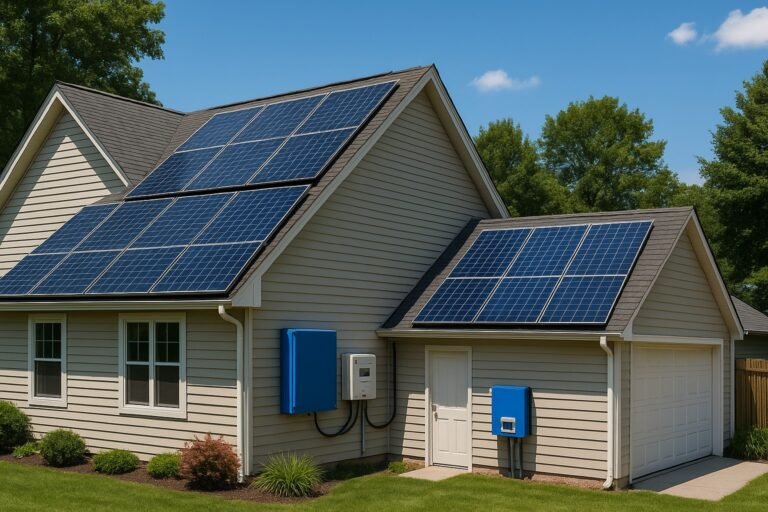
More families today are turning toward solar power for one simple reason: electricity has become too expensive to ignore. Monthly bills keep rising, and households want a solution that is both stable and affordable. Solar energy fits that need perfectly. Modern panels are more efficient, long-lasting, and reliable than the systems people knew a decade ago, making them a practical option for everyday homes instead of just large businesses.
Another major reason for this shift is improved technology. Homeowners now have access to complete solar system kits that include panels, batteries, and inverters designed specifically for household use. These systems are easier to install, simpler to maintain, and built to support daily home appliances. From cutting energy bills to gaining backup power during outages, solar is becoming a realistic lifestyle upgrade for many families.
Government incentives also play a big role. In many regions, rebates, tax credits, and net metering programs help reduce the upfront cost of going solar, making the investment more attractive for new homeowners. People researching “solar for household”, “solar panels for sale”, or “home solar system kit” are often looking for clear guidance on price, system size, installation options, and long-term savings. With rising interest, better technology, and accessible support, solar has become one of the smartest decisions a household can make for long-term energy independence.
What Is Solar for Household? A Simple Explanation For First-Time Buyers
Solar for household simply means using sunlight to power the everyday appliances in your home. Instead of relying only on the grid, a home solar system captures energy from the sun, converts it into electricity, and distributes it to lights, fans, appliances, and even backup storage batteries. The idea is straightforward, but the process uses a smart combination of technology designed to work quietly in the background.
A typical home solar system has three main parts: solar panels, an inverter, and a battery (optional but increasingly common). The panels absorb sunlight and produce direct current electricity. Since homes run on alternating current, the inverter steps in and converts that DC power into usable AC energy. If the system includes a battery, any excess solar power is stored for later use, especially during the evening or power outages. Once everything is connected, the system works automatically: panels collect light, the inverter converts it, and your home uses it just like regular electricity.
For most first-time buyers, the biggest advantage is how simple the setup becomes once installed. There are no moving parts, no fuel, and no complicated operation involved. The system takes sunlight — something free and available every day — and turns it into clean, reliable electricity for your household. Whether you want to reduce bills, gain backup power, or move toward energy independence, solar provides a practical, long-term solution that fits almost any home.
Key Components Of A Home Solar System Kit
A home solar system kit is built from several important components that work together to convert sunlight into dependable household electricity. Each part has a specific role, and understanding them helps homeowners choose better equipment, avoid common issues, and design a system that matches their needs. Below is a simple but expert-friendly breakdown of the essential components found in most household solar setups.
Solar Panels
Solar panels are the heart of the system, capturing sunlight and turning it into electrical energy. The three main types you’ll see in the household market include monocrystalline, polycrystalline, and thin film. Monocrystalline panels are known for their high efficiency and strong performance in warm climates, which makes them ideal for homeowners with limited roof space. Polycrystalline panels are slightly less efficient but still reliable and often more budget-friendly, while thin film panels offer flexibility for specific installations but are usually less powerful for residential settings. When comparing these types, efficiency is a major factor. Monocrystalline panels generally offer the highest output per square foot, while polycrystalline falls somewhere in the middle, and thin film is typically used when lightweight or custom mounting is required. For most homes, the best solar panels are those that balance durability, output, and weather resistance, especially in regions with strong sunlight or seasonal variations.
Solar Battery
A battery isn’t mandatory in all solar setups, but it has become an important addition for households that want backup power or smoother energy use. A solar battery stores extra energy produced during the day and makes it available at night, during cloudy weather, or when the grid fails. Modern systems use different battery technologies, each with its own benefits. Lithium batteries are the most popular due to their long lifespan, fast charging, and high energy density. Gel batteries are safer than traditional lead-acid types but tend to offer lower efficiency. AGM batteries are dependable and handle high load demand but don’t last as long as lithium options. Most household batteries last several years, with lithium offering the longest replacement cycle — often 8 to 12 years depending on usage. Choosing the right battery depends on your energy needs and whether you want complete backup during outages or simply better energy management.
Solar Inverter
The inverter plays one of the most important roles in a solar system: it converts the panel’s DC electricity into usable AC power for the home. There are a few types to consider. String inverters are cost-effective and commonly used in standard installations, but their output can be affected by shading on even a single panel. Microinverters, on the other hand, sit on each individual panel, allowing stronger performance in shaded or complex roof layouts. Hybrid inverters combine solar and battery control in one device, making them ideal for homeowners planning to store energy later. Choosing the correct inverter capacity is simple: it should match the total output of your solar array and support future expansion if needed. A properly sized inverter ensures stable power, better efficiency, and longer equipment life.
Solar Mounting Structure
The mounting structure holds your solar panels securely in place, and it needs to be strong enough to withstand weather changes throughout the year. Roof-mounted systems are the most common and work well when the roof has sufficient sunlight exposure and is structurally sound. Ground-mounted systems are an alternative for homes with large open spaces, offering easier cleaning, adjustable angles, and improved airflow. Regardless of the type, wind load is a critical safety factor. Panels must be installed with sturdy brackets and corrosion-resistant hardware to prevent damage during storms. A reliable mounting structure not only protects your system but also improves panel performance by keeping them at the right tilt angle.
Wiring & Protection Gear
The final part of a home solar system kit involves the wiring and safety components that ensure everything operates smoothly. MC4 connectors are used to link panels securely, preventing energy loss and ensuring waterproof connections. DC isolators allow technicians to safely disconnect the system during maintenance. Surge protectors shield the setup from voltage spikes caused by weather or grid issues, while breakers safeguard your home from electrical overload. Though these elements may seem small compared to the panels and inverter, they play a vital role in keeping the system safe, efficient, and long-lasting.
Solar For Household Cost Breakdown
Understanding cost is one of the first concerns for anyone thinking about solar for their home. Below I break down typical costs for different system sizes, what influences those costs, and a special look at Tesla’s solar offerings.
Average Cost For A Basic Home Setup
- For smaller homes or households with modest electricity needs, a 3 kW solar system is often sufficient. In some markets, a 3 kW system may cost roughly equivalent to a mid-range appliance setup; although global pricing varies widely, small systems tend to be the most budget friendly. For example, in Pakistan a 3 kW system might be significantly cheaper than large systems.
- As electricity demand grows — for example with more appliances, air-conditioning, or larger families — a 5 kW system becomes popular. This size often balances cost and power capacity reasonably well. In many places, 5 kW systems are considered a “standard home” solar size.
- For larger homes or heavier usage (lots of appliances, possibly small businesses from home, or future expansion), a 10 kW system is usually the upper end of typical residential setups. In certain markets, including some in Pakistan, a full 10 kW solar system (with battery and net-metering setup) has been quoted around PKR 1,630,000.
Because solar-system costs vary by region, quality, installation complexity, and demand, these numbers should be taken as typical ballpark ranges — not fixed.
Cost Factors Affecting Installation
Several factors influence how much a household solar system ends up costing. Here are the key ones to watch out for:
- Roof type and condition: A strong, simple roof makes installation easier, reducing the cost of mounting structures and labor. Complicated roofs (many angles, weak structure, or need for reinforcement) increase cost.
- Shading or roof orientation: If your roof is often shaded or not optimally oriented toward the sun, you might need fewer panels or higher-efficiency ones — or even ground-mounting, which can raise costs.
- Local labor and installation costs: Cost of skilled labor, local codes, electrical upgrades, wiring, permits — all vary by region and can significantly affect total expense.
- Quality of panels, inverters, and batteries: Premium components (higher-efficiency panels, better inverters, quality battery storage) cost more upfront but tend to pay off in performance, durability, and fewer maintenance issues.
Because of these variables, two households with similar power needs might pay quite different amounts depending on their roof, climate, and equipment choices.
Tesla Solar For Household Cost (Panels, Solar Roof, and Battery Options)
If you’re considering a premium setup — either using traditional solar panels from Tesla or going for a full Tesla Solar Roof — the costs tend to be higher than typical solar kits, but you also get certain additional benefits (aesthetic integration, brand support, longer warranties, smart storage options).
- Tesla’s standard solar panel systems (when installed) are often priced per watt. Some recent data suggests roughly USD 3.80–4.00 per watt before incentives.
- For example, an 8 kW Tesla solar panel setup would therefore cost around USD 30,400–32,000 before any rebates or credits.
- If you choose the complete Solar Roof (solar-integrated roofing tiles instead of panels), cost increases significantly because it involves replacing or covering your entire roof with energy-generating tiles rather than just mounting panels on top. Some estimates put the cost for a typical home’s roof replacement with Solar Roof at tens of thousands of dollars, depending heavily on roof size, complexity, and needed storage.
- Many Tesla installations also get paired with a home battery storage solution (for instance, Tesla Powerwall 3), which adds extra cost — but ensures you have backup power or stored energy for night use.
Because of higher upfront cost, Tesla’s solar solutions tend to appeal to homeowners who value long-term durability, aesthetics, or want a fully integrated energy system rather than basic solar panels.
What “Realistic Estimate” Means For You (Especially Outside US/Europe)
If you live in a country like Pakistan (or another region outside US/Europe), the global cost benchmarks might not directly apply — but they serve as useful references. Local prices depend heavily on:
- Import costs for panels, batteries, inverters
- Local labor costs and availability of qualified installers
- Whether components are high-end or budget-grade
- Climate conditions (which may affect system size and battery needs)
So while global data helps you understand baseline costs, you should always get local quotes and double-check conditions (roof strength, net-metering policies, battery availability).
Types Of Home Solar Systems: Which One Fits Your Household?
Choosing the right type of solar system matters just as much as choosing the right panels or inverter. Each system works differently, supports different household needs, and comes with its own advantages. Understanding the three main types — on-grid, off-grid, and hybrid — helps homeowners decide which setup truly matches their lifestyle, location, and energy goals.
On-Grid Solar For Household
An on-grid solar system connects directly to the utility grid, meaning your home uses solar power during the day and automatically switches to grid electricity when needed. This setup is ideal for households where electricity is stable, and the main goal is reducing monthly bills rather than relying on backup power. Families who live in urban areas or locations with dependable grid access typically benefit the most from this system.
On-grid solar is appreciated for its efficiency and affordability. It usually costs less upfront because it doesn’t require batteries, and many regions allow net metering, which means excess energy can be sent back to the grid for credit. However, it has a clear drawback: the system shuts down during power outages. Without a battery, you cannot store energy or receive backup power, which can be a limitation in areas where blackouts are common.
Off-Grid Solar System
An off-grid system is completely independent from the utility grid and functions as a standalone power source for your home. It’s the right choice for households in remote locations, areas without grid access, or places where electricity is unreliable or unavailable. Off-grid setups rely heavily on solar batteries, since they must supply power around the clock, including evenings and low-sunlight days.
This system offers complete energy independence, which is a major advantage for families who want full control over their electricity. But it also requires a larger upfront investment because high-capacity batteries and reliable inverters are essential. If the battery storage is not sized correctly, the system may not support heavier loads, so careful planning is crucial. Off-grid solar is ideal for homes that prioritize autonomy over convenience.
Hybrid Solar System
A hybrid system is a combination of on-grid and off-grid technology, and for many households, it represents the most balanced and practical option. It uses solar panels like any other system, but it also includes a battery and remains connected to the grid. This gives homeowners two benefits at once: the ability to store energy and the option to use grid electricity when needed.
Hybrid systems are especially useful in regions where load-shedding or power outages happen regularly. The battery provides backup when the grid fails, while the grid offers support when solar production drops. Although hybrid systems cost more than standard on-grid setups because of the battery, the flexibility and reliability they provide often outweigh the extra expense. For families looking for bill savings, backup power, and long-term stability, hybrid solar is often the best overall choice.
How To Calculate Your Home’s Solar Requirements
Sizing a solar system becomes much easier when you follow a simple, step-by-step method. Most households start by identifying their essential loads, estimating daily energy use, and matching that consumption with the right number of panels, battery capacity, and inverter size. This approach ensures your system supports your lifestyle without overspending on unnecessary components.
Begin by listing the appliances you plan to run on solar — such as fans, lights, refrigerators, air conditioners, washing machines, or smaller electronics. Every appliance has a watt rating. Multiply that watt number by the estimated hours of daily use to get each appliance’s energy consumption. Add these values together to find your home’s total daily energy requirement. Once you know your total watt-hours, divide that number by the average peak sunlight hours in your region. This calculation gives you the minimum kilowatt size your solar array should have.
Panel count depends on your chosen system size and the individual wattage of the panels. For instance, a 5 kW system using 550 W panels needs around nine or ten panels. If you prefer smaller panels such as 400 W, you’ll need more. Battery size depends on how much backup you want. A household that needs several hours of evening power typically uses a battery between 5 kWh and 10 kWh, while homes that want overnight backup or heavy appliance use may need more. Finally, inverter capacity should match or slightly exceed the total wattage of your panels. A properly sized inverter prevents overload, improves efficiency, and allows space for future expansion.
Best Solar Panels For Homes In 2025 (Based on Reliability & Output)
Choosing the best solar panels for your home is easier when you understand what sets top-performing panels apart. In 2025, homeowners and installers consistently look for three key qualities: high efficiency, strong durability, and reliable long-term performance. Panels that excel in these areas often provide better energy output in limited roof space, deliver consistent performance in warm climates, and maintain their power rating over many years of use.
Several leading brands dominate expert lists and top-ranking guides. SunPower remains known for exceptional efficiency and long-term durability, making it a favorite for households with smaller roof areas. REC panels offer a strong balance between price and performance, while Canadian Solar is often chosen for its stable, dependable output and accessible pricing. Longi has gained significant popularity for its high-efficiency monocrystalline panels, and JA Solar continues to be a strong contender for homeowners wanting a balance of cost, reliability, and output. These brands consistently perform well in independent tests and are commonly showcased in professional solar system recommendations.
What makes a panel truly “best” for household use depends on your specific needs. High-efficiency models help homeowners with limited space, while families in hot climates should choose panels designed to maintain output even at higher temperatures. When browsing solar panels for sale, it’s also helpful to compare warranties, degradation rates, and certifications. Panels with a slow degradation rate hold their power longer, giving you better long-term value. Whether you’re upgrading an existing system or installing solar for the first time, choosing a panel with strong efficiency, proven durability, and stable real-world performance will give your household the most reliable results.
Solar Panel Kit With Battery And Inverter: Complete Buyer’s Guide
A solar panel kit that includes panels, a battery, and an inverter offers a simple, all-in-one solution for households that want both daytime power and reliable backup energy. These kits are designed to match different home sizes, energy needs, and budgets, so choosing the right one depends on how much electricity your household uses and whether you want full backup or partial support.
Which Kit Size Is Right For You?
3 kW Kit
A 3 kW kit is suitable for smaller households or homes with basic energy needs. It can typically support lights, fans, a refrigerator, and light electronics. It’s a good starting point for people who want to reduce electricity bills without investing in a large system.
5 kW Kit
A 5 kW kit works well for most medium-sized homes. It can handle core appliances, occasional air-conditioning, and general daily use. For many families, this size strikes the best balance between affordability and usable power.
8 kW Kit
An 8 kW kit is ideal for larger households or those with heavier appliance use. It offers enough capacity to run multiple major appliances at once, making it suitable for families who want both strong daytime performance and meaningful battery backup.
10 kW Kit
A 10 kW kit is the top choice for homes with high energy consumption. This size supports multiple air conditioners, washing machines, water pumps, and heavier loads. It’s also preferred by households planning for future expansion or greater energy independence.
DIY Solar Panel Kit Vs Professional Installation
Buying a DIY solar kit may seem like a convenient option, but most households benefit more from professional installation. DIY kits can work for very small setups, but they involve electrical work, mounting safety, and precise wiring that many homeowners may not be trained to handle. Mistakes during installation can reduce system efficiency, shorten equipment lifespan, or even create safety risks.
Professional installers ensure the panels are mounted securely, the inverter is correctly sized, wiring is protected, and the system meets safety standards. They also provide warranties for workmanship and often help with insurance, inspections, and net metering approvals. For larger systems — especially 5 kW and above — professional installation is the safer and more dependable route.
How Much Can A Household Save With Solar? (Expert Financial Insight)
A well-designed solar system can significantly reduce a household’s monthly electricity expense. Savings depend on system size, sunlight availability, energy usage, and whether you use a battery or stay connected to the grid. Most households notice immediate reductions in their bills once the system is running, especially during peak daylight hours when appliances run directly on solar.
Annual savings vary, but even a modest system can lower electricity costs enough to recover the investment over time. The payback period — the time it takes for savings to cover the installation cost — often ranges from several years depending on local electricity rates, incentives, and the size of the system. Homes that use a hybrid or on-grid setup with net metering experience stronger financial returns because they can offset daytime usage and sell excess energy back to the grid where allowed.
Net metering plays a major role in maximizing savings. When your system produces more electricity than your home uses, the extra energy is exported to the grid, and your utility company may credit your account. These credits reduce your monthly bill and help shorten the payback period. If you are comparing Tesla options, it’s useful to know that a Tesla solar roof typically costs more upfront than traditional panels, but it can integrate seamlessly with Powerwall storage, making backup power automatic and long-lasting. Traditional solar panels, however, usually have a quicker financial return because they cost less to install while still offering strong long-term savings.
Government Incentives, Tax Credits, And Rebates (Country-Specific Notes)
Government incentives play a major role in reducing the overall cost of installing solar for household use. Many countries encourage homeowners to adopt solar by offering subsidies, tax credits, discounted loan programs, or direct rebates that lower the upfront investment. These benefits can significantly shorten the payback period and make solar far more affordable for families, especially those installing medium to large systems.
Incentives often focus on reducing the initial purchase cost or allowing homeowners to recover part of their spending through tax deductions. Some regions offer cash rebates, while others provide credits for every kilowatt of solar capacity installed. To apply for these programs, families usually need documents such as proof of property ownership, installation certificates, equipment specifications, and verification from a licensed installer. It’s also common for homeowners to submit an application for net metering, which allows them to export surplus electricity to the grid in exchange for credits. Eligibility typically depends on using approved equipment, connecting through a certified installer, and staying within the system size limits set by local authorities.
Maintenance Guide: Keeping Household Solar Running At Peak Efficiency
A well-maintained solar system delivers better performance, longer panel life, and higher energy savings. The most important part of maintenance is keeping the panels clean. Dust, pollen, bird droppings, and environmental debris can reduce output, so a gentle cleaning every few months — or more frequently in dusty regions — helps maintain efficiency. Homeowners should use soft brushes or non-abrasive materials to avoid scratching the panel surface.
Seasonal maintenance also plays a role. In summer, extra heat may reduce panel efficiency slightly, while winter may bring lower sunlight hours or occasional shading from tree branches. Checking the mounting structure, wiring, and overall system stability helps ensure nothing has shifted due to weather changes. Many modern systems come with monitoring apps that show real-time energy production and help homeowners spot issues early. If production drops unexpectedly, the app can guide you to the source, whether it’s shading, wiring, or inverter behavior.
There are moments when calling a technician is the best choice. Problems like inverter error codes, inconsistent output, loose wiring, or panel damage require professional attention to avoid safety risks. A yearly inspection from a qualified solar technician ensures the system remains safe, efficient, and ready to deliver consistent power throughout the year.
Common Problems With Household Solar (And How Professionals Fix Them)
Even well-installed solar systems can experience occasional issues. Most of these problems are easy to diagnose and repair once you understand what causes them. Homeowners don’t need to panic when performance drops — solar technology is durable, and professionals handle these concerns every day. Here are the most common household solar problems and how experts typically fix them.
Shading issues
Shading from nearby trees, buildings, or dust buildup can cause panels to produce less power, sometimes significantly. Even partial shade on one panel can affect the output of an entire string. Professionals usually address this by trimming branches, adjusting panel angles, or adding microinverters or optimizers to isolate shaded panels so the rest of the array can continue producing power efficiently.
Low voltage
Low voltage often occurs when panels are dirty, wiring is loose, or the system is overloaded. A technician checks each connection, inspects the cables, and ensures everything is properly tightened and protected. If the voltage drop comes from panel degradation or mismatched components, they may recommend replacing the affected parts to restore stable output.
Battery drainage
Household batteries can drain faster than expected when loads are higher than the system was designed for. Sometimes improper settings in the inverter or charge controller cause the battery to discharge too deeply. Professionals diagnose this by reviewing the system’s load distribution, adjusting inverter settings, and checking battery health. If a battery has aged beyond its optimal lifespan, they may suggest upgrading to a higher-capacity or more efficient battery type.
Inverter fault codes
Inverters often display error codes when something interrupts normal operation — such as grid instability, overheating, wiring issues, or internal component faults. A technician reads the fault code, identifies the cause, and performs the necessary repair or reset. Regular cleaning of the inverter’s vents and ensuring proper airflow also helps prevent overheating-related faults.
Panel degradation
All solar panels gradually lose efficiency over time, but excessive degradation may be caused by manufacturing defects, extreme weather, or long-term exposure to dust and moisture. Professionals check the panels for hot spots, cracks, discoloration, or poor connections. If the degradation is abnormal, the panel may still be covered under warranty, allowing for a replacement at little or no cost.
Each of these issues is manageable when identified early. Routine inspections, clean panels, and a well-sized system can prevent most performance drops and keep your solar setup running smoothly for years.
Safety Checklist Before Installing Solar For Your Household
Installing a solar system is a major home upgrade, and safety should always come first. A simple checklist helps you confirm that your home is ready and that your installation meets professional standards. The first thing to consider is roof safety. Your roof must be strong enough to support the weight of solar panels and mounting hardware. A technician usually inspects for weak spots, leaks, or old shingles that may need repair before installation. A solid roof ensures the panels stay secure during wind, rain, and seasonal changes.
Electrical safety is equally important. Solar systems operate with high-voltage DC power, so wiring must be correctly sized, well-insulated, and protected against moisture. Your home’s main electrical panel should also be capable of handling additional load connections. A qualified installer checks grounding, breaker capacity, and overall wiring quality to prevent hazards. Certifications are another key step. Panels, inverters, and batteries should meet recognized safety and performance standards. Homeowners should look for certifications that verify testing, durability, and compliance with electrical codes.
Finally, pay close attention to installer qualifications. A skilled installer ensures your system is safe, efficient, and correctly sized. Certifications such as NABCEP indicate advanced training in solar installation practices. Some regions also recognize TIER or equivalent technical qualifications that confirm an installer’s expertise. A certified professional not only installs the system correctly but also helps protect your equipment warranties and ensures long-term performance.
Comparing Tesla Solar Panels For Home Vs Traditional Solar
Tesla’s solar products are often compared to traditional solar panels because of their advanced features, sleek design, and integration with energy storage systems. The most noticeable difference begins with efficiency. Tesla panels are engineered for strong performance, but many traditional brands also offer high-efficiency monocrystalline models that compete closely. For homeowners with limited roof space, either option can provide the output needed, depending on local availability and preferred brands.
Battery compatibility is where Tesla stands out. Tesla panels pair seamlessly with the Powerwall, a household battery designed to store excess solar energy for night use or outages. Traditional panels can also connect to battery systems, but compatibility varies by brand and inverter type. When it comes to warranty, Tesla offers strong coverage, often comparable to premium traditional manufacturers who provide long-term performance guarantees. The quality between the two categories depends more on specific models than the general group.
Cost is another major comparison point. Tesla systems tend to fall in a premium price range, especially when bundled with storage or integrated roofing tiles. Traditional solar panels usually offer more affordable options without sacrificing performance. Aesthetic value is where Tesla appeals to many homeowners. Their panels have a clean, uniform appearance that blends into modern roofs, while traditional systems vary in design depending on the manufacturer. The right choice depends on a homeowner’s priorities — whether they value design, price, flexible equipment pairing, or a fully integrated solar-and-storage ecosystem.
Conclusion
Choosing solar for household use has become one of the most practical decisions families can make today. The benefits go far beyond reducing monthly bills — a well-designed system offers reliable daytime power, backup during outages, and long-term stability against rising utility costs. With the right combination of panels, inverter, and battery, homeowners gain greater control over their energy use while enjoying cleaner, more sustainable power every day. Solar also adds value to the home, supports modern lifestyles, and provides a dependable solution for families looking to improve comfort without stretching their electricity budget.
Before installing solar, it’s important to size the system correctly so it matches your household’s needs and future plans. A properly sized setup delivers stronger performance, better savings, and fewer technical issues down the road. Over time, the investment pays for itself through lower bills, reduced grid dependence, and long-lasting environmental benefits. For most households, solar is not just a smart upgrade — it’s a meaningful step toward financial efficiency, energy independence, and a cleaner future.
FAQ’s:
How Long Do Home Solar Systems Last?
Most home solar systems last 25 to 30 years, and many continue producing usable electricity even beyond that, just at a slightly reduced output. Panels degrade gradually over time, but if they’re well-maintained and installed correctly, they can deliver reliable performance for decades. Inverters and batteries may need replacement sooner, depending on their type and usage.
Is Home Solar Worth It In Cloudy Areas?
Yes, solar can still be worth it in cloudy regions. Panels don’t need direct sunlight to work — they generate electricity from daylight, even on overcast days. While output may drop during extended cloudy weather, modern high-efficiency panels are designed to perform well in a range of climates. For homes with frequent cloud cover, choosing quality panels and an efficient inverter becomes even more important.
Can I Run Ac On Solar?
Air conditioners can run on solar, but the system must be sized correctly. AC units draw significant power, so households that want to operate them on solar often require a larger system, such as 5 kW or higher. Hybrid or on-grid setups are more practical for AC use because they allow the grid to support the system if demand temporarily exceeds solar output. With the right design, running AC on solar is entirely possible and common.
How Many Batteries Do I Need?
The number of batteries depends on how much backup power your household wants. A small home that needs a few hours of evening power might only require one medium-sized battery. Homes that want all-night backup or plan to run appliances during outages may need multiple batteries or a higher-capacity storage unit. The best approach is to calculate your essential load and match the battery capacity to those needs.
Is Tesla Solar Roof Worth The Cost?
The Tesla solar roof is a premium product designed for homeowners who want an integrated, modern look rather than traditional solar panels. It generally costs more upfront because it replaces your entire roof with solar tiles. For households that prioritize aesthetics and seamless battery integration, it can be a good long-term investment. Traditional panels, however, typically offer a faster payback period due to lower installation costs.
Should I Get Insurance For My Solar System?
It’s a smart idea. Many homeowners include their solar system under their home insurance policy to protect against damage from storms, accidents, or unexpected events. Insurance helps cover repair or replacement costs and offers peace of mind, especially for larger systems or regions with harsh weather. It’s important to inform your insurer after installation so they can update your coverage accordingly.
Disclaimer
The information in this article is for general educational purposes only and should not be considered financial, technical, or installation advice. Solar system costs, incentives, and regulations vary by region. Always consult certified solar professionals for guidance tailored to your home and location.
