
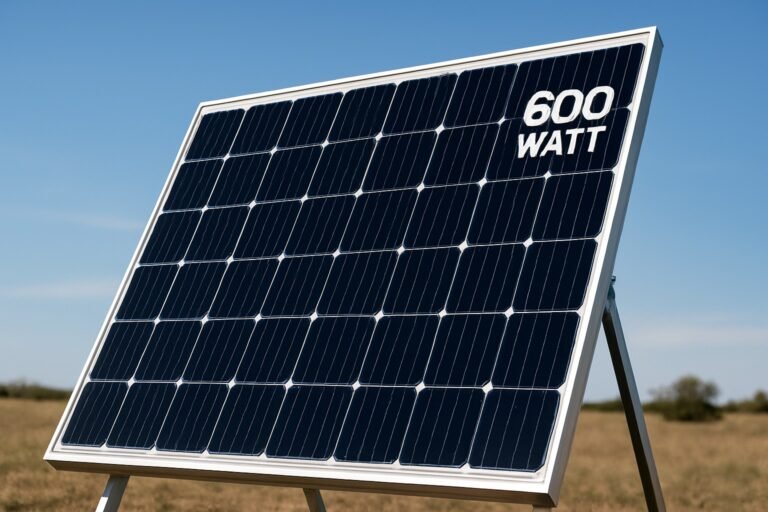
A 600 watt solar panel has become one of the most practical sizes for people who want solid power without needing a huge setup. It works well for homeowners trying to cut their electricity bills, RV users who need steady energy on the road, and anyone running a small off-grid system. A single 600 watt panel can charge batteries, run daily essentials, and support backup needs, making it a flexible option for different lifestyles. When people search for this panel, they usually want to understand its price, size, real output, and how it fits into a complete 600 watt solar panel kit. In this guide, you’ll get clear details on everything from dimensions to performance so you can decide whether this panel is the right match for your home, RV, or off-grid setup.
What Is A 600 Watt Solar Panel?
A 600 watt solar panel is a high-capacity photovoltaic panel designed to produce up to 600 watts of power under ideal sunlight. In simple words, it’s strong enough to run small appliances, charge batteries, and support daily essentials without needing a large array of panels. Most people use it for home backup, RV systems, and off-grid cabins because it offers a balance between power and space. This size is becoming popular in 2025 due to better cell technology, higher efficiency, and improved durability. Modern 600 watt panels often use features like half-cut cells, monocrystalline material, and low-light performance enhancements, which help them generate more power even when the weather isn’t perfect. From an expert point of view, this panel hits a sweet spot: it delivers solid output while staying compact enough to fit on RV roofs, small sheds, or limited home spaces. It’s a reliable choice for anyone looking for strong performance without overbuilding their system.
600 Watt Solar Panel Specifications
Size in Feet
Most 600 watt solar panels measure around 7.5 to 8 feet in length and 3.5 to 4 feet in width, depending on the brand and design.
Dimensions In Inches And Millimeters
When converted to exact numbers, the panel usually falls near:
- 90 to 96 inches long
- 40 to 45 inches wide
- Thickness: 2 to 1.6 inches
In millimeters, the size is close to 2,260 to 2,400 mm by 1,000 to 1,130 mm.
Efficiency Rating
Modern 600W panels offer high efficiency, usually 20 percent to 22.8 percent, thanks to half-cut cells, monocrystalline material, and improved low-light performance.
Voltage And Amperage Output
A typical 600 watt solar panel produces around:
- 30 to 42 volts
- 14 to 18 amps
These values change slightly based on sunlight, temperature, and shading.
Weight
Since it’s a large, high-capacity panel, the weight normally falls between 65 and 80 pounds, depending on the frame and glass thickness.
Temperature Coefficient
Most panels have a temperature coefficient of -0.30 to -0.36 percent per °C, meaning performance drops slightly as heat increases.
Frame Type And Durability
Good-quality 600W panels use a strong aluminum frame, tempered glass, and weather-resistant backing. This helps them handle wind, rain, dust, and long-term outdoor exposure.
Real-World Output Vs Rated Output
In real conditions, a 600 watt panel delivers around 450 to 550 watts during normal sunny hours. Perfect 600W output appears only under ideal test-level sunlight, but the panel still provides strong and steady power for homes, RVs, and off-grid setups.
Price Guide 2025: 600 Watt Solar Panel Price In The Market
The price of a 600 watt solar panel in 2025 depends on the brand, cell technology, warranty, and whether you’re buying just the panel or a complete kit. On average, a single 600W panel sits between 120 to 250 USD for standard models, while premium panels from well-known brands can reach 300 to 450 USD. Panels with higher efficiency, better low-light performance, and strong warranties naturally cost more. A 600 watt solar panel kit with a battery and inverter usually ranges from 600 to 1,200 USD, depending on battery capacity, inverter quality, and included accessories such as mounting brackets and wiring.
Monocrystalline panels are normally the most affordable, while bifacial panels cost slightly more because they generate power from both sides. PERC panels fall somewhere in the middle, offering better performance than older cells but still priced lower than advanced bifacial technology. When comparing prices, always check warranty details, frame quality, and certifications. A good deal includes solid efficiency, weather-resistant materials, and a trustworthy warranty. Avoid listings that look too cheap because they often lack proper testing, certifications, or long-term durability, which can lead to performance loss and early failure. If you live in a country offering solar incentives or tax credits, the overall cost may drop significantly, making the investment even better.
Types Of 600 Watt Solar Panels
A 600 watt solar panel comes in several designs, each offering different strengths based on where and how it will be used. The monocrystalline 600W panel is the most common and reliable choice. It delivers strong performance in various weather conditions, works well in low light, and remains the most efficient option for homes and RVs. A bifacial 600W panel can generate extra power by capturing light from the front and the back. It works best in open areas with reflective surfaces, such as rooftops or ground mounts, but is less suitable for tight RV roofs where the back side receives little light.
A split-cell 600W panel uses half-cut cells to reduce energy loss and handle shading better. This design improves performance on cloudy days and is durable enough for long-term outdoor use. Commercial-grade panels tend to be larger and heavier, offering more robust frames and longer warranties, while residential-grade panels focus on balanced size, lighter weight, and easier installation. When choosing the best panel for a specific need, homeowners usually prefer monocrystalline or split-cell designs for stable, year-round performance, while RV owners look for lighter panels with efficient shading tolerance.
From an expert perspective, panel quality, weather resistance, and efficiency ratings matter more than just wattage. A good 600 watt solar panel should maintain consistent output in heat, resist long-term UV exposure, and perform well during moderate shading. Choosing the right type depends on your location, roof space, sunlight conditions, and how much reliability you need from your system.
600 Watt Solar Panel Output: How Much Power Will You Actually Get?
A 600 watt solar panel performs differently based on sunlight, temperature, and installation quality. Under strong sunlight during peak sun hours, you can expect close to its rated output, usually between 500 and 600 watts for a few hours each day. On cloudy days, the panel may produce around 150 to 300 watts, depending on cloud density and light conditions. Weather also plays a big role. Solar panels work better in cooler temperatures, so output levels tend to increase on cold sunny days and drop slightly during hot summer afternoons because heat reduces cell efficiency.
The panel’s angle and shading also affect performance. A panel tilted toward the sun with no shadows will consistently produce more power, while even slight shading can cut output by a noticeable amount. In real conditions, a 600 watt panel normally produces around 14 to 18 amps at 30 to 42 volts, though this changes throughout the day as sunlight intensity shifts. When used correctly, this panel can power laptops, lights, fans, small appliances, and charge batteries efficiently, making it suitable for home backup, RV use, or off-grid setups.
What Can A 600 Watt Solar Panel Power
A 600 watt solar panel can support a wide range of devices, depending on how much sunlight you receive and whether you’re using a battery system. For home use, the panel can easily run daily essentials such as fans, LED lights, laptop chargers, a WiFi router, and other small appliances. It can also reduce the load on your grid power by covering a portion of your home’s basic energy needs. When paired with a battery, it becomes even more useful for handling short-term outages or nighttime use.
For RV or camper van setups, a 600 watt panel is strong enough to operate an RV fridge, charge electronics, power LED interior lights, run a water pump, and keep your battery bank topped up throughout the day. It’s ideal for travelers who want consistent off-grid power without relying on generators. In an off-grid cabin, this panel can manage daytime essentials like lights, charging devices, small fans, and other light loads. With a battery, it provides enough stored energy to handle nighttime power needs, making it a dependable option for simple, remote living setups.
600 Watt Solar Panel With Battery: Choosing The Right Storage Capacity
A 600 watt solar panel works best when paired with the right battery because storage determines how long your system can run after sunset. Most setups need a battery between 100Ah to 200Ah, depending on how much power you want to store. A 100Ah battery is enough for light use, such as lights, fans, and charging devices. For heavier loads or longer backup time, a 200Ah battery gives smoother performance. From an expert point of view, lithium batteries are the best match because they charge faster, deliver more usable power, and last longer. AGM batteries cost less but store less energy per cycle, take longer to charge, and have shorter lifespans.
A 600 watt panel usually charges a 100Ah lithium battery in about 3 to 5 hours of good sunlight, while a 200Ah battery takes longer because of its larger capacity. Depth of discharge also matters. Lithium batteries can safely use 80 to 90 percent of their total power, while AGM batteries should only use 50 percent to protect long-term life. When comparing costs, lithium batteries are more expensive upfront, but their longer lifespan makes them a better long-term value. For systems where reliability matters, choosing lithium storage is almost always the smarter investment.
600 Watt Solar Panel Kit With Battery And Inverter
A full 600 watt solar panel kit includes everything needed to run a small home setup, RV system, or off-grid cabin. The key parts start with a solar charge controller, which manages the panel’s power and protects the battery from overcharging. Most kits use either MPPT controllers for higher efficiency or PWM controllers for lower cost. The inverter is another important part. For 600 watts of input, a 1000W or 1500W inverter is recommended to handle small appliances, laptop chargers, lights, and other essential loads without strain. Battery options vary, but the best kits offer lithium batteries because of their faster charging and deeper discharge capability.
Most kits include cables, connectors, mounting brackets, breakers, and fuses, giving you a complete setup without needing extra hardware. For RV users, kits often include flexible mounting options and portable wiring systems. For home backup power, the kits usually focus on stable installation hardware and a larger battery. Off-grid cabin kits often come with heavier-duty mounting frames and higher-capacity batteries designed for long-term use. A well-made 600 watt solar panel kit gives you everything needed to run essential appliances smoothly, whether you are traveling, living remotely, or building a small backup system at home.
600 Watt Solar Panel for RV: What RV Owners Must Know
A 600 watt solar panel is one of the strongest and most practical choices for RV owners who want reliable off-grid power without relying on generators. Before installing one, it’s important to understand how it fits on your RV roof, how to wire it correctly, and what equipment gives the best long-term performance.
Roof Space Requirement
Most RV roofs can fit a 600 watt panel, but you still need to check your space carefully. A typical 600W panel is around 7.5 to 8 feet long and 3.5 to 4 feet wide. You need an area that’s open, flat, and free from roof vents, AC units, or antennas. Some RV owners prefer using two or three smaller panels instead of one large panel to make the layout easier, but a single 600W panel saves wiring time and reduces roof clutter.
Wiring Setup
For RVs, wiring should be clean and secure because vibrations from driving can loosen connections. Use proper MC4 connectors, tight cable routing, and rubber grommets where wires pass through the roof. An MPPT charge controller is strongly recommended because it produces more power throughout the day, especially during early morning and late afternoon sunlight.
Portable Vs Rooftop Panels
A single 600 watt panel is usually installed on the roof, but some RV owners choose portable folding panels to avoid drilling holes. Rooftop installations generate power while driving and don’t need setup time, while portable panels let you chase the sun by placing the panel at the perfect angle. For boondocking, a mix of rooftop power and portable add-ons works best.
Best Inverter Type
For a 600 watt RV system, a pure sine wave inverter around 1000W to 1500W is ideal. It safely runs sensitive electronics like laptops, chargers, fans, and the RV fridge without causing noise or damage. Modified sine wave inverters are cheaper but shorten appliance life and often cause humming in electronics.
Battery Compatibility
A 600 watt panel charges RV batteries well, but the best performance comes from lithium (LiFePO₄) batteries. They charge faster, weigh less, and deliver more usable power per cycle. A single 600W panel works well with a 100Ah battery, but RV owners who run fridges or fans for long hours prefer 200Ah or more for smoother performance.
RV-Specific Safety Tips
RV solar setups experience constant movement, heat, and dust, so safety becomes even more important. Use proper fuses near the battery, mount the panel securely to avoid wind lift, and check all connections every few months. Avoid letting wires rest against sharp metal edges and never overload the inverter with high-draw appliances like microwaves unless your system is designed for it.
600 Watt Solar Panel For Home: Smart Uses And Setup Tips
Homeowners choose a 600 watt solar panel because it delivers strong power without needing a large rooftop system. It’s a good option for smaller homes, sheds, backup setups, and anyone wanting to reduce their electricity usage. Most homes use one to three 600W panels depending on how much power they want to generate, though even a single panel can run daily essentials like lights, fans, chargers, and small appliances when combined with a battery. For grid-connected homes, pairing the panel with a grid-tie inverter helps feed excess power back into the system and reduces overall energy costs.
To get the best performance, the panel should be installed at an angle that matches your location’s latitude, with full exposure to sunlight and no shading. A south-facing position works best in most regions. Homeowners should also follow basic safety steps like using strong mounting hardware, checking for secure wiring, and installing proper fuses or breakers. A simple maintenance routine, such as cleaning the glass a few times a year and inspecting cables for wear, keeps the panel working efficiently for many years. With the right setup, a 600 watt panel becomes a dependable and cost-saving addition to any home.
600 Watt Solar Panel Installation: Step-By-Step Expert Guide
Installing a 600 watt solar panel is straightforward when you follow the correct steps. Start by measuring your space to confirm that the panel fits safely without touching vents, pipes, or roof edges. Once the area is ready, position and secure the mounting brackets using stainless-steel hardware to ensure long-term durability. After the brackets are in place, lift and mount the panel carefully, making sure it sits firmly on the frame.
Next, begin wiring the panel using MC4 connectors or the supplied cables. Run the wires neatly toward your charge controller, keeping them protected from sharp edges or moving parts. Once the wiring reaches the electrical area, connect the panel to the charge controller, matching the positive and negative terminals correctly. After that, connect the battery to the controller so the panel can charge it safely. When the battery setup is complete, you can add the inverter, which converts stored DC power into usable AC power for appliances.
Always include grounding and fuses to protect your system from surges or wiring faults. Before using the system, run a full testing and troubleshooting check: confirm the controller is detecting the panel, the battery is charging, and the inverter powers your devices without any fluctuation. With proper installation, a 600 watt solar panel can deliver stable and reliable energy for years.
Best 600 Watt Solar Panels In 2025
Choosing the best 600 watt solar panel in 2025 comes down to understanding how different models perform in real conditions. Instead of focusing only on wattage, it’s smarter to compare efficiency, durability, warranty strength, and real-world output. Below is a detailed comparison framework that helps readers judge panels the same way solar professionals do.
Efficiency
Most high-quality 600W panels fall between 20 to 22.8 percent efficiency. Panels using monocrystalline or half-cut N-type cells usually offer the highest output per square foot. Higher efficiency means better performance in low light, cooler mornings, and winter months.
Durability
Durability depends on frame strength, tempered glass quality, and resistance to heat and humidity. Panels with a thick aluminum frame and corrosion-resistant coating last longer, especially in sunny or coastal climates. Half-cut cell designs also help the panel handle microcracks and shading better.
Price
The price range varies by brand and technology:
- Standard monocrystalline 600W panels: mid-range cost
- PERC or N-type panels: slightly higher due to modern cell technology
- Bifacial panels: usually the highest because of dual-side power generation
Even with a higher price, advanced models often deliver better long-term value because they produce more power over their lifetime.
Warranty
Most good panels offer:
- Product warranty: 10–15 years
- Performance warranty: 25 years
Performance warranties matter because they show how much power the panel will still generate decades later. Panels that degrade slowly (less than 0.5 percent per year) hold their efficiency longer.
Real-World Performance
Lab ratings tell only part of the story. Real usage depends on temperature, sunlight quality, and angle. The best 600W panels:
- Perform well in high temperatures
- Maintain strong output under partial shading
- Deliver consistent power on cloudy days
- Have stable voltage and amperage throughout the day
Panels with better cooling design and low temperature coefficients stay close to their rated performance even during summer heat.
User Ratings
Users who installed 600W panels in 2024–2025 usually pay attention to:
- Ease of installation
- Build quality
- Long-term stability
- Output consistency
- Battery charging speed
Panels with higher user satisfaction often have stronger frames, better packaging, and stable power generation across different seasons.
Expert Opinion
Experts favor 600W panels that combine:
- Modern half-cut or N-type cells
- Solid frame strength
- High efficiency
- Reliable long-term warranty coverage
- Good low-light behavior
These features make a panel more dependable, especially for people who want consistent performance for home, RV, and off-grid applications.
600 Watt Solar Panel Pros And Cons
A 600 watt solar panel delivers strong performance for many setups, but like any hardware, it has strengths and limitations. Here’s a realistic breakdown based on real-world usage.
Pros
High power output:
A single 600W panel produces enough energy to support daily essentials, making it ideal for small homes, RVs, and off-grid cabins.
Great for limited-space setups:
Because you get more watts per panel, you need fewer panels overall. This helps homeowners with small roofs or RV owners with limited mounting space.
More affordable than larger commercial panels:
600W models are cost-effective compared to oversized commercial panels that require special mounting hardware or large open areas.
Cons
Requires proper mounting:
Because of its size and weight, a 600W panel needs strong brackets and secure installation to avoid movement during wind or storms.
Heat reduces output:
Like all solar panels, 600W units lose a bit of efficiency in high temperatures. Hot summer afternoons can reduce total watt output.
Not ideal for shaded roofs:
A shadow covering even a small part of the panel can significantly lower performance. This size panel works best in clear, open sunlight.
600 Watt Solar Panel Buying Checklist
Buying a 600 watt solar panel is a smart upgrade, but it’s easy to overlook important details when comparing different models. This checklist helps you focus on the right specs, avoid low-quality listings, and choose a panel that performs well for years.
What Specs To Check
Always start with the core technical details. Look at:
- Efficiency rating (higher means more power per square foot)
- Voltage and amperage output
- Panel dimensions to ensure it fits your roof or RV
- Temperature coefficient, which shows how much performance drops in heat
- Weight and frame type for long-term durability
These numbers tell you more about real-world performance than the watt rating alone.
How To Compare Efficiency
Efficiency affects long-term output. Panels between 20–22.8 percent are considered strong for 2025. Higher efficiency is especially important if you have limited installation space, live in a cooler region, or rely on low-light performance. When comparing two models with the same wattage, choose the one with better efficiency and lower degradation rates.
What Scam Listings Look Like
Scam or low-quality listings often show:
- Extremely low prices compared to the market
- Missing warranty details
- No brand information or certifications
- Unrealistic claims like “works in complete shade”
- Blurry product images or inconsistent dimensions
If a panel is priced far below others, it’s usually using low-grade cells or untested materials that won’t last.
What Warranty Actually Matters
Solar panels usually have two warranties:
- Product warranty – covers physical defects (10–15 years is good)
- Performance warranty – guarantees output over time (25 years is standard)
The performance warranty is the most important. Panels that promise at least 80–85 percent power after 25 years are more reliable and degrade slower.
What Accessories Must Be Included
A complete panel setup or kit should come with:
- MC4 connectors
- Mounting brackets or rails
- Cabling
- Fuses or breakers
- User manual
- Charge controller (if sold as a kit)
Missing accessories increase installation cost and delay your setup.
Mistakes New Buyers Make
New solar buyers often overlook real-world factors. Common mistakes include:
- Picking a panel based only on wattage
- Ignoring roof size and shading
- Choosing the cheapest option without checking build quality
- Forgetting to match the panel with the right battery or inverter
- Buying panels without proper warranties
- Assuming all 600W panels perform the same
A careful comparison helps you avoid these issues and ensures you get a panel that performs well throughout its lifespan.
600 Watt Solar Panel Vs 400W, 500W, And 700W Panels
Choosing between different wattages depends on budget, available space, and power needs. This comparison helps readers understand how a 600W panel performs against other common panel sizes.
| Feature | 400W Panel | 500W Panel | 600W Panel | 700W Panel |
| Price | Lowest cost; budget-friendly | Mid-range | Moderate to high | Higher cost due to size and tech |
| Efficiency | 18–21 percent | 19–22 percent | 20–22.8 percent | 21–23 percent |
| Ideal Users | Small RVs, sheds, tiny loads | Small homes, RVs | Homes, off-grid cabins, larger RV setups | High-demand users, commercial setups |
| Required Roof Space | Small space | Medium | Larger footprint | Largest and may not fit RVs |
| Real-World Performance | Steady but limited power | Good balance of size vs output | Strong power output, reliable for daily needs | High output but requires perfect conditions |
| Payback Period | Longest due to lower production | Medium | Strong return due to high efficiency | Good but depends on high energy usage |
A 600 watt panel often hits the “sweet spot” by offering strong watt output without requiring as much space as a 700W commercial-grade panel.
Maintenance Guide: Keep Your 600 Watt Solar Panel Working Long-Term
To keep a 600 watt solar panel performing at its best, regular maintenance is important. Start with cleaning the surface every few months, especially if you live in an area with dust, pollen, or pollution. A soft cloth and clean water are usually enough. Avoid using harsh chemicals that may damage the glass coating.
Next, do routine inspections to check for cracks, loose frames, or signs of wear. Examine the wiring and connectors to ensure they’re tight, corrosion-free, and not rubbing against sharp edges. A quick visual check can prevent electrical issues later. Safety is also important. Make sure the system has proper grounding and functioning fuses or breakers.
Tracking performance helps you spot problems early. If the panel produces noticeably lower power on sunny days, it could be due to shading, dirt buildup, or a loose connection. Monitoring tools or controller readings can help you catch these issues right away. With simple cleaning, inspections, and safe wiring checks, a 600 watt solar panel can continue delivering reliable power for many years.
Conclusion
A 600 watt solar panel is a smart choice for anyone who wants strong and reliable power without installing a large solar system. It offers a good mix of efficiency, size, and affordability, making it ideal for homes that want to reduce daily energy use, RV owners who need dependable off-grid power, and small cabins that rely on clean, steady electricity. With solid real-world performance, good battery compatibility, and long-term durability, this panel size delivers excellent value in 2025.
Whether you’re building a backup system, upgrading your RV setup, or starting an off-grid project, a 600W panel provides enough power for everyday essentials while staying easy to install and maintain. When paired with the right charge controller, inverter, and battery, it becomes a dependable energy source that works in different weather and sunlight conditions. For most users, it strikes the perfect balance between strength, size, and long-term savings.
FAQ’s:
How Big Is A 600 Watt Solar Panel?
Most 600 watt solar panels measure around 7.5 to 8 feet long and 3.5 to 4 feet wide, depending on the brand and cell design. The typical size is close to 90–96 inches by 40–45 inches.
How Many Amps Does A 600 Watt Solar Panel Produce?
A 600W panel usually produces around 14 to 18 amps in ideal sunlight. The exact number depends on voltage, cell type, temperature, and real-world conditions.
Can A 600 Watt Solar Panel Run A Refrigerator?
Yes, a 600 watt panel can run a small or RV-style refrigerator, especially when paired with a battery. For full-size home fridges, you may need more than one panel or a larger battery bank to support nighttime usage.
What Battery Is Best For A 600w Panel?
A lithium (LiFePO₄) battery is the best match because it charges faster, lasts longer, and provides more usable energy per cycle. A 100Ah or 200Ah battery works well depending on your power needs.
Is A 600 Watt Solar Panel Enough For An Rv?
Yes, a 600W panel is ideal for most RV setups. It can power lights, charge electronics, run the water pump, and operate an RV refrigerator. Pairing it with a good lithium battery ensures steady performance day and night.
How Many Units Can A 600w Panel Generate Daily?
A 600 watt panel can generate around 2.4 to 3.0 units (kWh) per day in strong sunlight. In cooler areas with good sun exposure, it may reach slightly higher numbers.
Disclaimer
The information in this guide is for general educational purposes only. Solar performance, pricing, and system compatibility can vary by location, brand, and installation conditions. Always consult a certified solar professional before making purchase or installation decisions.
