
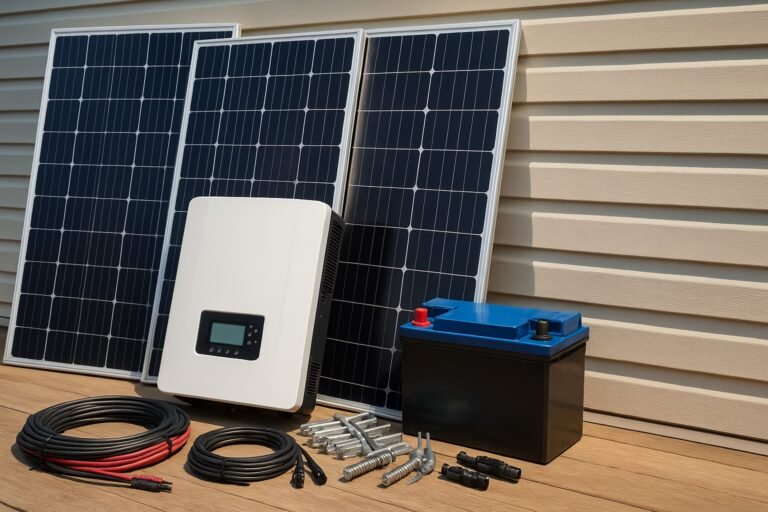
More homeowners are turning to solar panel kits for home because they offer something everyone wants today: control. Electricity costs continue to rise, power cuts are becoming more common, and people are looking for ways to reduce their monthly bills without dealing with complicated installations. Solar kits solve all of this in a simple, practical way. They come with everything you need — panels, an inverter, and often a battery — so you don’t have to figure out each piece separately.
What makes these kits even more appealing is their flexibility. You can install them yourself if you’re comfortable with basic tools, or you can get a professional to set them up. Many families prefer complete solar power kits for homes with battery and inverter because they provide backup power during outages and help maintain steady electricity throughout the day. Even small DIY solar kits can power essential appliances, making them popular for cabins, apartments, and homes that want energy independence.
As solar technology becomes cheaper and more efficient, these kits are no longer a niche product. They’re becoming a normal, smart choice for everyday homeowners who want reliable power, long-term savings, and a more sustainable lifestyle — without the stress of a full-scale solar installation. Let’s explore what these kits include, how they work, and how to choose the right one for your home.
What Exactly Is A Solar Panel Kit For Home?
A solar panel kit for home is a ready-made package that gives you nearly everything required to generate electricity from sunlight. Instead of buying each component separately, these kits combine the essential parts into one complete system, making it easier for homeowners to understand, install, and use solar power. The goal is simplicity — whether someone wants a basic backup setup or a full home system with battery storage.
Main Components Included In Most Home Solar Kits
Most solar kits follow a similar structure, even if brands and models vary. Here’s what you will typically find inside:
Solar Panels
These are the main energy producers. They absorb sunlight and convert it into usable electricity. Modern panels are more efficient and durable, offering long-term performance with minimal maintenance.
MPPT/PWM Charge Controller
The charge controller sits between the panels and the battery.
- MPPT controllers are more efficient and common in high-quality kits.
- PWM controllers are cheaper and used in smaller or budget-friendly setups.
Their job is to prevent overcharging and improve battery lifespan.
Solar Panel Kit With Inverter (Hybrid, String, or Microinverter)
The inverter converts solar power (DC) into household electricity (AC).
Common types include:
- Hybrid inverters: Support both grid power and batteries.
- String inverters: Affordable and used in traditional on-grid setups.
- Microinverters: Installed behind each panel for better efficiency and shade tolerance.
Battery Bank (Lithium or AGM)
A battery allows you to store extra power for night use or outages.
- Lithium batteries: Longer life, faster charging, higher performance.
- AGM/Lead-acid batteries: Cheaper but heavier and require more maintenance.
Wiring, Fuses, And Connectors
These accessories ensure safe and reliable connections between the panels, battery, and inverter. Quality wiring prevents power loss and reduces safety risks.
Mounting Hardware
Includes brackets, rails, and clamps for attaching panels to a roof or ground frame. Good mounting keeps panels secure and angled correctly for maximum sunlight exposure.
The Difference Between On-Grid, Off-Grid, And Hybrid Solar Kits
Solar kits come in different configurations depending on your home’s needs and whether you want backup power.
Solar Panel Kits for Home On Grid
These connect directly to your utility line.
- Best for lowering electricity bills.
- Does not work during a power outage unless paired with a battery.
- Commonly recommended by Home Depot, Lowes, and major solar retailers.
Off-Grid Solar Panel Kit With Battery and Inverter
This setup works completely independent of the utility grid.
- Ideal for remote locations, cabins, rural homes, and backup solutions.
- Includes its own inverter + battery bank.
- Offers full independence but requires enough storage to cover night usage.
Hybrid Solar Setups (Best of Both Worlds)
A hybrid kit combines grid power + battery energy.
- Works even during outages.
- Allows smart switching between solar, battery, and grid.
- Preferred in modern homes because it balances savings, backup power, and convenience.
Most top-ranking guides recommend hybrid or off-grid setups for homeowners who want stability and resilience, especially in areas with unstable electricity.
DIY Solar Panel Kits For Home Vs Professional Install Kits
Not every homeowner needs professional installation. Some prefer a hands-on approach, while others want a certified expert.
When DIY Makes Sense
DIY solar kits are ideal when:
- You only need a small or mid-size system.
- You’re comfortable using basic tools.
- The kit is designed for plug-and-play installation.
- You want to save on installation costs.
DIY kits are common for cabins, RVs, tiny homes, sheds, backyard rooms, and small homes with modest energy needs.
When to Hire an Installer
You should consider hiring a professional when:
- The system is large (5kW–15kW).
- Your home has old wiring or structural challenges.
- You need permits or grid approval.
- You want maximum efficiency and safety.
Professional installers handle roof assessments, electrical balancing, and code compliance.
What Top-Ranking Sites Recommend
Based on analysis of high-ranking sources (SolarReviews, CNET, Forbes, EcoFlow, Renogy, Home Depot):
- DIY kits work great for small or medium systems.
- Professional installation is safer and yields better performance for full home setups.
- Hybrid kits give the best long-term value for most households.
Types Of Solar Panel Kits For Home
Homeowners today have more options than ever when choosing a solar kit. Each type serves a different purpose, and understanding the differences helps you pick a system that matches your energy needs, budget, and location. Below is a clear, practical breakdown of the four main types of solar panel kits available in 2025.
On-Grid Solar Panel Kits (Best for Lower Bills)
On-grid solar kits are the most common option for homes connected to the local utility. These systems supply power to your home and send excess energy back to the grid.
Works with Net Metering
Net metering allows you to earn credits for the extra electricity your system sends to the grid. These credits reduce your monthly bill and help you recover your investment faster.
No Backup During Outage
On-grid kits do not work when the grid shuts down. Even if your panels are producing power, safety regulations require the system to shut off during an outage unless you add a battery.
Why Home Depot and Lowes Promote These Kits
Large retailers prioritize on-grid systems because they’re:
- Easier for homeowners to install
- Cheaper upfront
- Ideal for reducing electric bills
- Compatible with typical U.S. suburban homes
These kits are simple, cost-effective, and beginner-friendly.
Off-Grid Solar Panel Kits (Best for Backup & Rural Homes)
Off-grid kits operate independently of the utility grid. They generate and store their own electricity, making them ideal for remote places.
Works Without Grid
These systems produce and store enough energy to power homes in areas with no grid connection. Every watt you use comes directly from your panels and battery.
Perfect for Cabins and Remote Homes
Off-grid kits are popular for:
- Rural houses
- Farmhouses
- Mountain cabins
- Locations with unstable or no electricity
They offer independence and security where the grid is unreliable.
Includes Battery + Inverter Combo
A complete off-grid solar kit includes:
- Panels
- Charge controller
- A powerful inverter
- A battery bank
Without a battery, off-grid living is impossible, because you need storage for nighttime and cloudy days.
Hybrid Solar Kits (Most Recommended for 2025)
Hybrid systems combine the best features of on-grid and off-grid solutions, making them the top recommendation for most families today.
Both Grid + Battery
A hybrid kit can use solar power, store excess energy in batteries, and also stay connected to the utility. This provides flexibility and reliability.
Peak Shaving and Outage Protection
Hybrid systems can smartly switch between solar, battery, and grid to lower your power costs during expensive peak hours.
They also supply electricity during outages — something pure on-grid systems cannot do.
Preferred by Forbes & SolarReviews
Top-ranking review sites consistently recommend hybrid systems because they:
- Deliver long-term savings
- Offer backup power
- Support expanding battery capacity
- Work for nearly every home type
They are the modern “standard” for future-ready solar homes.
Portable Solar Panel Kits (EcoFlow, Jackery, Bluetti Models)
Portable solar kits are smaller systems designed for mobility and convenience rather than powering an entire house.
For Apartments, Renters, RV Owners
These kits are ideal when you cannot install panels permanently. People use them for:
- Apartments
- Camping
- RVs
- Outdoor workspaces
They help you power essentials without altering your home.
Expandable Battery Options
Brands like EcoFlow, Jackery, and Bluetti offer modular battery systems that can grow with your needs.
This flexibility makes portable kits great for small-scale solar beginners.
Solar Panel Kit With Battery And Inverter — Why It’s Becoming Standard
More homeowners now prefer complete solar kits that include both a battery and an inverter. The rise of outages, increasing electricity costs, and the demand for reliable backup power have pushed this setup into the mainstream.
Benefits Of A Complete Solar Power Kit For Homes With Battery
24/7 Power
The battery stores extra energy generated during the day and provides electricity at night or during cloudy weather. This ensures round-the-clock power.
Backup for Load Shedding/Outages
A battery gives your home steady backup power during grid failures — a major benefit in areas with unreliable electricity.
Long-Term Savings
Storing your own energy reduces peak-hour grid usage. Over time, this lowers your electricity bill and increases your return on investment.
Better ROI
A battery-based system delivers better overall value than a system without one, especially when you factor in:
- Reduced dependency on the grid
- Lower bill
- Protection during outages
- Increased home value
Battery Types Compared (Lithium vs Lead-Acid)
Choosing the right battery affects system performance, lifespan, and maintenance needs.
Lifespan
- Lithium (LiFePO4): 10–15 years, thousands of charge cycles
- Lead-acid/AGM: 3–5 years, fewer cycles
Lithium lasts more than double the lifespan of most lead-acid batteries.
Safety
- Lithium: Stable chemistry, built-in protection circuits, less heat
- Lead-acid: Can overheat or leak if poorly maintained
Lithium is widely considered safer for home use.
Cost
- Lithium: Higher upfront cost but better long-term value
- Lead-acid: Cheaper to buy but replacements cost more over time
Charging Speed
- Lithium: Fast charging, supports deeper discharge
- Lead-acid: Slower and less efficient
Lithium batteries handle modern hybrid inverters much more effectively.
How Much Battery Storage A Home Really Needs
To size a battery correctly, you need to understand your home’s energy usage. Here’s a simple, expert-backed approach.
kWh Requirements
Calculate your daily energy usage:
Average home: 10–20 kWh per day
Small apartment or tiny home may use less (3–7 kWh daily).
Peak Load Calculation
Peak load refers to the maximum number of watts your home uses at one time.
Example: Running AC, fridge, lights, and fans simultaneously.
A typical hybrid home needs:
- 3kW–5kW for small homes
- 7kW–10kW for larger families
Real-World Examples
- A 5kWh battery powers essential loads (lights, fans, WiFi, fridge) for several hours.
- A 10kWh battery supports bigger appliances like AC or washing machines.
- A 15–20kWh setup can power a full home for several hours during an outage.
Choosing The Best Solar Panel Kits For Home
Selecting the right solar panel kit for your home is more than picking a box off a shelf. It involves matching your usage, budget, quality expectations, and future plans. This guide will walk you through the key decisions so you feel confident in your choice.
How Many Watts Do You Actually Need?
- Kits vary frequently from 1 kW, 3 kW, 5 kW, up to 10 kW (and larger). The size you pick depends on how much electricity your household uses, how sunny your location is, and whether you’ll add batteries for backup.
- For example, a modest single-family home might consume 15–20 kWh per day in the U.S.; in Pakistan households might average lower load but still benefit from solar for critical loads and rising tariffs.
- To estimate:
- A 3 kW kit might run your fridge + lights + fans + some appliances.
- A 5 kW kit could handle larger houses with AC, multiple devices.
- A 10 kW kit is suited for large homes, heavy usage or future-proofing.
- It’s wise to list your major loads (AC unit say 1.5 kW, fridge 200 W, lights 100 W, fans 300 W) and estimate runtime. Then match to a system size that generates enough energy + buffer for cloudy days.
Cost Breakdown: Solar Panel Kits For Home Price Explained
- According to a recent U.S. study, the average cost for a 12 kW residential solar installation before incentives is about $29,649 in 2025.
- Cost per watt varies widely depending on region, system size and incentives (for example $/W may be $2.07 in Arizona vs higher elsewhere).
- Hidden costs often overlooked:
- Wiring and conduit runs
- Roof reinforcement or mounting upgrades
- Electrical permits and inspections
- Optional battery storage
- Labor, travel, system commissioning
- Compare: a kit bought for self-installation may cost less than a full professional install, but savings must be weighed against risk, time, and warranty coverage.
- In places like Pakistan, panel-only costs show ranges ~ PKR 24–40 per watt for premium brands.
Understand upfront cost and expected pay-back, not just kit price.
Evaluating Quality (What Experts Look At)
When comparing kits, experts check these details carefully:
- Panel efficiency: higher efficiency panels cost more but require less roof area and often perform better in low light or heat.
- Inverter brand reputation: a good inverter matters as much as the panels — reliability, support and compatibility with batteries or grid vary widely.
- Battery cycle ratings: if your kit includes storage, check how many cycles the battery supports, depth-of-discharge permitted, warranty terms.
- Warranty comparison: Look for warranties on panels (often 20–25 years), inverters (5–10 years), and battery (often 5–15 years). Better warranty = better trust.
- Also consider installation quality, wiring standards, brand support, local service, and whether the kit is expandable in future.
Recommended Brands Based On Top-Ranking Pages
Drawing from top-ranking review sites and product listings, here are brands you may want to keep on your shortlist:
- Renogy: well-known in DIY and mid-size solar kits, solid build quality.
- EcoFlow: innovative battery + panel systems, praised for smart features.
- Bluetti: strong in portable and storage-integrated kits, growing in home backup space.
- Grape Solar: another reputable brand for residential kits (less frequently cited in global rank lists but strong regionally).
- Jackery: well known for portable solar + battery combos, useful for rentals, smaller homes, and backup systems.
- Retail outlets like Home Depot often list their own kit bundles or partner brands, giving easier access for U.S. homeowners.
- Amazon: Amazon’s best-rated kits are often good entry choices; check reviews carefully.
When choosing, compare the same spec kit across these brands, check local availability, and service support.
Installation Guide: How To Set Up DIY Solar System Kits Safely
Installing a solar panel kit at home can be straightforward when you understand the basic steps and follow safety practices. Even if you choose to hire a professional later, knowing the process helps you make better decisions and avoid costly mistakes.
Basic Tools You’ll Need
Before starting, gather the essential tools used in most DIY solar installations:
Drill, MC4 Crimper, Tester
A drill is needed for mounting panels and brackets. An MC4 crimping tool helps secure solar connectors, and a multimeter or tester ensures your wiring is safe and working correctly.
Safety Gear
Use gloves, shoes with good grip, and protective eyewear when working on the roof or handling wiring. Safety gear reduces the risk of cuts, shocks, and slipping.
Step-By-Step Solar Panel Kit Home Installation Walkthrough
The installation process varies slightly depending on the kit size, but most home systems follow these steps:
Step 1: Site Survey
Choose a location with maximum sunlight — usually the roof facing south or southwest. Make sure there are no nearby trees, walls, or structures casting shadows during peak sunlight hours.
Step 2: Mounting Panels
Install the mounting brackets first, ensuring they’re aligned and securely fixed. Attach the panels to the brackets and tighten all bolts to prevent movement during storms or strong winds.
Step 3: Wiring Panels
Connect the panels in series or parallel as recommended by your kit. Use MC4 connectors to make secure, weather-resistant connections. Double-check polarity to avoid damaging the inverter.
Step 4: Connecting the Battery Bank
If your solar kit includes a battery, place it in a cool, dry, and ventilated spot. Connect the charge controller between the panels and the battery to regulate charging.
Step 5: Inverter Setup
Mount the inverter close to the battery bank for efficient power transfer. Connect the inverter to your home’s main distribution board if you’re setting up a hybrid or on-grid system.
Step 6: Testing System
After all connections are made, turn on each component one by one. Check voltage levels, panel output, and battery charge status. Fix any loose wires or incorrect connections immediately.
Safety Warnings Most Beginners Don’t Know
Working with solar power involves both height and electricity, so certain risks are easy to overlook.
Voltage Handling
Even small kits can produce high DC voltage. Touching exposed wires can cause shock or burns. Always keep your hands dry and tools insulated.
Overcurrent Protection
Use proper fuses and breakers to prevent overload. Without them, a short circuit can damage equipment or cause fire.
Fire Safety
Avoid placing batteries in hot or enclosed spaces. Poor ventilation increases fire risk, especially with older battery technologies.
Roof Damage Risks
Incorrect drilling can cause leaks. Always use proper flashing, sealing, and waterproofing when mounting panels.
Mistakes New Homeowners Commonly Make
Many first-time buyers repeat the same errors — and they’re easy to avoid when you know what to look out for.
Undersizing Inverter
If your inverter is too small, it won’t handle peak loads like AC or refrigerators. Always size it slightly above your home’s highest expected load.
Wrong Battery Chemistry
Some homeowners buy lead-acid batteries thinking they’re cheaper, only to replace them quickly. Lithium batteries cost more upfront but last significantly longer.
Buying Low-Quality Panels
Cheap panels may work at first but degrade faster, reducing your system’s output over time. It’s better to choose reputable brands with tested performance.
Overloading Panel Strings
Connecting too many panels to one string can exceed voltage limits. Always follow the inverter’s maximum voltage and amperage guidelines.
Maintenance & Troubleshooting Guide
A solar system is low-maintenance, but regular care ensures long-lasting performance. Most problems are preventable when you understand how to look after your system.
How To Maintain Solar Panels For Maximum Efficiency
Cleaning Schedule
Dust, bird droppings, and pollution reduce panel efficiency. Clean panels once every 1–2 months with soft water and a non-abrasive cloth.
Shade Management
Trim any trees that begin to cast shadows on your panels. Even a small shaded area can lower the output of the entire string.
Annual Inspection Tips
Once a year, check the mounting structure, wiring, connectors, and inverter display for any signs of wear, corrosion, or loose connections.
Battery Maintenance Tips (Lithium vs AGM)
Depth of Discharge
Lithium batteries can handle deeper discharge levels, while AGM batteries should not be drained too far to maintain lifespan.
Avoiding Overcharging
Always use a quality charge controller. Overcharging shortens battery life and increases the risk of overheating.
Temperature Control
Keep batteries away from extreme heat. High temperatures speed up battery degradation regardless of technology.
Common Problems & How To Fix Them
Low Voltage Output
Check for shading, dirty panels, or loose connectors. These are the most common causes of reduced power.
Inverter Trips
This may happen due to overload, wiring errors, or low battery voltage. Restart the inverter after checking connections and loads.
Battery Draining Too Fast
A battery may drain quickly if it’s undersized, too old, or overused. Check usage patterns and cycle count.
Panel Mismatch Issues
Panels with different wattages or voltages in the same string create imbalance. Always use matching panels or separate strings.
Real-World Use Cases & Personal Experience Tips
Choosing a solar kit becomes easier when you match it to your lifestyle and daily energy habits. Here are practical setups that work well for different types of homes and situations, along with expert-backed advice drawn from real-world installations.
Best Solar Kit Setup For Small Homes, Apartments, And Tiny Houses
Small spaces usually need simple, compact systems that don’t overwhelm the roof or budget.
A 1kW–3kW kit is often enough to handle essentials like lighting, fans, a fridge, chargers, and small devices. Apartments or rented spaces also benefit from portable solar kits, which don’t require permanent roof drilling and allow easy relocation. Tiny homes, cabins, and backyard rooms often choose off-grid kits with a small battery, giving them power even without access to the grid.
Best Solar Kit Setup For Large Homes (5kw–15kw Systems)
Large homes with multiple appliances, air-conditioning, and higher daily usage generally require 5kW–15kW solar kits. These systems generate more energy, support heavier loads, and work well with hybrid inverters.
Most homeowners in this category prefer setups with:
- A larger inverter (5kW–10kW or more)
- Multiple battery modules for dependable backup
- High-efficiency panels to maximize roof space
These kits are ideal for families that want stable, long-term solar power with minimal reliance on the grid.
Solar Kits For Emergency Backup Or Load-Shedding Regions
In areas where power cuts are common, a solar kit with a battery becomes essential. Even a modest 2kW–5kW system with lithium storage can keep essentials running during outages — such as fans, lights, WiFi, TV, freezer, and some medical devices.
People living with unpredictable electricity often choose:
- Off-grid or hybrid setups
- Lithium battery banks for fast charging
- Solar kits that can expand later
This ensures the home has steady backup power and isn’t forced to rely entirely on the grid.
Expert Tips On Reducing Solar Kit Cost Without Sacrificing Quality
Solar can be affordable when you know where to cut costs and where to spend wisely.
Used Panels
Many homeowners buy used or refurbished panels. They’re cheaper and still offer good performance because panels naturally degrade slowly over time.
DIY Mounting
Installing the mounting structure yourself can save a significant amount. As long as you follow safe drilling and sealing practices, it’s a good way to reduce labor expenses.
Expandable Inverter Strategy
Rather than buying the biggest inverter upfront, some people start with a medium-size hybrid inverter that supports future expansion. This keeps initial costs low while allowing upgrades later.
Comparing Solar Panel Kits for Home
These simple comparison tables help you understand the differences at a glance and choose the right kit for your home.
Table: On-Grid Vs Off-Grid Vs Hybrid Kits
| Type of System | Works During Outages | Uses Battery | Best For | Main Benefit |
| On-Grid | No | Optional | Homes wanting lower electricity bills | Lowest upfront cost |
| Off-Grid | Yes | Yes | Remote areas or no-grid homes | Full energy independence |
| Hybrid | Yes | Yes | Most modern homes | Savings + backup power |
Table: Top 5 Best Solar Panel Kits For Home
(Values generalized for clarity; exact figures change by brand and region)
| Solar Kit | System Size | Battery Included | Best Use Case | Price Range |
| 5kW Hybrid Kit | 5kW | Yes | Medium to large homes | Mid–High |
| 3kW Off-Grid Kit | 3kW | Yes | Cabins, small homes | Medium |
| 10kW On-Grid Kit | 10kW | No | Large homes focusing on savings | Medium–High |
| Portable Solar Kit (EcoFlow/Jackery Style) | 0.5–2kW | Yes | Apartments, renters | Low–Medium |
| 1kW Starter Kit (Budget DIY) | 1kW | Optional | Beginners, sheds, tiny homes | Low |
Table: Solar Kit With Battery Vs Without Battery
| Feature | With Battery | Without Battery |
| Works During Outages | Yes | No |
| Monthly Bill Reduction | Higher (peak shifting) | Moderate |
| Upfront Cost | Higher | Lower |
| Ideal For | Backup power, unstable grids | Bill savings only |
| Flexibility | High | Moderate |
Conclusion
Choosing a solar panel kit for home is one of the smartest steps you can take toward gaining more control over your energy use. These kits offer a practical blend of affordability, independence, and long-term reliability, especially as electricity costs rise and homeowners look for stable solutions. Whether you live in a small apartment or a large family home, modern solar kits — especially hybrid systems with battery storage — make it easier to power essential appliances, reduce your monthly bills, and stay prepared during outages.
Before making your final decision, think about your energy needs, your roof’s sunlight exposure, and whether you need backup power. Start with a system size that fits your lifestyle, choose reliable brands with solid warranties, and don’t rush the installation process. With proper planning and the right setup, a solar panel kit becomes more than just a home upgrade — it becomes a long-term investment in comfort, savings, and peace of mind.
FAQ’s:
How Much Does A Solar Panel Kit For Home Cost In 2025?
Prices vary depending on system size, battery type, and brand. Small starter kits may cost as little as the price of basic portable systems, while larger home kits with hybrid inverters and lithium batteries can be on the higher end. Most homeowners choose setups in the mid-range depending on their needs, roof space, and energy usage.
What Size Solar Panel Kit Do I Need For A 3-Bedroom House?
A typical 3-bedroom home usually needs a 3kW–7kW solar kit, depending on how often appliances like air conditioners, refrigerators, and heaters run. Homes with heavier usage or families of four or more often prefer a 5kW–10kW system to comfortably cover daytime use and reduce monthly bills.
Is A Solar Panel Kit With Battery Worth It?
Yes, especially if you live in an area with frequent outages or high peak-hour electricity rates. A battery stores extra solar energy for night or emergency use, giving you reliable backup power and better long-term value. While battery kits cost more upfront, they provide more stability and independence.
Can I Install A Solar Kit Myself?
You can install small and medium-sized kits yourself if you’re comfortable using basic tools and following wiring instructions. Larger systems or on-grid installations often need a professional installer to ensure safety, correct load balancing, and local code compliance. Many homeowners choose a mix: DIY mounting + professional electrical connection.
How Long Do Solar Kits Last?
Solar panels usually last 20–25 years or more with proper care.
- Inverters typically last 5–10 years.
- Lithium batteries last 10–15 years, depending on use and temperature.
The system’s lifespan improves with regular cleaning and timely maintenance.
Do Solar Kits Work During Power Outages?
Only off-grid and hybrid solar kits work during outages.
A standard on-grid kit shuts down for safety when the grid goes offline. To keep your home powered, you need a battery-supported system or hybrid inverter designed for backup.
Are DIY Solar Panel Kits Safe?
DIY kits are safe when installed correctly. Most come with plug-and-play wiring and safety instructions. However, high-voltage DC electricity can be dangerous if handled incorrectly, so beginners should follow manuals carefully and consider professional help for complex or roof-heavy installations.
What Is The Best Solar Panel Kit For Home Use?
The “best” kit depends on your needs:
- Small homes or apartments: Portable or 1kW–3kW kits
- Medium homes: Hybrid kits around 5kW–7kW
- Large homes: 10kW+ hybrid systems with battery backup
Look for good panel efficiency, a reliable inverter, long battery lifespan, and a warranty that matches your expected usage.
Disclaimer
The information in this article is for general guidance only and should not be considered professional electrical or installation advice. Solar requirements vary by location, home design, and energy usage. Always consult a qualified solar technician or licensed electrician before making installation decisions or modifying your home’s electrical system.
