
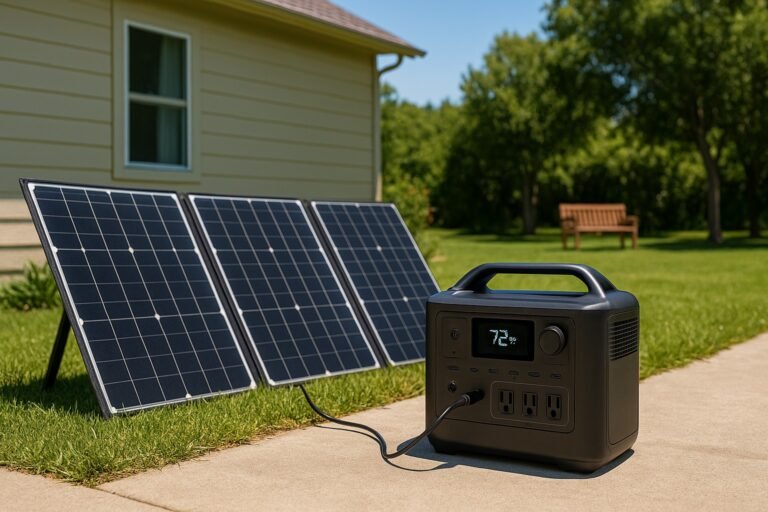
Here’s the thing — if you’re considering a solar powered generator for your home or outdoor kit, you’ll want to cut through the hype and focus on what truly matters. A solar powered generator is a clean energy system that converts sunlight into electricity and stores it for later use. Unlike fuel-based generators, it doesn’t rely on gasoline or diesel. Instead, it combines solar panels, a battery, and an inverter to provide reliable, renewable power whenever you need it.
In today’s world, where power outages, rising energy costs, and environmental concerns are part of daily life, these generators have become a practical and eco-friendly solution. Whether you’re looking for a home backup system to keep your essentials running or a portable power station for camping and travel, solar powered generators offer quiet operation, zero emissions, and long-term savings. They’re no longer just a futuristic idea — they’re a smart investment for anyone who values independence, sustainability, and peace of mind.
What Is A Solar Powered Generator?
A solar powered generator is a compact, self-contained power system designed to capture sunlight and convert it into usable electricity. It typically includes four main components: solar panels, a charge controller, a battery, and an inverter. The process starts with the solar panels absorbing sunlight and converting it into direct current (DC) electricity. That electricity then passes through a charge controller, which manages the flow of energy to prevent overcharging. The stored power sits in the battery until it’s needed, and the inverter converts it into alternating current (AC) — the same type of power your home appliances use.
Unlike traditional fuel generators, solar powered generators operate silently and require almost no maintenance. There’s no need for gasoline, oil changes, or dealing with fumes. They’re completely emission-free, which makes them safer for indoor and outdoor use. This simplicity also means fewer moving parts and less chance of mechanical failure, resulting in a longer operational life.
You might hear similar terms like “solar generator,” “portable solar power station,” or “solar powered generator with battery backup.” All refer to systems that combine solar charging with stored battery power, but they vary in capacity and portability. A portable solar power station is often lighter and designed for camping or small electronics, while a solar powered generator with battery backup can support larger home appliances during outages. Essentially, they all serve the same purpose — providing clean, renewable energy wherever it’s needed most.
Why Choose A Solar Powered Generator? Key Benefits & Use Cases
A solar powered generator offers a reliable, eco-friendly, and cost-effective alternative to fuel-based systems. It’s designed for people who want dependable power without the noise, pollution, or ongoing expense of traditional generators. Let’s look at the main benefits and how different setups fit real-world needs.
Benefits
- Clean energy source: A solar powered generator runs entirely on sunlight, meaning it produces zero emissions and has no environmental impact. You don’t have to worry about fuel spills, exhaust fumes, or noise — it’s a quiet, planet-friendly solution.
No fuel cost: Once installed, sunlight is free. You can skip the constant fuel purchases that come with gasoline or diesel generators, leading to substantial long-term savings.
Low maintenance: With fewer moving parts, solar systems require minimal servicing. You won’t need oil changes, filter replacements, or refueling. This simplicity makes them perfect for long-term home use or emergency backup.
Portability and flexibility: Many modern models are compact and easy to move, making them suitable for both home backup and outdoor adventures. You can charge devices, power small appliances, or even run essential home systems during an outage.
Use Cases
- Home backup during outages: A solar powered generator ensures your essentials — refrigerator, lights, WiFi — keep running when the grid fails.
Portable power for daily use: Smaller models can act as a portable solar powered generator for home, perfect for maintaining critical electronics during short blackouts.
Camping and outdoor travel: A solar powered generator for camping keeps your phones, lights, and cooking gear powered without any noise or pollution.
High-output systems: If you need more energy for large appliances or extended off-grid living, consider mid-sized to larger setups such as a 5000 watt solar generator or a solar powered generator 10,000 watts, which can power tools, air conditioners, or even a small home.
Expert Tip:
From real-world experience, don’t just focus on wattage. Look at runtime, battery chemistry, and expandability. A generator with a higher-quality battery (like LiFePO4) and the option to add extra panels or batteries will serve you longer and adapt as your energy needs grow.
Key Components & What To Look For
Before buying a solar powered generator, it’s essential to understand the parts that make it work efficiently. Each component affects how much power you get, how long it lasts, and how easy it is to use. Here’s what you need to look at closely before making your choice.
Solar Panels / Input
The solar panels are your generator’s main power source. Their wattage determines how quickly they can recharge your system. Monocrystalline panels are more efficient and space-saving, while polycrystalline panels are cheaper but slightly less effective in low light. Make sure your panels are positioned at the right tilt angle and orientation toward the sun for maximum efficiency.
Battery / Energy Storage
The battery stores the energy your panels collect. Modern solar powered generators use different battery chemistries, such as LiFePO4 (lithium iron phosphate), NMC (lithium-ion), or AGM/Gel (lead-acid). LiFePO4 is the most durable, offering a longer lifespan and deeper discharge levels. Pay attention to depth of discharge (DoD) and cycle life, which show how much usable energy you get and how long the battery will last.
Inverter & Output
The inverter converts stored DC power into AC electricity, allowing you to run everyday appliances. A pure sine wave inverter is ideal because it provides smooth, stable power safe for electronics and motors. Always check both the continuous watt rating (how much it can deliver steadily) and the surge capacity (short bursts needed for starting appliances like refrigerators or pumps).
Charge Controller & Management
This component manages how electricity flows from your panels to your battery. MPPT (Maximum Power Point Tracking) controllers are more efficient than PWM (Pulse Width Modulation) versions, especially in variable sunlight. Look for built-in safety features like over-charge and short-circuit protection to ensure reliable long-term use.
Portability, Monitoring & Extras
If you plan to use your generator for camping or travel, check its weight, handles, or wheels for easy transport. Many modern systems include smart app monitoring, letting you track input, output, and battery health in real time. Multiple solar input ports also make expansion easier.
Things To Check Before Purchase
Before buying, review key specs like the solar panel type, battery capacity, surge rating, and inverter strength. These determine how well your generator performs in different conditions and how many devices it can safely run.
Pro Tip:
Think of your purchase as a complete system, not just a single box. For home backup, you might need extra solar panels, an additional battery bank, better wiring, or even professional installation to ensure everything runs smoothly. Planning for expandability will help your setup grow with your energy needs.
Choosing The Right Size & Capacity
Selecting the right solar powered generator starts with understanding your energy needs. Every appliance draws a specific amount of power, and choosing a generator that matches (or exceeds) your total load ensures consistent performance.
Understanding Your Load
Start by listing the essential appliances you plan to run. Common examples include:
- Refrigerator: ~150 W
- Freezer: ~100 W
- LED lights: ~10–20 W each
- WiFi router: ~15 W
- Laptop: ~60 W
If your fridge uses 150 watts and runs for 8 hours, it consumes about 1,200 watt-hours (Wh) in a day. By estimating each item’s wattage and usage time, you can calculate your total daily consumption.
Matching Generator Size
For home backup, look for systems rated between 3000–5000 watts output with 3000–10,000 Wh battery storage. This range can power essentials like lights, a refrigerator, a fan, and small electronics. For larger households or off-grid setups, a solar powered generator 10,000 watts or higher provides more comfort, allowing use of heavy appliances or even partial home automation.
Solar Panel Sizing + Battery Bank Sizing
Your panels need to collect enough power to fully recharge your batteries during daylight. For instance, if your system stores 5000 Wh and you have 5 hours of strong sunlight, you’d need roughly 1000 watts of solar panels (5000 Wh ÷ 5 hrs = 1000 W). Always plan your solar array and battery bank together, ensuring they’re balanced for your usage and local sun conditions.
Portability vs Full-Home Tradeoff
A portable solar powered generator for home typically includes a 1000–2000 Wh battery and 1000–2000 W output, ideal for essentials or short power outages. In contrast, a full-home backup system is larger and often installed permanently with higher capacity and heavier components. The right choice depends on how much mobility and energy independence you want.
Expert Tip:
Always build in 20–30% extra capacity to handle unexpected surges, inverter losses, and cloudy days. This safety margin ensures your system performs smoothly even under imperfect conditions.
Top Use-Case Scenarios & Best Match Products
Choosing the right solar powered generator depends on where and how you plan to use it. Each situation requires different power levels, portability, and battery size.
Home Backup (Stationary)
The best solar generator for home backup offers high continuous output, a large battery capacity, and possibly a wall-mounted or modular design. These systems can support refrigerators, lights, fans, and routers for several hours or even days.
Portable Home Backup / On-The-Go
A portable solar powered generator for home is smaller but highly practical for short-term use. It can keep WiFi, phones, and LED lights running during outages. These models recharge quickly and are easy to store.
Camping / Outdoor / RV
A solar powered generator for camping should be lightweight, durable, and easy to move. Look for one with multiple USB ports, DC outputs, and solar inputs to charge phones, lights, mini-fridges, and even small cookers without noise or fumes.
High-Power Systems
For serious energy demands — workshops, off-grid homes, or RVs — consider a 5000 watt solar generator or even a solar powered generator 10,000 watts. These can run heavy-duty equipment, water pumps, or charge electric vehicles.
Brand & Model Insights (Expert-Backed)
Experts often categorize solar generators into small, midsize, and large/premium classes. Brands like EcoFlow, Bluetti, Jackery, and Goal Zero consistently rank high for performance, battery life, and smart monitoring features. The EcoFlow solar powered generator, for example, is known for its fast charging, expandable battery, and app control, making it a top pick for both home and travel.
Price Considerations
The solar powered generator price varies widely. Smaller portable units may start around $400–$800, mid-range home backup systems cost $1,000–$3,000, and high-end or expandable setups can exceed $5,000–$10,000. Factors influencing cost include battery type, capacity, inverter size, and brand reputation. While the initial investment may seem high, the long-term savings in fuel, maintenance, and grid independence make it a smart and sustainable choice.
Installation, Maintenance & Best Practices
Setting up a solar powered generator the right way makes all the difference in performance and longevity. With careful installation, regular maintenance, and a few smart upgrades, you can keep your system running efficiently for years.
Installation Tips
Proper placement is key. Install your solar panels in an area with full sun exposure for most of the day, ideally facing south (in the northern hemisphere) or north (in the southern hemisphere) at the correct tilt angle. Avoid shaded areas or spots near tall buildings or trees that may block sunlight. When connecting the system, keep wiring runs short to minimize energy loss, and ensure all cables are properly insulated. Your inverter and battery should be placed in a cool, ventilated area away from direct heat or moisture to prevent overheating and extend their lifespan.
Maintenance
Regular care keeps your solar powered generator performing at its best. Keep the battery at partial charge during storage and avoid completely draining it, especially for lithium systems. Clean solar panels every few weeks using a soft cloth and mild soap to remove dust and debris that reduce efficiency. Periodically inspect wiring connections for wear, corrosion, or loose fittings. A quick check every month or two prevents small issues from turning into bigger problems.
Safety Considerations
Always prioritize safety when setting up your generator. Use proper grounding to prevent electrical hazards, and install surge protection devices to protect your inverter and battery from power spikes. For home backup systems, ensure the setup complies with local electrical codes and have a qualified professional verify the installation if needed.
Expert Tip From The Field
In my experience, it’s often better to run your system slightly off-grid rather than syncing it directly to an unreliable power source. This keeps your stored energy stable and ensures you always have backup power, especially in areas with frequent voltage fluctuations.
Upgrades & Expansion
If you plan ahead, you can easily expand your solar system later. Choose a modular setup that allows for additional battery packs or solar panels as your power needs grow. Look for systems with extra input ports, smart app monitoring, and upgrade-ready designs. Future-proofing your generator helps you stay prepared for increased energy demands without replacing your entire setup.
Common Mistakes & How To Avoid Them
Even well-intentioned buyers sometimes make errors that affect their generator’s performance. Knowing these common mistakes can save you time, money, and frustration.
- Under-sizing the system: Many people underestimate their energy needs. Always calculate your total watt-hours and include extra capacity for cloudy days or power surges.
Choosing the wrong battery chemistry: Cheaper batteries like lead-acid may save upfront costs but have shorter lifespans. Lithium options, especially LiFePO4, provide better durability and deeper discharge.
Ignoring portability vs power trade-offs: High-power systems are heavier, while portable ones have limited capacity. Pick based on how you actually plan to use it.
Poor panel placement: Panels installed at the wrong angle or in shaded spots won’t deliver their full potential. Optimize their direction and tilt to match your location’s sunlight pattern.
Skipping warranty and service checks: Always check the warranty terms and ensure the brand offers reliable service or parts support.
Expert advice: Before finalizing your system, simulate worst-case scenarios — such as several cloudy days with high power use — to make sure your setup can handle real-life conditions.
Emerging Trends & Future Outlook
The solar power industry is evolving fast, and solar powered generators are at the center of this transformation. With new technologies, smarter designs, and lower costs, they’re becoming more efficient and accessible than ever.
Battery Chemistry Improvements
One of the biggest shifts is the move toward lithium-iron-phosphate (LiFePO4) batteries. These batteries are safer, more stable, and last much longer than older lithium-ion or lead-acid options. They allow deeper discharge cycles, meaning you can use more of your stored power without damaging the battery — a major advantage for both home backup and off-grid users.
Integrated Solar + Generator Hybrids
Another emerging trend is the rise of hybrid systems that combine solar energy with traditional grid or fuel-based backup. These setups give homeowners the best of both worlds: clean energy most of the time and a secondary power source for emergencies. It’s a smart way to stay powered even during prolonged cloudy periods or severe weather events.
Smart Home Integration & IoT Monitoring
Modern solar powered generators are becoming part of the smart home ecosystem. Built-in IoT connectivity allows users to monitor performance through mobile apps, track battery health, and even schedule power usage. Predictive maintenance systems can alert you before a potential issue arises, increasing reliability and reducing downtime.
Larger Home-Scale Systems
The market is also moving toward 10 kW+ solar generator systems, capable of powering an entire household. These modular setups can be expanded over time with additional batteries or panels, allowing full-home coverage without switching to a full solar roof system. This flexibility appeals to homeowners seeking energy independence without the cost of large installations.
Sustainability & Circular Economy
As sustainability takes center stage, manufacturers are focusing on battery recycling and second-life applications. Used batteries from electric vehicles or older solar systems are being repurposed for stationary energy storage, reducing waste and production costs. This not only benefits the environment but also makes solar powered generators more affordable in the long run.
Expert Perspective
In the next five years, the cost per watt-hour (Wh) is expected to drop significantly due to advances in manufacturing and wider adoption. This means that home-scale solar powered generators will soon become mainstream, offering reliable, sustainable energy at prices that rival traditional power systems. In other words, clean, independent energy will no longer be a luxury — it will be the standard.
Conclusion
Choosing the right solar powered generator isn’t just about picking the biggest or most expensive model — it’s about finding one that truly fits your lifestyle. Whether you need a home backup system for power outages or a portable setup for camping trips, understanding the components and how they work together makes all the difference. When you size your system correctly, pair it with a quality battery and inverter, and plan for proper sunlight exposure, you’ll enjoy steady, clean power that supports your daily needs without the noise or hassle of fuel.
So yes, a solar powered generator can totally change how you power your home or adventures. With the right setup, you’ll be ready for outages, off-grid living, and any situation that demands reliable energy. Just remember — maintain your system, keep your panels clean, and consider future upgrades as your needs grow. The result is more than just backup power; it’s peace of mind, energy independence, and a step toward a more sustainable future.
FAQ’s:
What’s The Difference Between A “Solar Generator” And A “Portable Solar Power Station”?
A solar generator is a broader term that covers any system using solar panels, batteries, and an inverter to generate electricity. A portable solar power station, on the other hand, is a compact version designed for mobility. It’s lightweight, easy to carry, and perfect for camping or short-term home backup, while larger solar generators are built for extended or whole-home use.
Can A Solar Powered Generator Replace My Home’s Fuel-Based Generator Fully?
Yes — but it depends on the system’s size and your energy needs. A solar powered generator with enough panels and battery capacity can replace fuel-based models for most homes. However, for continuous high loads or cloudy regions, pairing it with a hybrid or grid backup system ensures uninterrupted power.
How Many Solar Panels Do I Need For A 5000 Watt Output System?
To support a 5000 watt solar powered generator, you generally need around 15 to 20 solar panels rated at 300–400 watts each, depending on sunlight availability. The exact number can vary based on location, average sunlight hours, and system efficiency.
What Size Battery Do I Need To Keep A Fridge & Essentials Running For 8 Hours?
A refrigerator (150 W), lights (100 W), and WiFi (15 W) running for 8 hours would require around 2,000–2,500 Wh of stored power. A battery of at least 2.5 kWh capacity ensures enough energy with a small reserve for inverter losses and efficiency drops.
Does Panel Angle/tilt Matter For A Portable Solar Powered Generator For Camping?
Yes, it matters a lot. Even for portable solar powered generators, the panel tilt and orientation affect how much sunlight is captured. Point your panels directly toward the sun and adjust the tilt according to your latitude — small changes can increase efficiency by 20% or more.
What Is The Typical Lifespan Of A Solar Powered Generator?
Most solar powered generators last between 10 to 15 years, depending on usage and maintenance. Lithium-based batteries, especially LiFePO4, can handle up to 3,000–5,000 charge cycles, making them the most durable choice for long-term use.
How Much Does A Good Solar Powered Generator Cost In 2025?
In 2025, prices vary widely based on capacity and brand. Small portable units start around $400–$800, mid-range systems for partial home backup cost $1,000–$3,000, and large or expandable systems can reach $10,000 or more. While the upfront cost is higher than fuel generators, the long-term savings on fuel, maintenance, and lifespan easily make up for it.
Disclaimer
The information in this article is for general educational purposes only and should not be taken as professional or technical advice. Always consult a certified solar energy expert or electrician before purchasing, installing, or modifying any solar powered generator system.
