
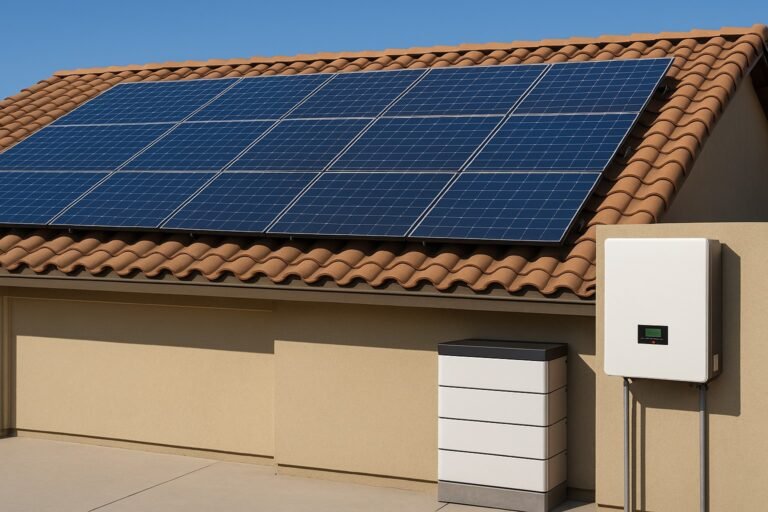
A 20 kW solar system is a large-scale solar power setup designed to meet the energy needs of spacious homes, small businesses, farms, or commercial spaces with significant daily consumption. It’s powerful enough to generate around 80 to 100 kWh of electricity per day, depending on your location and sunlight conditions, making it a smart investment for anyone looking to cut utility bills and rely more on renewable energy. In this article, you’ll find everything you need to know about a 20 kW solar system — from its total cost, daily output, and the number of panels required, to the difference between on-grid and off-grid configurations, battery storage options, and expert insights tailored for 2025 and beyond. The goal is to help you make an informed decision, whether you’re planning a new installation or upgrading your existing solar setup.
What Constitutes A “20 kW Solar System”?
A 20 kW solar system refers to a solar power setup capable of producing 20 kilowatts (kW) of electricity at peak performance — meaning, under ideal sunlight conditions, all panels together can generate up to 20,000 watts of power. However, the real-world output is usually a bit lower due to environmental factors like shading, temperature, and inverter efficiency.
This system size is ideal for large households, small commercial properties, farms, and offices that have consistent energy demands throughout the day. It’s powerful enough to support multiple air conditioners, water pumps, lighting systems, and electronic appliances running simultaneously.
Depending on your preference and local regulations, a 20 kW solar setup can be installed as:
- On-Grid System: Connected to the utility grid, allowing you to export excess energy through net metering.
- Off-Grid System: Works independently using batteries for energy storage — perfect for remote areas without grid access.
- Hybrid System: A blend of both, providing grid connection with battery backup for round-the-clock reliability.
In simple terms, a 20 kW system is a balanced choice — large enough to meet high energy demands but not so massive that it falls into the industrial or utility-scale category. It offers homeowners and small businesses a strong mix of energy independence, cost savings, and sustainability without overcomplicating the setup or maintenance process.
How Much Electricity Will A 20 kW Solar System Produce?
The electricity a 20 kW solar system generates depends mainly on how much sunlight your area receives each day. On average, a system of this size can produce between 80 to 100 kilowatt-hours (kWh) per day under good sun conditions, which equals roughly 2,400 to 3,000 kWh per month or about 28,000 to 36,000 kWh per year.
In regions with strong sunlight, such as Pakistan or other South Asian countries, a 20 kW setup typically generates around 2,200 to 2,400 kWh per month, enough to comfortably power a large home, a small office building, or even an agricultural setup with water pumps and refrigeration systems.
Several factors influence the actual energy output:
- Shading: Even partial shading from trees or nearby buildings can significantly reduce performance.
- Tilt and Orientation: Panels facing the right direction and angle capture maximum sunlight.
- System Losses: Around 10–15% of energy can be lost due to inverter inefficiency, wiring, dust buildup, and heat.
- Seasonal Variation: Expect higher production in sunny months and slightly lower generation in winter due to shorter daylight hours.
To estimate production for your specific location, you can check local “peak sun hours” and multiply them by the system size (20 kW). For example, if your area receives an average of 5 peak sun hours per day, your system can produce roughly 100 kWh daily (20 × 5). This simple formula helps you forecast performance before installation and plan your energy use more efficiently.
How Many Solar Panels Do You Need For A 20 Kw System?
A 20 kW array is the sum of all panel wattages, so the panel count depends on the module you choose: with 300 W panels you need about 67 panels (20,000 ÷ 300), with 400 W panels 50 panels, and with 450 W panels 44–45 panels; if you pick newer 500 W modules, it drops to 40 panels. For space planning, modern panels are roughly 1.7–2.1 m² each; that means a 20 kW array typically needs 90–120 m² of clear roof area for modules alone, or 110–150 m² when you include access paths, setbacks, and obstructions. Think ahead: panel efficiency keeps improving, so if your roof is tight, select higher-wattage modules now and leave 10–20% spare capacity in your inverter or racking for future upgrades. Lay out rows to match your roof tilt and dominant sun direction, group strings by similar orientations to avoid mismatch, keep shading objects behind the array line, and verify structure limits; as a rule of thumb, expect a static load in the 15–20 kg/m² range for panels plus racking, and confirm local wind/snow requirements before finalizing the design.
What Does A 20 kW Solar System Cost?
The cost of a 20 kW solar system can vary widely depending on your location, equipment quality, and installation method. In the United States, the average price for a fully installed 20 kW solar system is around $47,000 before incentives, while most homeowners pay between $40,000 and $55,000 depending on panel type, inverter brand, and local labor costs. After applying federal tax credits or state rebates, the effective cost can drop by 20–30%, making it far more affordable.
In countries like Pakistan and other South Asian markets, the same 20 kW system with net metering typically ranges from PKR 1.7 million to 2 million, depending on whether you choose a standard on-grid system or a hybrid setup with battery storage.
Several factors influence these prices:
- Panel Quality and Brand: Tier-1 panels and high-efficiency modules cost more but last longer.
- Inverter Type: Hybrid or high-end string inverters add to the price but improve reliability.
- Mounting Structure: Complex rooftops or ground mounts increase labor and material costs.
- Battery or Backup Integration: Adding energy storage can raise costs by 30–40%.
- Permitting and Labor: Local regulations, grid approval, and certified installation teams affect pricing.
Government incentives, tax credits, and net metering programs play a major role in lowering the overall cost. For instance, U.S. homeowners can claim the 30% federal solar tax credit, while many other countries offer similar rebates or feed-in tariffs. Ultimately, a well-installed 20 kW solar system is a long-term investment that pays for itself over time through reduced energy bills and potential earnings from exporting excess power back to the grid.
20 Kw Solar System With Battery Storage: Hybrid & Off-Grid Configurations
Adding battery storage to a 20 kW solar system gives you the flexibility to use stored solar energy during the night, power outages, or peak electricity hours when grid rates are high. This setup is ideal for homeowners or businesses that need consistent power or live in areas where the grid is unreliable.
A typical 20 kW hybrid solar setup pairs with 30–40 kWh of battery storage, offering enough energy to run essential appliances overnight or maintain backup power for several hours. In an off-grid system, larger battery banks are required since they become the main energy source when solar production drops.
When choosing batteries, the chemistry matters a lot. Modern LiFePO4 (lithium iron phosphate) batteries are more efficient, safer, and longer-lasting than traditional lead-acid ones. Also, consider the depth of discharge (DoD) — deeper discharge capability means more usable energy. The inverter/charger must match both your solar capacity and your household load, ensuring smooth power flow.
For best results, experts recommend:
- Pairing your solar system and battery brand for compatibility.
- Planning for future expansion if your energy needs grow.
- Scheduling periodic maintenance and system monitoring to prolong battery life.
Although batteries increase upfront costs, they provide energy independence, lower reliance on the grid, and ensure continuous power supply — a crucial benefit for modern living.
On-Grid Vs Off-Grid Vs Hybrid 20 kW Solar Systems
A 20 kW solar system can be designed in three main configurations, each suited to different needs and lifestyles:
- On-Grid Systems: These are tied to the utility grid and use net metering to export extra power. They’re the most cost-effective option, as they don’t require batteries and rely on the grid for nighttime power.
- Off-Grid Systems: Ideal for remote areas without electricity access, these systems run entirely on solar and batteries. They offer full energy independence but require larger battery banks and generators for backup.
- Hybrid Systems: Combining the strengths of both, hybrids connect to the grid while also having battery storage. They allow you to store excess energy for backup use or to reduce grid consumption during peak hours.
To choose the best fit, consider your location, budget, grid reliability, and incentive programs. In cities with stable grids, on-grid systems often provide the best ROI. In rural or unstable-grid regions, a hybrid or off-grid setup ensures consistent energy security.
Expert tip: Before deciding, check your local regulations for system size limits, grid connection requirements, and permit procedures. A professional installer can help you align your setup with both your energy goals and utility policies, ensuring safe and efficient operation.
Factor-By-Factor: Key Considerations Before Installing A 20 Kw Solar System
Before committing to a 20 kW solar installation, it’s important to evaluate several technical and practical factors to ensure the system performs as expected for years to come. Start with your roof’s condition and orientation — it should be in good shape, structurally strong, and angled to capture maximum sunlight throughout the day. Conduct a shading analysis to identify trees, walls, or nearby buildings that could reduce sunlight exposure.
Next, check whether your property has enough space for about 90–120 square meters of panels. If roof space is limited or irregular, consider ground-mounting options. Assess your area’s solar irradiation or “peak sun hours” data; this determines how much energy your panels can realistically generate daily.
Review your electrical load profile to size your system correctly — include current consumption and any future additions like EV chargers or electric heating. Choose Tier-1 quality panels and reliable inverters that come with solid warranties (usually 10–25 years). A good performance ratio ensures consistent output over time.
Select an experienced, certified installer with proven project history and transparent warranty policies. Discuss available financing options such as outright purchase, bank loans, or lease/PPA models depending on your budget. Finally, consider ongoing maintenance, system monitoring tools, and local safety codes or permits to ensure compliance and long-term system reliability.
Cost-Benefit & Return On Investment (ROI) For A 20 kW Solar System
A 20 kW solar system offers a strong financial return, especially when paired with net metering. In markets like Pakistan, for instance, such systems can achieve a 2–3 year payback period, meaning your investment recovers through savings and excess energy credits within that time frame. In regions with higher electricity rates, ROI can be even faster.
Over a 20–25 year lifespan, the system can generate hundreds of thousands of kilowatt-hours, translating into substantial lifetime savings that often exceed the original investment several times. Factors such as annual panel degradation (around 0.5%–0.8%) and occasional maintenance costs should be included in calculations to create a realistic forecast.
Rising electricity tariffs and inflation further improve ROI, as the value of self-generated power increases over time.
Scenario modeling helps visualize outcomes:
- Best Case: High sun exposure, stable equipment, strong net metering → payback in under 3 years.
- Typical Case: Average sunlight and usage pattern → 4–5 years.
- Worst Case: Shading, low irradiation, or inefficient components → 6–7 years.
Experts recommend making conservative ROI estimates to avoid over-promising. Use accurate energy data, factor in realistic efficiency losses, and ensure system performance monitoring from day one. This approach guarantees a more transparent and trustworthy financial outlook while helping you track the real benefits of your solar investment.
Uncommon Or Expert-Backed Tips For Getting The Most From Your 20 Kw Solar System
To maximize the long-term performance of your 20 kW solar system, planning and smart operation are key. First, future-proof your design by leaving extra inverter capacity or roof space if you plan to expand later. This makes it easy to add more panels, install an EV charger, or include additional battery storage without redesigning the system.
Next, invest in a solar monitoring platform that tracks real-time energy production. This helps detect shading, dust accumulation, or inverter faults early, preventing unnecessary energy loss. Routine panel cleaning every few months is also essential, especially in dusty or coastal areas, to keep efficiency high. Include preventive checks for wiring, racking bolts, and inverter ventilation.
In regions with varying sunlight throughout the year, optimize your setup for shoulder seasons—spring and autumn—by slightly adjusting panel tilt or using bifacial or tracking panels that capture sunlight from different angles. You can also use smart load management by running energy-intensive devices—like washing machines, water heaters, or air conditioners—during peak solar hours to utilize direct solar power efficiently.
Understanding panel degradation is another expert insight. Most panels lose about 0.5% of efficiency per year, so tracking performance trends helps you identify early replacements under warranty. Finally, stay updated on incentives and regulations in your region. Energy policies, net metering rules, and rebate programs often change, and being informed ensures you don’t miss valuable benefits or compliance updates that could impact your return on investment.
20 kW Solar System: DIY Vs Professional Installation
For experienced individuals, DIY solar kits offer a way to lower upfront costs. A 20 kW DIY kit, typically starting around $31,000 to $32,000, usually includes panels, mounting hardware, inverters, and wiring components—but excludes professional installation, permitting, and grid connection. While DIY installation can save labor expenses, it requires advanced electrical skills, structural knowledge, and strict adherence to safety codes.
On the other hand, a professional installation provides end-to-end service: proper system design, roof load analysis, secure mounting, certified wiring, and official inspection approval. Professionals also handle warranties, permits, and grid interconnection, ensuring your investment is protected and legally compliant.
The risks of a DIY 20 kW installation are significant—improper wiring, poor alignment, or failure to meet local code can cause safety hazards or void warranties. Since this is a high-capacity system generating substantial power, the margin for error is very small.
Expert recommendation: DIY systems work best for smaller setups (under 5 kW) where risks are manageable. For a 20 kW solar system, it’s wiser to rely on a certified installer. You gain peace of mind, full system warranty coverage, and guaranteed performance—all of which outweigh the small savings from a self-installation approach.
Conclusion
A 20 kW solar system is a powerful and practical solution for homeowners and small businesses looking to achieve real energy independence and long-term savings. It provides enough capacity to generate between 80 and 100 kWh per day, easily supporting large households or commercial operations. Understanding key factors like the number of panels required, cost breakdown, battery options, and on-grid versus off-grid configurations helps you make an informed decision. With the right design, quality equipment, and professional installation, this system can deliver consistent performance for over two decades while significantly reducing electricity bills.
Beyond the numbers, the true value of a 20 kW system lies in its adaptability and sustainability. Whether you plan to expand later, add battery storage, or integrate smart energy management tools, this setup offers flexibility for the future. The best next step is to get a professional site assessment, compare multiple installation quotes, and review your energy consumption patterns. Doing so ensures your investment aligns with your goals — saving money, supporting a cleaner environment, and enjoying reliable solar power every single day.
FAQ’s:
How Many Panels Will I Need For A 20 Kw System?
The exact number depends on the wattage of your panels. If you use 400 W panels, you’ll need about 50 panels (20,000 ÷ 400). With 450 W modules, that drops to 44–45 panels, and with 500 W panels, around 40 panels are enough.
Can A 20 Kw Solar System Run My Whole Home Or Business?
Yes, in most cases it can. A 20 kW solar system can produce 80–100 kWh of electricity per day, which is sufficient for large homes or small commercial setups. Whether it runs everything depends on your daily energy use, the appliances you operate, and your backup preferences.
What Roof Size Do I Need For A 20 Kw System?
You’ll need around 90 to 120 square meters (roughly 1,000–1,300 square feet) of clear roof space for the panels, depending on layout and panel size. For more complex roofs or access spacing, the required area might increase slightly.
How Long Does Payback Take With A 20 Kw System?
Typically, the payback period ranges from 2 to 5 years, depending on location, electricity rates, and net-metering benefits. Areas with strong sunlight and higher utility costs tend to recover the investment faster.
What Happens If I Expand Beyond 20 Kw Later?
Expansion is possible if your inverter and grid connection allow for it. It’s smart to plan for future growth during installation by choosing scalable components and leaving extra inverter capacity or roof space for more panels.
Is Net-Metering Available For 20 Kw Systems In My Region?
Yes, in most regions including Pakistan, net-metering is available for 20 kW systems. It lets you send excess electricity to the grid and receive credit for it, reducing your overall electricity bill. However, check local utility regulations, as some regions have capacity or registration limits.
Do Batteries Make Sense For A 20 Kw System?
Absolutely—especially if you want backup power or lower grid dependency. A 30–40 kWh battery bank can store excess energy for nighttime use or during outages. Though it increases initial costs, it improves self-sufficiency and ensures consistent power availability.
What Maintenance Does A 20 Kw Solar System Require?
Maintenance is minimal but important. Clean your panels every few months, inspect for shading or dust, and check your inverter’s performance regularly. Annual system inspections by a technician help detect early wear or faults, keeping the system efficient for 20–25 years.
Disclaimer
The information in this article is for general educational purposes only. Actual solar system performance, pricing, and incentives may vary by location, equipment quality, and installer. Always consult a certified solar professional before making purchase or installation decisions.
